-
•
•
5 responses
One of the most modified Mormon doctrines is the doctrine of the gathering—the idea that Church members should move to a central gathering spot to build up Zion in this dispensation. D&C lesson 12 teaches about this doctrine, the subject of many of the sections in the Doctrine and Covenants. Under this doctrine, Mormons have “gathered” to Kirtland, Ohio, Independence, Missouri and other areas in that state, Nauvoo, Illinois and Salt Lake City, Utah and perhaps other places. Other Mormon sects have likewise sought to gather members to central locations. Hundreds of thousands of converts have left their homes to… Read More
-
•
•
2 responses
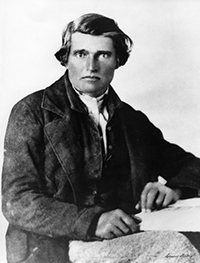
One of the early focuses of the Doctrine and Covenants is missionary work. Repeatedly the Lord advises the Church in revelation that “the field is white, already to harvest,” and encourages missionaries to labor with “all your heart, might, mind and strength.” Church members are urged to prepare and to “open your mouths” to warn and convert neighbors. And these themes did appear in early Mormon poetry, including this work, which was written by the first Mormon missionary to die in the field outside of the United States, Lorenzo D. Barnes. Read More
-
•
•
One response
Chapter 6 of the Lorenzo Snow manual discusses President Snow’s teachings about perfection—his encouragement of gradual improvement, diligence and patience and the role of repentance in obtaining perfection. One of the concepts that stands out to me is the requirement for patience and endurance in reaching perfection. These themes can also be found in his sister’s poem that follows. Read More
-
•
•
133 responses
In 1840, almost nine years before being called as an LDS apostle, while he was listening to a friend read from the scriptures, Lorenzo Snow experienced a sudden enlightenment that he apparently regarded as a revelation from God. He summarized his enlightenment in this well known verse (which I’ll call the Couplet): As man now is, God once was: As God now is, man may be. Neither the Couplet, nor any alternative account of Lorenzo Snow’s pre-apostolic claimed revelation, has been canonized. It is not scripture. The first part of the Couplet in particular encourages the belief by rank and… Read More
-
•
•
Lorenzo Snow’s teachings on man’s destiny and on the nature of God have often been met with both criticism from non-Mormons and wonder from members. His couplet about the past of God and the future of man (mentioned in the lesson), encapsulates an important part of Mormon theology, something that has been even encapsulated in our poetry, such as in his sister Eliza’s well-known poem, today sung as the hymn O My Father. But that hymn is not the only poetical expression of these teachings. Read More
-
•
•
Lesson 10 of the Gospel Doctrine manual for the Doctrine and Covenants is one of those lessons that is a bit hard to characterize. It covers D&C 25, addressing subjects like “husbands and wives should support and comfort each other,” “meekness and pride,” and “rejoice and be of good cheer.” I found it hard to come up with a single subject that covers all of this, and the best I could do is a poem about friendship. Read More
-
•
•
6 responses
Last month, Jacob over at BCC started an interesting series on the philosophy of religion, which I hope he continues at some point. Not being quite ready to spring $120 for a copy of the recommended book, I tracked down a library copy of a shorter and very readable introductory text, William L. Rowe’s Philosophy of Religion: An Introduction (Wadsworth, 2001, 3rd ed.). What I found most interesting in the book was the contrast between knowledge and faith. The discussion seems particularly relevant given how frequently the distinction between knowledge and faith is muddled or simply ignored in LDS discourse. Read More
-
•
•
6 responses
When I read Stephen Peck’s groundbreaking novella A Short Stay in Hell the idea that struck me more than any other was how little we know about the idea of eternity–and how unfamiliar we are with how long eternity is. We simply have no way of comprehending the time involved. We live in a world where we have limited time and must decide how we use the time we have. Read More
-
•
•
6 responses
The formal organization of the Church on April 6, 1830, subject of Gospel Doctrine lesson #9 this year, was the culmination of many preparatory steps that Joseph Smith and his fellow believers took. When the organization occurred, the group had new scripture, new authority from God and a new prophet at its head. In the ensuing years it added other key elements to its structure, beliefs and practices, some of which are described below in John Hardy’s hymn. In a real sense, at least most of these elements are what we are talking about when we speak of the restoration… Read More
-
•
•
91 responses
Over at Worlds Without End, Seth posted Overcoming Correlation, or Mormon Studies and Pastoral Care. Why do we keep talking about Correlation? Obviously, there’s something wrong, but there are various opinions as to what exactly that is and how one might go about fixing it. After recounting his own scholarly engagement with Mormon Studies, Seth offers a couple of conclusions about Correlation, its problems, and how Mormon Studies might help solve them. Read More
-
•
•
26 responses
I’ve been observing Lent for a few years now. And every year I run into consternation from other latter day Saints. Every year I’m told “Mormons don’t observe Lent.”Last year I reflected on this at the end of Lent. I fast as a Mormon, but that doesn’t mean I can’t take advantage of the period of Lent. I pray as a Mormon, do the scripture reading and contemplative thinking that we class as meditation, but I also practice yoga for its meditative and mind-clearing effects as well as the physical benefits. I actively seek out good faith practices developed by… Read More
-
•
•
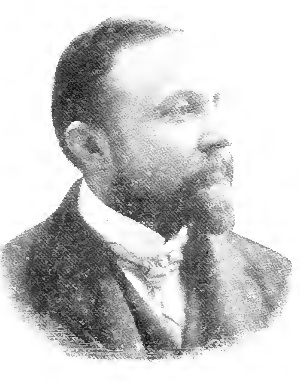
The restoration of the priesthood, outlined in the D&C Gospel Doctrine lesson #8, is central to the Church’s claim to authority and to our understanding of the course of the plan of salvation. Following the atonement of Christ, the authority to administer the ordinances required for eternal life must be a very important element of the plan and central to the preparation for the millennium, at least in the view of the author of this poem, John Hardy. Read More
-
•
•
43 responses
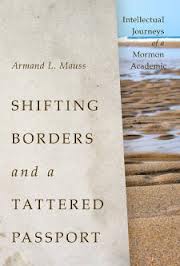
I am almost done with the recently published memoir by Armand Mauss, Shifting Borders and a Tattered Passport: Intellectual Journeys of a Mormon Academic (U of U Press, 2012; publisher’s page). Like Leonard Arrington’s earlier memoir, Adventures of a Church Historian, the book is something of a insider’s guided tour of fifty years of Mormon Studies, including the two important books on Mormonism authored by Mauss, The Angel and the Beehive (1994) and All Abraham’s Children (2003). Anyone who reads T&S or the other blog will certainly enjoy the tour. Read More
-
•
•
When Lorenzo Snow speaks of the Holy Ghost in the material included in chapter 4 of the lesson book, it is clear that he sees the spirit as a great help to us. “It would be simply foolish indeed to expect the Latter-day Saints in these days to comply with the celestial law… except they were sustained by a supernatural power.” The idea that there is a power in the Holy Ghost is something that isn’t mentioned often. So when I saw the following poem, it resonated with me. Read More
-
•
•
When discussing the first principles and ordinances of the gospel the focus is often on the details and less often on their purpose in the plan of salvation. The 7th D&C gospel doctrine lesson talks about faith, repentance, baptism and the gift of the holy ghost. In teaching these principles and ordinances, the focus should remain on Christ. Read More
-
•
•
What Mormon art projects are drawing attention? Does the Mormon community donate to worthy projects? What Mormon projects attract Mormons? Off and on I’ve been looking at Kickstarter, the crowd-funding website for artists of all kinds who are looking for seed money to get their projects completed. I’ve even funded a project and I’m looking forward to the results of my small contribution. When Kickstarter launched a few years ago it drew a lot of press because it promised to make raising money for small projects easier. A number of similar sites that have launched, and it looks like some… Read More
-
•
•
7 responses
Our stake president has challenged all members of our stake to have a “missionary moment” this year. I never served a mission and I don’t like doing overtly missionary-type activities. But his challenge did bring to mind one of the most important missionary experiences I have ever had. It was more than a decade ago. I was a young housewife living in one of the graduate and family student housing complexes at UCSD while my husband was doing his graduate work. I had a toddler and I was expecting our second baby. One day a couple of strangers knocked on… Read More
-
•
•
2 responses
The concept of enduring to the end can be somewhat vague. Much of what it requires depends on environment and circumstance — what is required for you to endure to the end is perhaps different than what will be required of me. But the underlying gospel principles are known, and the following poem by Eliza R. Snow talks about some of them. Read More
-
•
•
The principle of personal revelation is a foundation of Mormonism, a key to our understanding of the gospel. And few places in the scriptures make this as clear as in D&C 8 and 9, which are discussed in Gospel Doctrine lesson 6. There we learn, among other things, that faith is a key aspect of personal revelation. Thus to receive personal revelation, we need to remember the Lord, as is described in the poem I selected for this lesson. Read More
-
•
•
Our sisters and brothers in the bloggernacle have turned their virtual relationship into doing tangible good for those in need. Yesterday, Lisa at fMH announced the Tracy McKay fMh Scholarship. I remember last year when Tracy’s ward financial assistance was cut and the immediate action by her fellow bloggers to raise enough money to get her through her last semester. fMh is working on an endowment to make the scholarship permanent and contributions tax-deductible. (Last year, we just gave money because it was needed, it was the right thing to do, and that mattered more than a tax deduction.) In… Read More
-
•
•
11 responses
[This is the fourth in a series of guest posts on Mental Health, Mortal Life, and Accountability. The first three installments are available here: Part 1:”Exceeding Sorrowful, Even Unto Death” (Mark 14:34), Part 2: Causes and (Mis)Attributions, Part 3: Fractured Images of God, Self, and Others, and Part 4: Accommodations in LDS Activities and Meetings] Now knowing a portion of my background, you can probably guess I’ve had opportunity to give a fair amount of consideration to the concepts of personal responsibility, repentance, and forgiveness. Please take this post as exactly that, my own considerations on these topics, long thought out, studied, prayed about,… Read More
-
•
•
5 responses
This is the third and final post on Adam Miller’s Rube Goldberg Machines: Essays in Mormon Theology (Greg Kofford Books, 2012; publisher’s page). This post covers the short (two pages) and easy-to-discuss essay “Shipwreck.” It’s about what happens when you discover that you are Mormon. What does that mean? How does it change your life? As theology goes, this is a very accessible question. I expect everyone (this means you!) will weigh in with a comment because we have all at some point made this momentous discovery of Mormonism and grappled with the consequences. Read More
-
•
•
12 responses
[This is the fourth in a series of guest posts on Mental Health, Mortal Life, and Accountability. The other installments are available here: Part 1:”Exceeding Sorrowful, Even Unto Death” (Mark 14:34), Part 2: Causes and (Mis)Attributions, Part 3: Fractured Images of God, Self, and Others, and Part 5: The “Greater Sin”/ Sane Repentance & Forgiveness] During graduate school (in a different field of study), I worked in the university’s office for staff and students with disabilities. I learned a great deal about the Americans with Disabilities Act, and about how individuals with a variety of disabilities qualify for and obtain accommodations in their work and schooling… Read More
-
•
•
2 responses
The spirit of revelation described in D&C Gospel Doctrine lesson #5 isn’t always credited with all that it deserves. During our lives, I think, we often receive inspiration that we don’t attribute to anything but our own decisions, while that inspiration makes subtle changes, pushing us towards the better. Other times personal revelation is very clear, appearing as the kind of direct communication whose source is all but undeniable. The following poem is an example of when and how personal revelation can appear, along with a meditation on nature and how it should turn our vision o the truth. Read More
-
•
•
7 responses
This is the second post on Adam Miller’s Rube Goldberg Machines: Essays in Mormon Theology (Greg Kofford Books, 2012; publisher’s page). In this post I’ll discuss Chapter 8, “The Gospel as an Earthen Vessel,” a suggestive symbol that Adam borrows from 2 Corinthians 4:7: “We have this treasure in earthen vessels, that the excellency of the power may be of God, and not of us.” Read More
-
•
•
19 responses
[This is the third in a series of guest posts on Mental Health, Mortal Life, and Accountability. The other installments are available here: Part 1:”Exceeding Sorrowful, Even Unto Death” (Mark 14:34), Part 2: Causes and (Mis)Attributions, Part 4: Accommodations in LDS Activities and Meetings, and Part 5: The “Greater Sin”/ Sane Repentance & Forgiveness] I appreciate the input and insights from those who have experienced depression and other mental health challenges firsthand. Many of the comments have focused on physiological causes and medical helps. I’d like to briefly explore some emotional and psychological factors and their effects and treatments before we discuss implications and applications for… Read More
-
•
•
4 responses
I think that we often think of witnesses as something outside of the event, added to fill a particular need or satisfy the desires of the world. But I wonder if this perception might not be incorrect, if witnesses are not, in fact, an important part of the process of communicating truth. A testimony is, after all, what a witness provides, and, at least in the church, it is hard to imagine communicating truth without testimony. In the fourth D&C Gospel Doctrine lesson witnesses to the Book of Mormon are an important part of the story of the scripture’s preparation.… Read More
-
•
•
6 responses
[I am traveling for the 4th annual Brazilian Mormon Studies Conference — please excuse the delay in posting this.] From the beginning of Mormonism, Baptism has been a central focus of our preaching. Baptism must be done in the correct manner and by the correct authority, and should be followed by the gift of the Holy Ghost. And this is the focus of the second lesson in the Lorenzo Snow manual used in Priesthood and Relief Society. Of course, our baptisms have always been accompanied by hymns, and the following hymn appeared in Emma Smith’s first hymnal in 1835 and… Read More
-
•
•
6 responses
[I am traveling for the 4th annual Brazilian Mormon Studies Conference — please excuse the delay in posting this.] Of our mythic founding stories, the First Vision is surely the most important. It appears regularly in manuals and conference talks, as well as in the missionary lessons, where it is among the first things that converts to Mormonism learn. So naturally it is a frequent subject for Mormon poetry. But most of the poetical treatments of the First Vision that come to my mind are descriptive, tell what happened instead of the role of the First Vision in the ages.… Read More
-
•
•
16 responses
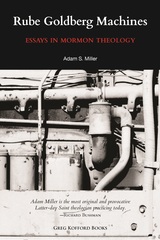
This is the first of several posts discussing Adam Miller’s Rube Goldberg Machines: Essays in Mormon Theology, a little gem published by Greg Kofford Books in 2012 (here’s the publisher’s page on the book). After some preliminary discussion about why there has been so little Mormon theology done (compared to say LDS history) and what Mormon theology might look like, I’ll discuss some of Adam’s observations in Chapter 6, “A Manifesto for Mormon Theology.” Adam, of course, is a permablogger here at Times and Seasons and will likely be adding his own additional enlightening thoughts in the comments. Read More