-
•
•
147 responses
Once upon a time, there was Sunday School, an independent auxiliary whose officers were appointed by senior LDS leaders and whose primary task was to develop a Sunday School curriculum, and commission and supervise the writing of lesson manuals. They did a nice job. Then came Correlation. Read More
-
•
•
Chapters 23 and 27 are not assigned for the lesson. Nevertheless, I have included them because I will refer to them. This week, rather than giving a list of questions to answer, I will suggest some exercises in reading that seem to me to be particularly appropriate to reading Isaiah, exercises in understanding in terms of types and shadows. Before studying how these chapters can apply to us, consider a literal, historical interpretation of these chapters. You may need to consult the maps in your scriptures to understand the references to countries and kingdoms. Looking at a literal interpretation may… Read More
-
•
•
Scriptural Background The Savior tells us, “great are the words of Isaiah” (3 Nephi 23:1), and he commands us to search them diligently. (Towards the end of Book of Mormon history, Mormon repeats that command: Mormon 8:23.) Nephi tells us that his soul delights in Isaiah (2 Nephi 11:2), but he also tells us that many of his people did not share his experience: “Isaiah spake many things which were hard for many of my people to understand” (2 Nephi 25:1). A good number of us have had the experience of Nephi’s people rather than of Nephi. Nephi explains why… Read More
-
•
•
Note to newcomers: These are not lesson notes. They are notes–and questions–to help people study the lesson material. Of course, as such they may also be helpful for preparing lessons, but that isn’t their primary purpose. Amos Though Amos is a short book, it can be difficult to make sense of it. Amos seems to have done his prophetic work at about 765-750 B.C., though it may have been earlier. (We can give fairly accurate dates for him because he refers to an earthquake (1:1) that occurred during the reign of Uzziah (Zechariah 14:5) and to an eclipse of the… Read More
-
•
•
The book of Hosea is an excellent example of a book that we often find difficult because we don’t understand “the manner of prophesying among the Jews” (2 Nephi 25.1). One of the most important of those ways of prophesying was the use of types and shadows. (See Romans 5:14; Colossians 2:17; Hebrews 8:5, 9:9 and 24, and 10:1; and Mosiah 3:15, 13:10, and 16:14.) The key to understanding Hosea is to recognize that the relation of Israel to the Lord is typified by the marriage relation and that Israel in apostasy is typified by an unfaithful wife. That relation… Read More
-
•
•
36 responses
Continuing the conversation begun in my earlier post (God and Science), let’s look at the Encyclopedia of Mormonism entry titled “Science and Religion.” It provides a good summary of what might be termed the conservative LDS position on the topic. The article opens on a positive note: “Because of belief in the ultimate compatibility of all truth and in the eternal character of human knowledge, Latter-day Saints tend to take a more positive approach to science than do some people in other religious traditions who also claim a strong foundation in scripture.” While it is true that “Latter-day Saints” (you… Read More
-
•
•
108 responses
It happened again. Another batch of forwarded emails from my family, filled with misinformation, outright lies and sometimes even hate. Once again I went through them message by message, looking them up on snopes, responding to point out the misleading parts, the lies, and the hate. What should I do? Read More
-
•
•
22 responses
The conflict between science and religion is generally overstated. But it is certainly true that science is the matrix that most people of our day — believers or not — use as the basis for understanding the natural world we live in. Atheists and agnostics stop there; believers add a supplemental layer of faith to their view of the universe that includes a doctrine or idea of God and that reflects a view or theory of how God acts (or doesn’t act) in the natural world. So does science strengthen our faith or threaten it? Is it easier or tougher… Read More
-
•
•
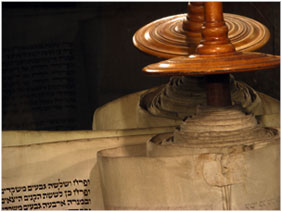
This is another long set of study notes. I have adapted parts of them from a set of notes that Arthur Bassett made several years ago—but don’t hold Art responsible for any mistakes you see here. They are probably mine. I will provide study notes for both sets of readings, that from Jonah and that from Micah, but I will concentrate my notes on the book of Jonah. With this lesson we begin to study a group of writings called the Minor Prophets. Jews divide the Hebrew Bible (what we call “the Old Testament,” but what is probably more accurately… Read More
-
•
•

Word Biblical Commentary quotes this very nice poem from W. H. Auden, “Thomas Epilogises”: Where Job squats awkwardly upon his ashpit, Alone on his denuded battlefield, Scraping himself with blunted Occam Razors He sharpened once to shave the Absolute . . . Eliphaz, Zophar, Bildad rise together, Begin to creak a wooden sarabande; “Glory to God,” they cry, and praise his Name In epigrams that trail off in a stammer. Suave Death comes, final as a Händel cadence, And snaps their limbs like twigs across his knees, Silenus nods, his finger to his nose. One lesson on Job and,… Read More
-
•
•
203 responses
Although I grew up in the Washington D.C. suburbs when the Temple was being built, I don’t remember the controversy and protests to its construction, since I was just a deacon when it was dedicated. I’ve been told that there were objections from the neighbors — one of the early examples of what has become a very normal part of constructing a Temple both in and outside of the U.S. Read More
-
•
•
2 responses
Like some of you, I’ve been reading a book or two on the Old Testament, this year’s Sunday School course of study. Most recently I read Susan Niditch’s Ancient Israelite Religion (OUP, 1997), described in the jacket blurb as “a perceptive, accessible account of the religious beliefs and practices of the ancient Israelites.” Too often our approach to the Old Testament is essentially cherrypicking — highlighting passages that affirm our own beliefs and understanding while skimming over or simply ignoring everything else. We can do better. Niditch takes a worldview approach, suggesting we ought to strive to see how the… Read More
-
•
•
18 responses
That theme is addressed from many different angles in The Future of Mormonism series at Patheos. It might be the best online event on Mormonism I’ve seen, with contributors drawn from across the Mormon spectrum. Here are a few highlights. Mormonism in the New Century by Armand Mauss — Mauss sees the retrenchment-assimilation pendulum swinging back toward assimilation as the Church moves into the 21st century. He lists several signs of this “new posture of diplomatic outreach by the church leadership.” Mormon Publishing, the Internet, and the Democratization of Information by Kristine Haglund — Dialogue’s editor weighs in on “the… Read More
-
•
•
72 responses
The Deseret News posted an article (“Mormons need to work to increase favor“) summarizing remarks by Gary Lawrence at the recent FAIR Conference held last week in Sandy. He addressed perceptions of Mormonism, based on data gathered by his polling firm. We’ve got some problems, it seems. Read More
-
•
•
9 responses
I recently finished Victor Davis Hanson’s Ripples of Battle (Doubleday, 2003), with the give-it-all-away subtitle How wars of the past still determine how we fight, how we live, and how we think. Generalizing a bit, not just wars but many major events and some small, unnoticed ones send ripples into the future, silently influencing future generations. Could the present, our present, have turned out differently? Read More
-
•
•
20 responses
This past week more than 10,000 scientists launched the Vienna Declaration, a call for a major change in handling drug crimes and treatment. Noting that the global war on drugs has failed, the group wants governments to use scientific methods to determine policy instead of, as one health professional puts it, “a moralistic approach.” Read More
-
•
•
14 responses
This little reflection was originally posted on the blog Law, Religion, and Ethics — most of whose readers, if any, are presumably not LDS or residents of Utah. Pioneer Day, in case you didn’t know, is today, July 24; it commemorates the day in 1847 (give or take a day or two) when Brigham Young declared “This is the place,” and the Mormon pioneers entered the Salt Lake Valley. I imagine Pioneer Day is still celebrated in Utah, and it was a festive occasion in Idaho Falls, Idaho, when I was growing up in the 50s and 60s. My mother,… Read More
-
•
•
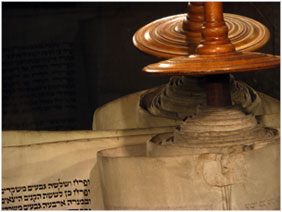
As the Old Testament tells the history, Hezekiah was the 13th king after David and the 11th king of Judah: David, then Solomon, then Rehoboam (who was king at the time of the split between Judah and Israel, and became the first king of Judah), then Abijah, then Asa, then Jehoshaphat, Joram, Ahaziah, Joash, Amaziah, Uzziah, Jotham, Ahaz, and finally Hezekiah. Hezekiah reigned from 715 B.C. to 687 B.C. King Uzziah was a successful king, but at the end of his career he came into conflict with the temple priests. Whether the description of the conflict that we see in… Read More
-
•
•
61 responses
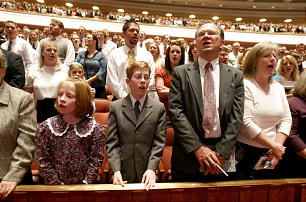
I’m currently visiting my in-laws for a few weeks. I attended their ward on Sunday and once again was shocked at the difference in the singing there compared to my home ward. Why don’t members sing the hymns in Sacrament Meeting here? Read More
-
•
•
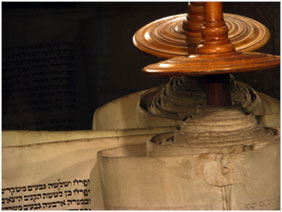
A reminder: these are not notes for preparing a Sunday School lesson—though they may help a person do that. They are notes for studying the chapters assigned for reading. Arthur Bassett has pointed out these parallels between Elisha, on the one hand, and Moses and Christ, on the other. (All scripture references are to 2 Kings). Elisha parts the water [2:14] (as Moses parted the sea and Joshua and Elijah parted the Jordan)—Jesus parts the heavens at the time of his baptism in the same Jordan. He supplies water [2:19-22] (as had Moses)—Christ presents himself as the living water. Waters… Read More
-
•
•
8 responses
In 70 AD, the Romans capped their extended campaign to crush a Jewish revolt by destroying the magnificent temple in Jerusalem. The Jews lost their temple. Earlier, they had lost political autonomy and the kingship; later, in 132 AD, another Jewish revolt was suppressed and Jews were barred from living in or even entering Jerusalem. Despite this loss of temple, king, and land, the Jews adapted and Judaism endured. In the 19th century, Mormons had their own sharp if somewhat less dramatic struggle with American government and culture. What did we Mormons lose? Read More
-
•
•
Elijah We know from passages in the New Testament and, especially, from Latter-day revelation, that Elijah is one of the most important prophets to have lived. (In the Jewish tradition, he is second only to Moses.) Yet we know almost nothing about him. Why do you think that is? In addition to the story of his life, in these and the next few chapters of scripture, we have Malachi’s prophecy that Elijah would come to bind the hearts of the fathers and the children (Malachi 4:5), as well as the repetition of that prophecy in several places, notably in D&C… Read More
-
•
•
The material of this lesson, especially that of chapters 12-13, is important to understanding the rest of Old Testament, for the eighty years that it covers details the split that occurred between the ten tribes of Israel in the north and the tribe of Judah/Benjamin in the south. Since these accounts, like the rest of the Old Testament, were edited many years later (for example, after the return from Babylon) by descendants of those in the southern kingdom, you should think about what their point of view would have been and how that might have shaped their version of the… Read More
-
•
•
The Story This week’s lesson focuses on the construction of the first temple. Previously there had been many places for offering sacrifices and several buildings that we would call temples. But this is the first one built on the site traditionally associated with Abraham’s sacrifice of Isaac. As this temple came to prominence, it overshadowed the others and, by the time of the return from Babylon, it became the only one recognized. The first two chapters of 1 Kings are the background for that temple-building. Chapters 1-2 deal with the final days of David, when his son, Adonijah, aided by… Read More
-
•
•
16 responses

I took a stroll through the End of the World last week. Brought the wife and kids and a picnic lunch. It was beautiful, as always. But one of these days (and it won’t be long) it will be gone. Maybe us too. Read More
-
Church History, General Doctrine, Philosophy and Theology, Scriptures, SS Lesson – Doctrine and Covenants
•
•
31 responses
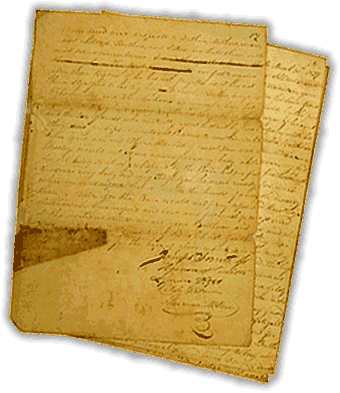
I have been working on a paper looking at the Doctrine and Covenants, and my research has me thinking about how the texts of modern revelation were produced. I think that there are a lot of Mormons who assume that the words of the revelations in the Doctrine and Covenants were dictated word for word to Joseph. On this model, the Doctrine and Covenants is rather like the Qua’ran, which also consists of a series of revelations given to a prophet over a period of years in response to concrete historial circumstances. Pious Muslims affirm that the Qua’ran was dictated… Read More
-
•
•
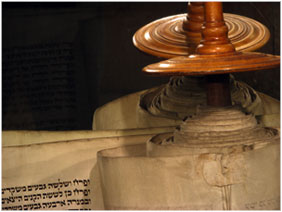
I’m going to skip my usual whine about how much material is covered in the reading for this lesson (unless announcing that I won’t whine counts as a whine). Overview One traditional division of the book of Psalms—often called “the psalter”—divides it into five sections, on analogy with the five books of Moses: Psalms 1-41, Psalms 42-72, Psalms 73-89, Psalms 90-106; and Psalms 107-150, with Psalm 150 being the closing doxology for the whole collection. Those who accept this division understand the first and second psalms to be an introduction to the psalter as a whole, so some manuscripts give… Read More
-
•
•
2 Samuel 11 Verse 1: What do you make of the fact that the story is set at the time of the year when “kings go forth to battle,” but David sent his army to battle and stayed behind himself? What is the writer telling us about David when he says “But David tarried still at Jerusalem”? (Note: presumably the time when battles could once again commence was at the end of the rainy season, approximately the beginning of May.) Verses 2-5: How do you suppose that David could see Bathsheba bathing? Where do you think people would usually have… Read More
-
•
•
40 responses
This week, the Rochester Stake in New York is sponsoring a special performance of Carol Lynn Pearson’s Facing East, to be followed by a fireside featuring a discussion led by the Rochester Stake President. Notably, the performance is being directed by Jerry Argetsinger, who was the long-time director of the Hill Cumorah Pageant throughout the 90s, and costume design is being handled by Gail Argetsinger, a Tony award-winning costume designer who designed and supervised the construction of thousands of pageant costumes during the 90s. For those unfamiliar with Facing East, it is the story of a Mormon couple who is… Read More
-
•
•
3 responses
Jana Reiss, former T&S guest blogger and author of Mormonism for Dummies, is running a new Mormon blog at Beliefnet: Flunking Sainthood. Put a link in your blogroll (do people still do blogrolls?) and visit often. Having myself previously hosted a Mormon blog at Beliefnet, I have some idea of the challenge the new blog is facing. The problem can be put very simply: (1) few people who aren’t Mormon have much to say about Mormonism, and (2) there aren’t too many Mormons hanging around the Beliefnet site. But it just seems wrong that one of the most popular Internet… Read More