-
•
•
25 responses
The irony of religious fundamentalism is that it is a profoundly modern and profoundly secular phenomenon. This is perhaps especially true of the scriptural literalism that often accompanies it. The result is that many of the most conservative Mormons are, in point of fact, also the most secular. Few Mormons are more secular than Joseph Fielding Smith and Bruce R. McConkie. Why is fundamentalism so profoundly secular? Because it cedes the field of truth wholly and without contestation to secular models of truth – and then tries to combat, contest, and outdo the secularists at their own game. Is there… Read More
-
•
•
Matthew 11 Verse 28: What does it mean to come to Christ? Has he already told us how we can do that in readings from some of the previous lessons? The word translated “labor” means “wearying labor.” The phrase “heavy laden” translates a Greek word that means “weighed down.” What wearying, taxing work does Christ have in mind here? From what does he offer relief? Why is that described as something that wears us out? As something that burdens us? Can we understand sin as a kind of difficult work? The word translated “rest” literally means “cessation.” It is used… Read More
-
•
•
12 responses
Just finished A Brief History of History: Great Historians and the Epic Quest to Explain the Past (The Lyons Press, 2008) by Colin Wells. It is a quick review of all those names you have heard a time or two (Thucydides, Tacitus, Guicciardini, Ranke, Burckhardt, Turner, Braudel, etc.) woven together into a narrative. Favorite quote: “History is everywhere; we live in it.” The comments in the book that are worth discussing at an LDS blog concern the challenges of writing Church History. Read More
-
•
•
50 responses
Mexican-American activist Raul Lopez-Vargas letter asking Mexican President Felipe Calderón to hold up LDS missionary visas to Mexico because of proposed illegal immigration enforcement legislation is being called a blatant blackmail attempt. If true, I have to wonder how he could possibly think it would work. Read More
-
•
•
As is usually the case, there is a lot of material to cover in this lesson, but the material in these chapters is so important that it would be a shame to focus on only part of it. So I will focus on the Lord’s prayer (Matthew 6:5-15), but I will also provide notes for the rest of both chapters. Notice that in 2007 Robert C and Cheryl M provided excellent materials on these chapters, and Karl D will almost certainly provide current notes on the lesson materials. Chapter 6 Jesus continues to teach about true righteousness, a righteousness that… Read More
-
•
•
The lesson this week picks out the first part of a longer sermon. Matthew 5-7 give us Jesus’ Sermon on the Mount. Even if preparing for only the Sunday School lesson, it is probably best to read the entire sermon to see the context of this part. At the time of Jesus there seems to have been considerable controversy over who was “in” and who was “out” when it came to being the children of God. This controversy had been on-going for some time, at least since the time of the return from exile. The Samaritan community was one of… Read More
-
•
•
For purposes of this lesson, I take Luke 7:1-17 to be a supplement to the miracle stories we read in the material from Mark. So I will make my notes and questions on Mark, assuming that reading and thinking about Luke will be appropriate to them. As usual, I offer the reminder that these are study notes for the reading, not notes for preparing a lesson. Presumably study notes could help a person prepare a lesson, but these go beyond what one might expect in notes for a lesson. Mark’s Gospel This is the first lesson this year to use… Read More
-
•
•
145 responses
Marvin Perkins is a Latter-day Saint music producer who is currently the Public Affairs Co-chair for the Genesis Group and who has worked to nurture understanding between African Americans and Latter-day Saints and attack misconceptions (see our 12 Questions series with Brother Perkins from 2009). This morning, Brother Perkins circulated the following email to his “Blacks in the Scriptures” listserve (which is re-posted here with his permission): ______________________________ Friends, Many of you have recognized the new LDS.org website. Some of you have recognized that with the new site also came changes to chapter headings and footnotes in the scriptures. Not… Read More
-
•
•
32 responses
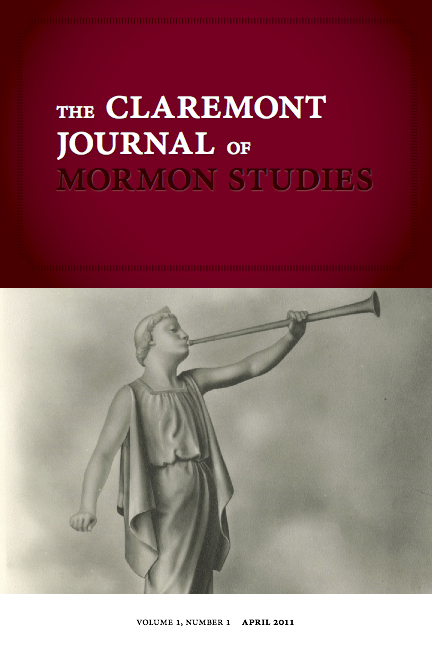
The Claremont Graduate School’s Mormon Studies program has produced another contribution to the study of Mormonism: a student-run on-line journal. Which makes me wonder, how many Mormon Studies journals can be supported? Read More
-
•
•
21 responses
Mormons are metaphysical heretics, backward pagans, country bumpkins, who claim that the world, rather than being one, is fundamentally many. We’re metaphysical pluralists and so break with the creeds. Unity is a product, not a starting point. God the Son is not God the Father and (moreover!) all intelligences are uncreated and co-eternal with God. As a result, rather than being reassuringly antedated by the simplicity of a Divine Will or the uniformity of a Providential Reason, we’re preceded by the mystery of a material plurality that is always already given. In this scenario, faith is a different kind of thing. Unlike… Read More
-
•
•
Before we look at some individual verses from this lesson, consider the overall structure of Luke’s narrative and think about how Luke’s story of the calling of the Twelve compares to Matthew’s. I have put in bold the parts that the lesson focuses on, but I have outlined all four chapters so that you can think about how Luke tells the story as a whole. Because of the length of the materials, I have created study questions only for the first part of the lesson, Luke 4:14-32. Luke’s story: • John’s preaching and message (Luke 3:1-20) • Jesus’s baptism (Luke… Read More
-
•
•
Matthew 3 Verses 1-2: What function did the herald of a king serve in ancient times? Why did kings need heralds? Is John the herald of a king? Why does this King need a herald? Compare John’s message to Jesus’s message in Matthew 4:17. Why do you think Matthew uses almost exactly the same words in each case? What is he teaching? Given Matthew’s focus on Jesus’ royal birth, how are we to understand “the kingdom of heaven is at hand”? How many ways can you think of understanding that the kingdom of heaven is soon to come or is… Read More
-
•
•
8 responses

Say someone asks if you know the time. You say yes and then look at your watch. Did you really know the time? Say someone asks you how to get downtown to the museum. You say yes. They ask you to write down directions. You can’t, but you offer to drive them there instead. If you can see the landmarks, then you’ll know where to turn. Did you really know how to get there? Say that, walking past a bakery, you’re struck by the smell of a pastry and then vividly recall a time when, six years-old, you made those same rolls… Read More
-
•
•
21 responses

Times and Seasons has selected Elizabeth Smart as Mormon of the Year for 2010. Elizabeth Smart has been in the public eye this year in the United States and around the world as the chief witness in the trial of Brian David Mitchell, who abducted her in 2002. And her testimony gave her significant influence, despite her apparent distance from the spotlight while serving on an LDS mission during 2010. In her testimony, Smart showed a poise and decorum that is rarely found among private individuals thrust into the public spotlight. Central to Smart’s impact is her religion. Mormonism was… Read More
-
•
•
Matthew 2 Verse 1: Who were the wise men? The phrase “wise men” is a somewhat odd translation of the Greek word magoi, “astrologers.” It is because of this word that sometimes we refer to the wise men as “magi.” We get the word “magician” from magoi. “The east” may refer to Mesopotamia, the center of astronomical studies at the time. Compare Numbers 24:17, Psalms 72:10-11, and Isaiah 60:1-7. What do such verses suggest to us about the wise men? Why does Matthew tell us about the homage paid to Jesus by the wise men, but Luke tells us about… Read More
-
•
•
14 responses
When I looked at the results of voting for the Baseball Hall of Fame, I was somewhat surprised that two LDS players were still getting enough votes to stay on the list for next year, even though they haven’t yet been selected. And one of the players looks like he may eventually be selected — perhaps even next year. Read More
-
•
•
130 responses

Looking back at last year’s MOTY post, I came across a comment I had not seen before. Having been raised hearing about the vast differences between communism and the United Order — and how communism was actually a counterfeit of God’s community — I was surprised that the comparison was being made. This was coupled with a discussion I had two days ago with Belinda, one of my children attending BYU. She just started a church history class and we were talking about the first chapter in her text. It discusses the divine nature of the founding of the United… Read More
-
•
•
18 responses

In the introduction to his Faith, Philosophy, Scripture (Neal A Maxwell Institute, 2010), Jim Faulconer gives us a kind of typology of religious subjects. Imagining the different kinds of responses he might get to the difficulty of his philosophically inclined essays, he picks out four basic types. I. Typology 1. Those who enjoy a kind of childish naivete. Those with childish faith will find what I say difficult because it makes the obvious difficult. They are likely to be bored or, at best, indulgent of me, and their reaction is the right reaction. I have nothing to say to those who are naive… Read More
-
•
•
107 responses
This post opens the voting for Mormon of the Year. Votes will be taken until midnight Eastern Time on Saturday, January 8th, at which time the voting will close. The voting mechanism will attempt to restrict votes to one per person. The order of the choices is set at random, and is different each time the form is presented. THE WINNER OF THE ONLINE VOTE IS NOT NECESSARILY THE MORMON OF THE YEAR!!! Read More
-
•
•
9 responses
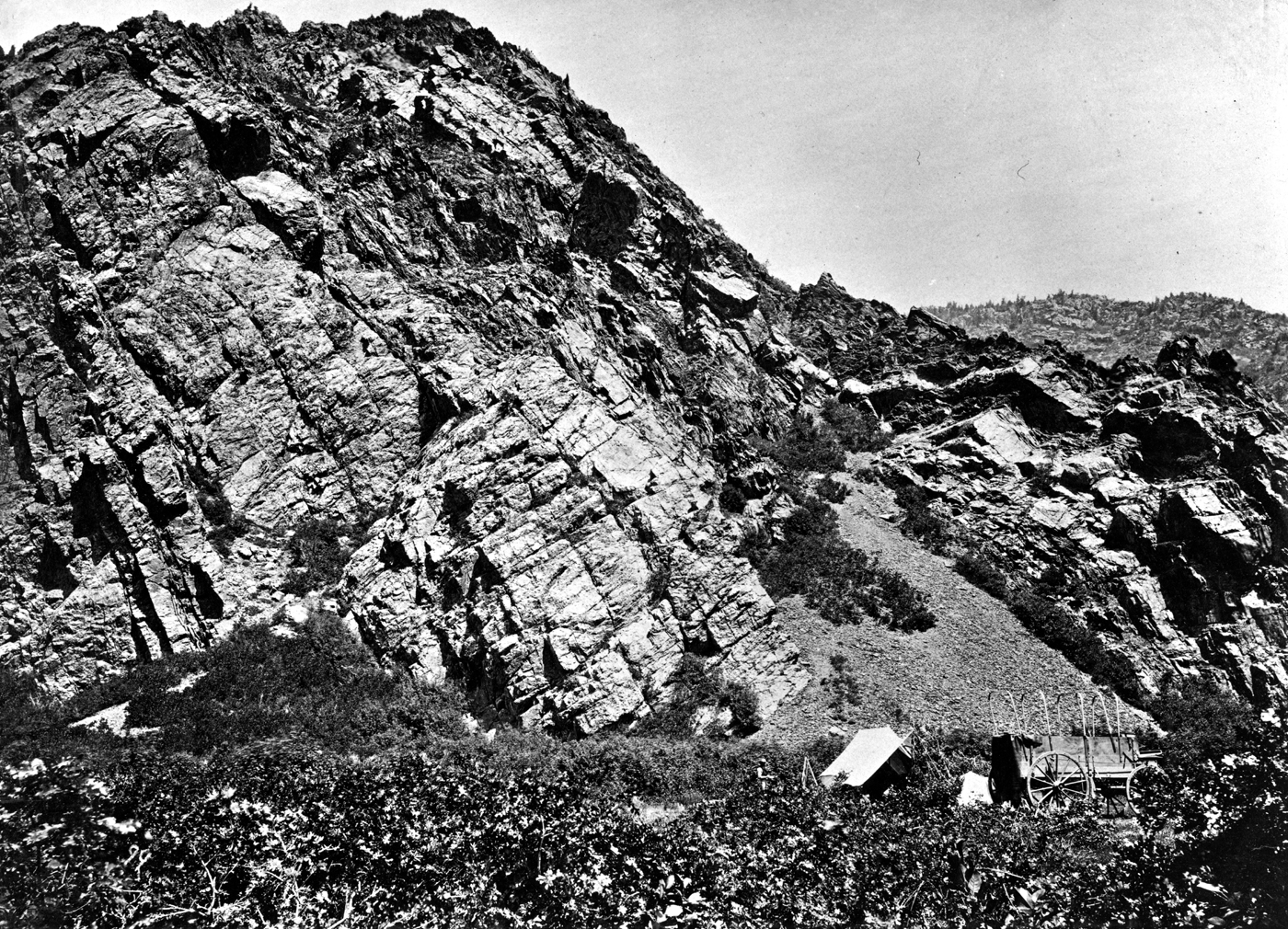
Of his awakening, Dogen says, “I came to realize clearly that mind is no other than mountains and rivers, the great wide earth, the sun, the moon, the stars.” Tinged with enlightenment, you see what Dogen saw: that life is borrowed and that mind itself is mooched. Every day you’ll need something old, something new, something borrowed, and something blue. Mind borrows mountains and rivers, earth, sun, and sky. But you can’t just keep these things forever. Even if they weren’t quite what you wanted, they gave what they had and now some compensation is needed, some recompense is required.… Read More
-
•
•
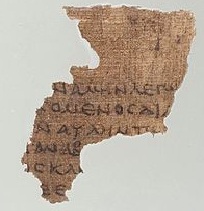
Before I offer the study questions for this lesson, let me voice my objection to the format of our lesson manuals. They treat the Gospels as if the best way to understand them is to harmonize them, as if they are each histories of the life of Jesus rather than four different testimonies—for different audiences and for different purposes—of who Jesus is, the Messiah. That’s a little bit like taking a particular version of President Monson’s testimony, and one of President Eyring’s, and one of President Uchtdorf’s and pasting them together where they speak of similar things to make one… Read More
-
•
•
This is the time of year for Christmas devotions. This year my thoughts have been on the impulse to serve the needy that we have at Christmas. We don’t have it at Easter. My thoughts have also been on the Christ child. The religious significance of the grown Christ, on the cross and in the garden, is obvious. But what did Christ do for us as a bare baby? Read More
-
•
•
3 responses

Earth is stratified time. Use some wind, water, and pressure. Sift it, layer it, and fold it. Add an inhuman number of years. Stack and buckle these planes of rock into mountains of frozen time. Use a river to cleave that mountain in two. Hide hundreds of millions of purloined years in plain, simultaneous sight as a single massive bluff. It’s a good trick. Bodies, made of earth, are just the same: in my face, unchosen, generations of people are stratified in plain, simultaneous sight. My father’s nose, my grandfather’s ears, my mother’s wink, the lines my kids have etched… Read More
-
•
•
13 responses
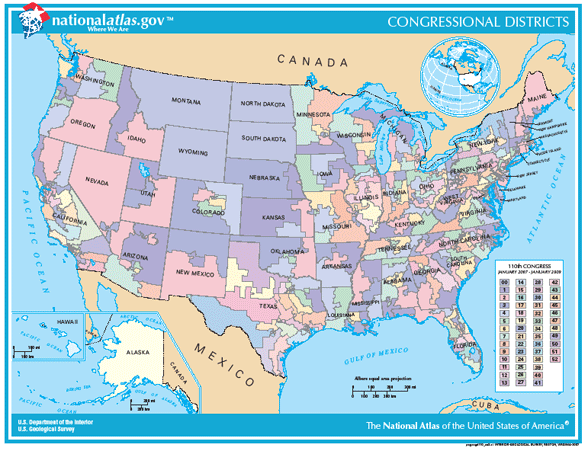
On December 21st the U.S. Census Bureau will release the initial results of the 2010 census and indicate which states will gain members of Congress and which states will lose members of Congress. From the estimates made by third parties, it seems likely that the number of Mormons in Congress will increase as a result. Read More
-
•
•
126 responses
Its that time of year again. The media are already reviewing the important news stories of the year, Time will soon select its Person of the Year (one Mormon — Glenn Beck — has been nominated this year); so we should get busy selecting the Mormon of the Year. For those who don’t remember, T&S selected Mitt Romney as the Mormon of the Year for 2008, and Harry Reid for 2009. As in the past, the choice does not mean that the person is a good Mormon or even a good person. This designation is solely about the impact the person… Read More
-
•
•
31 responses
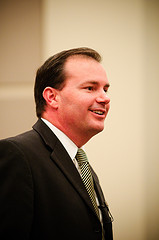
With the U.S. 2010 elections over more than a month ago, I’ve wanted to put together a summary of the results for Mormon candidates for some time, and finally got around to finishing it this past weekend. There were a few surprises. Read More
-
•
•
4 responses
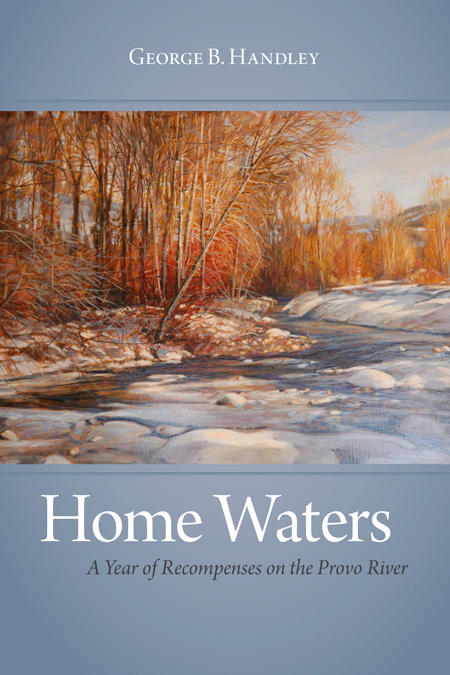
George Handley’s Home Waters: A Year of Recompenses on the Provo River (University of Utah Press, 2010) practices theology like a doctor practices CPR: not as secondhand theory but as a chest-cracking, lung-inflating, life-saving intervention. Home Waters models what, on my account, good theology ought to do: it is experimental, it is grounded in the details of lived experience, and it takes charity – that pure love of Christ – as the only real justification for its having been written. It is not afraid to guess, it is not afraid to question, it is not afraid to cry repentance, and… Read More
-
•
•

Zechariah 1:7-6:8: We may be able to read the first six chapters of Zechariah as having a roughly chiastic structure. As with many chiasmi, however, deciding whether this is a chiasmus is a matter of judgment rather than fact. A 1:7-17: The Lord’s omniscience B 1:18-21: Judah and the empires C 2:1-5: Jerusalem’s territory [2:6-13: Reiterates the first three parts] D 3:1-10: Joshua the high priest D’ 4:1-14: The temple itself C’ 5:1-4: Jerusalem’s self-rule (the scroll of the law?) C’ 5:5-11: Judah and Persia (? perhaps a “counter-temple”?) A’ 6:1-8: The Lord’s omnipotence If this analysis is correct, the… Read More
-
•
•
Note that the books of Ezra and Nehemiah were considered one book until well after the time of Christ. The rough chronology below will help place this week’s material in its historical context. 606 The fall of Nineveh, capital of Assyria. Babylon becomes the major power. Daniel and others are taken to Babylon from Israel 604 Nebuchadnezzar is king of Babylon 598 Judah’s king, Jehoiachin, and the prophet Ezekiel (with thousands of others) are carried captive into Babylon. Lehi leaves Jerusalem. Habakkuk and Ezekiel prophesy 587 The fall of Jerusalem; much of the population of Judah is taken captive into… Read More
-
•
•
Verses 4-5: Why does the king make this demand on his wise men? Verses 10-12: What did it mean to be a wise man in Babylon? Why was the king angry? Why do you think that the gods of Babylon are never mentioned in this story, not even negatively? Verse 24: Why does Daniel save the other wise men of Babylon? Verse 28: Why would a king living hundreds of years before Christ’s birth be interested in what would happen at the age when the end of the world would come? (“Latter days” is probably better translated “at the end… Read More