-
•
•
Moses 8 Verse 9: The Hebrew of Genesis 5:29 shows us that Noah’s name means “rest.” How does his father, Lamech, explain the name? Is Noah’s name significant to the story of the flood? Verses 19-21: Why don’t the people listen to Noah? What do the things they say about themselves tell us about them? (Compare verse 21 to verse 14.) Why does what they say focus on marriage and children? How is what they say a reply to Moses’ message of repentance? Do we see anything here about how they understand what it means to have dominion? Verse 22:… Read More
-
•
•
As always, remember that these are questions for studying the reading assigned more than for planning the lesson itself. Even then, you are certainly going to find more questions here than you can deal with in one study session, though not, perhaps, more than you can deal with in a week. However, that said, the lesson itself has turned out to be more than I could deal with in a week. I had most of the lesson revised by Sunday evening and thought I would be able to finish adding material for chapter 7 by Tuesday or Wednesday. I was… Read More
-
•
•
6 responses

Thanks so much for all the fun. Before departing, I leave this layered perspective on parenthood and then return you to your regular T&S, already in progress. Read More
-
•
•
9 responses
We, the children of our Heavenly Father, naturally make places where we can draw closer to Him. Almost all of us do it- in some way- all over the world. The thoughts and efforts we put into these holy places reflect our theology, values, hopes and desires. Read More
-
•
•
72 responses
The several parallels between the Book of Mormon and the Qur’an have been noted before: the Qur’an serves as proof of Muhammad’s prophethood, an additional (although superseding) witness of the Bible’s God and salvation history, the source of devotional reading and instruction for believers. It is central to the piety of Muslims and commands their highest esteem. For non-believers to glibly dismiss it offends Muslims the same way we take umbrage when the Book of Mormon is described as something any nineteenth-century, Bible-literate yokel could have tossed off between lunch and dinner. In other ways, though, the Qur’an is simply… Read More
-
•
•
These notes focus on Moses 4, giving less attention to the other scriptures for this lesson. However, the other readings are necessary to understanding chapter 4. (The study questions for Moses 4:1-4 were part of the materials for lesson 2. I repeat them here so that they will be convenient.) Note that if Moses 2 tells of the spiritual creation (as is commonly but not universally believed among Latter-day Saints), then chapters 3 and 4 correspond to Moses 2:24-30, the sixth day. That would mean that carrying out the physical aspect of each day’s creation involved considerably more than we… Read More
-
•
•
83 responses
I confess that I am not a regular reader of the Church News, but I did happen to run across this recent piece, “Using proper sources.” I will note a couple of quibbles I have with the piece (which, as an unsigned post in the “Viewpoints” section, I take to be essentially a staff editorial), but in the end I think I agree on the need to avoid the use of “uncorrelated” supplementary sources or materials in class. Read More
-
•
•
130 responses
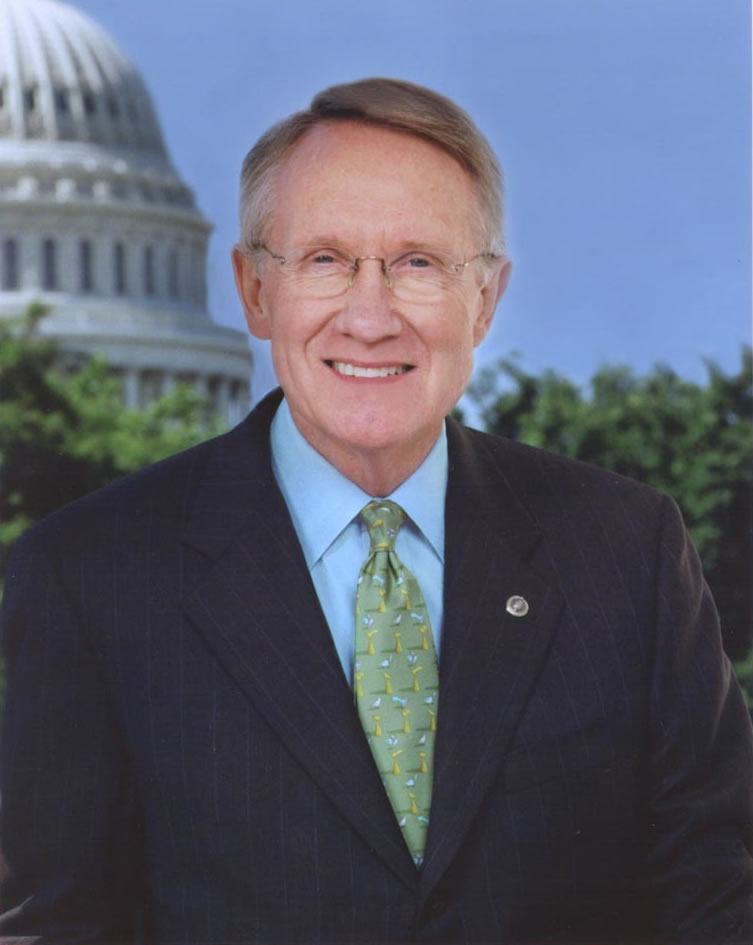
Times and Seasons has selected Harry Reid as Mormon of the Year for 2009. During 2009, Senate Majority Leader Harry Reid was the most visible and influential Mormon politician in the world, shepherding Democratic legislative proposals through the U.S. Senate after the party’s victories in the 2008 elections, including a landmark health care bill that represents one of the more controversial pieces of legislation to pass through the Senate in recent memory. Reid’s off-the-cuff style has also led occasionally to unscripted remarks that have attracted a lot of attention. While Reid’s faith is not always discussed as much as that… Read More
-
•
•
3 responses
A reminder about these notes: They are intended to help people study the assigned material for this week’s Sunday School lesson. They are not intended as an outline for how to teach that lesson, though I assume that by studying the material a person might get ideas about how to teach it. And a note about these notes: These questions are for one particular kind of study, not the only kind nor necessarily the best kind. Sometimes we study a book of scripture from cover to cover, learning or reminding ourselves of its overall teachings and how the parts of… Read More
-
•
•
Abraham 3 Verses 1-19: Why did the Lord reveal these things to Abraham? More important: why did he think it important to reveal them to us? Verse 1: Why is it important that Abraham tell us that he received the revelation that follows through the Urim and Thummim? Verse 2: Assuming that the throne of God is on a planet, why say that the star is near that throne / planet rather than that the throne / planet is near the star? In contrast, we don’t say that the sun is near the earth, but that the earth is near… Read More
-
•
•
131 responses
This post opens the voting for Mormon of the Year. Votes will be taken until midnight Eastern Time on Thursday, January 7th, at which time the voting will close. The voting mechanism will attempt to restrict votes to one per person. The order of the choices is set at random, and is different each time the form is presented. THE WINNER OF THE ONLINE VOTE IS NOT NECESSARILY THE MORMON OF THE YEAR!!! Read More
-
•
•
4 responses
December, like childhood, is an opportunity for us to experience an enchanted world, and regain some of the understanding we too quickly lose – and often anxiously jettison – after childhood. Read More
-
•
•
As the title of this post says, these are notes for studying the lesson rather than for teaching it, though presumably one who studies the lesson will have material from which to teach it. Read More
-
•
•
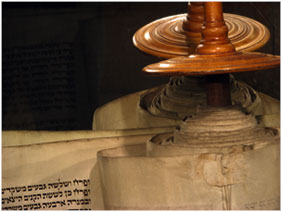
What are the scriptures for? How should we use them? How do we use them? “Proof-texting” is a procedure that begins by assuming we know the doctrines and then searches through the scriptures to find something to back up the belief. Because it begins with what we assume we know rather from what the scriptures teach, proof-texting always runs the danger of “wresting” the scriptures. Jesus accuses the Jews of wresting the scriptures by proof-texting in John 5:39. See also 2 Peter 3:16, Alma 13:20, and D&C 10:63. “Wrest” is the word from which the modern word “wrestle” comes, and… Read More
-
•
•
Don’t expect Old Testament writers to have written their histories the way we would have written them. Read More
-
•
•
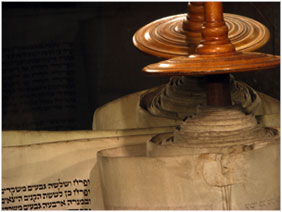
The version of the Old Testament used by Protestants and Jews today contains 39 books. Catholic Bibles include 9 more books, as well as 2 additions to Daniel and 1 to Esther. At least some of those 9 additional books were used as scripture by Saints of the 1st century AD. For various reasons (mostly historical rather than doctrinal or revealed, I would guess) Latter-day Saints use the same version of the Bible as do the Protestants. The major difference between the Protestant and Jewish Bibles is that the order of the books in each is different. The Protestants arrange… Read More
-
•
•
It is daunting to be posting anything about scripture when Eric Huntsman is posting alongside. It ought to be daunting in any case, but it is easier to ignore the fact that I am a mere dabbler when my posts stand alone. In any case, I will be posting revised versions of my study questions for the Old Testament Sunday School lessons. I begin with several posts of background. These will all be cross-posted from Feast Upon the Word, a site you should become acquainted with if you aren’t already (and it is the blog daughter of its more important… Read More
-
•
•
119 responses
Its that time of year again. The media are already reviewing the important news stories of the year, Time has selected its Person of the Year; so we should get busy selecting the Mormon of the Year. For those who don’t remember, last year at this time T&S selected Mitt Romney as the Mormon of the Year for 2008. I think the ground rules are basically the same as last year (suggestions about changes to the rules are welcome – I’ve tried here to clarify some assumptions we made in the rules last year): Nominees must be Mormon somehow — those… Read More
-
•
•
4 responses
[Once again, these are just notes, and they do not even begin to do the subject justice, but yesterday’s Matthew notes were able to spark some good discussion. I will response and comment as I can today, but, hey, it is Christmas Eve Day!] While Matthew’s is largely from Joseph’s perspective, Luke’s from Mary’s This does not mean, however, that Joseph and Mary were necessarily the sources—rather that the evangelists focused on them and what they represented Luke included poetic passages or songs to personalize the characters of his infancy narrative (canticles, more below) Luke adds the stories about John… Read More
-
•
•
8 responses
[Christmas realities have hit, making me admit that full length blogs the last two days of Christmas week are just not feasible! So forgive me as I just post here some “notes” on Matt and later Luke, consisting of largely recycled material from my class lectures!] Matthew’s is largely from Joseph’s perspective, Luke’s from Mary’s This does not mean, however, that Joseph and Mary were necessarily the sources—rather that the evangelists focused on them and what they represented For Matt, Joseph’s proposed status as a Davidid makes Jesus David’s true heir, although admittedly through “adoption” or legal recognition by Joseph,… Read More
-
•
•
20 responses
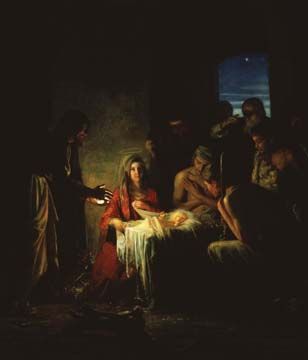
This Christmas Eve, most of us will at least read the “Christmas Story,” as found in Luke 2:1-20. As we approach the holiday, a few more diligent souls will read all of the Infancy Narratives, as found in Matt 1-2 AND Luke 1-2. Yet even when reading (as opposed to just remembering or “thinking” about) these familiar texts, the tendency will be to harmonize the two accounts, resulting in a hybrid vision of the birth of Jesus that accords nicely with the Christmas pageants that we will watch and the Nativity scenes that we have set up. But our Christmas… Read More
-
•
•
7 responses
The text “It Came Upon the Midnight Clear,” written by Unitarian minister Edward Sears, included haunting verses about war and social inequity. Nowadays, there are several versions of the hymn, as different denominations (including the LDS church) have altered the words in one form or other. The original words remain well worth reading (and singing) this Christmas season: Read More
-
•
•
26 responses
There’s hope! At least that’s the message of a couple of posts I read through lately (here and here) presenting an interview with Adam McHugh, the author of Introverts in the Church: Finding Our Place in an Extroverted Culture. By “Church” he means Evangelicals, not the LDS Church, but the discussion is still relevant to us. Read More
-
•
•
14 responses

or, an untraditional Mormon couple in traditional clothes. After the ceremony while I was walking through the temple halls, people were coming out from all over the place to gawk at my dress. I think most of them had never seen formal Vietnamese wedding regalia before. What’s funny is that the Vietnamese traditional dress (ao dai), seems, to me, to be more suited for the temple than American wedding dresses with its floor length, high neckline and long sleeves. Unlike many others before me, I didn’t have to wear anything over or under my dress to make it appropriate for… Read More
-
•
•
98 responses
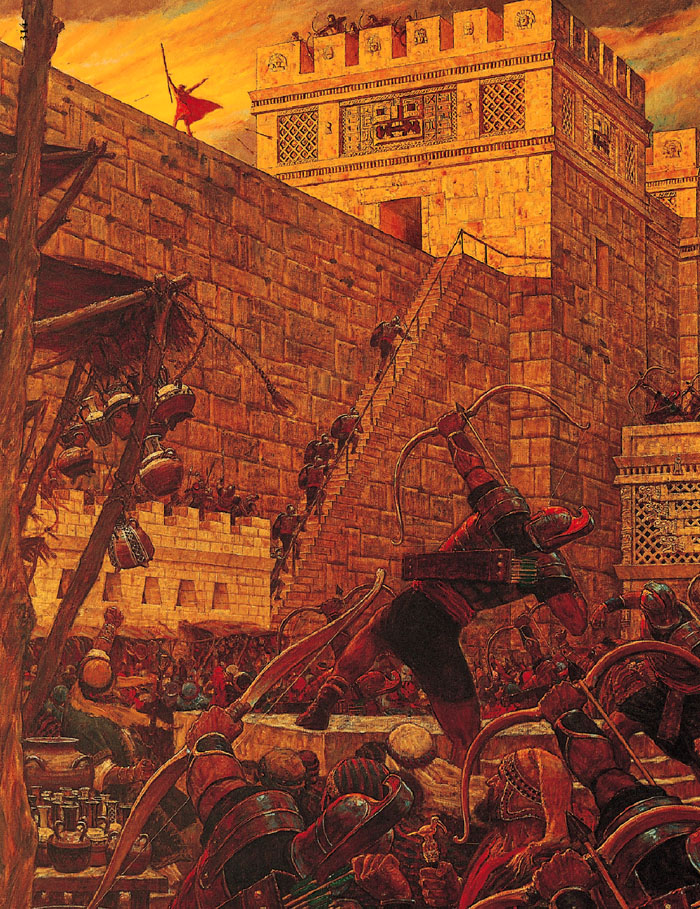
The news is out that LDS leaders are adding a fourth mission for the Church: caring for the poor and needy. According to an official LDS spokesman cited in the Salt Lake Tribune article, the new mission (or purpose or emphasis) will be included in the new edition of the Handbook of Instructions to be issued next year. With a publishing deadline looming, I propose that we put our collective heads together and see whether we need a fifth mission as well. Perhaps adding a fourth mission alone is not enough to fill in the gaps apparently missed by the… Read More
-
•
•
17 responses
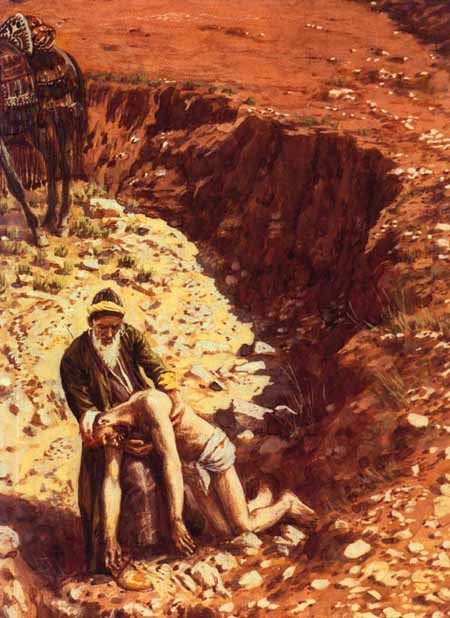
As we all know, the gospel is overrun with economic doctrine. On that note, I noticed a quote about free riding from President Monson (which I just saw at Mormon Times): “I am confident it is the intention of each member of the church to serve and to help those in need,” he said. “At baptism we covenanted to ‘bear one another’s burdens, that they may be light.’ How many times has your heart been touched as you have witnessed the need of another? How often have you intended to be the one to help? And yet how often has… Read More
-
•
•
3 responses

Here’s an image from ‘The Roof’ restaurant in the Joseph Smith Building. It’s a family tradition to eat there for special occasions, this one being my mission call. I always love the view. Submitted by M. Dean Egan Read More
-
•
•
2 responses
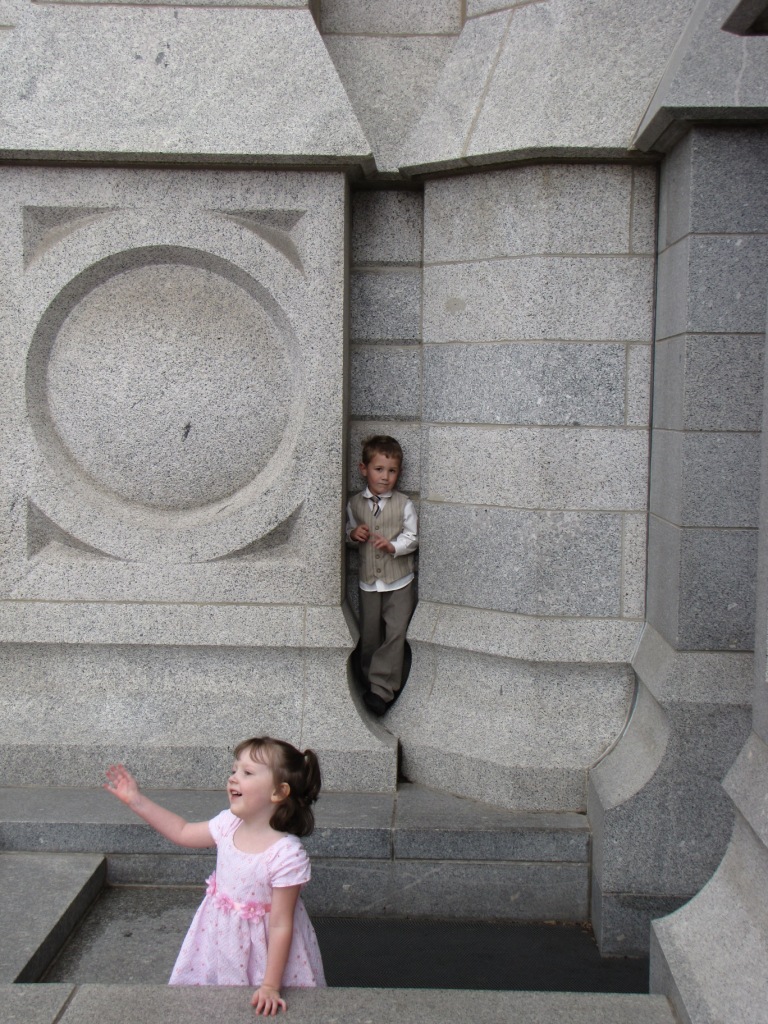
This is a picture I took of my eldest son and daughter, waiting outside the Salt Lake Temple after my niece’s wedding. As it was a Friday in June, there were many people waiting outside for wedding pictures. My children, while not exactly reverent and not at all quiet, certainly found plenty to keep them busy during the wait. by Keryn Ross Read More
-
•
•
3 responses
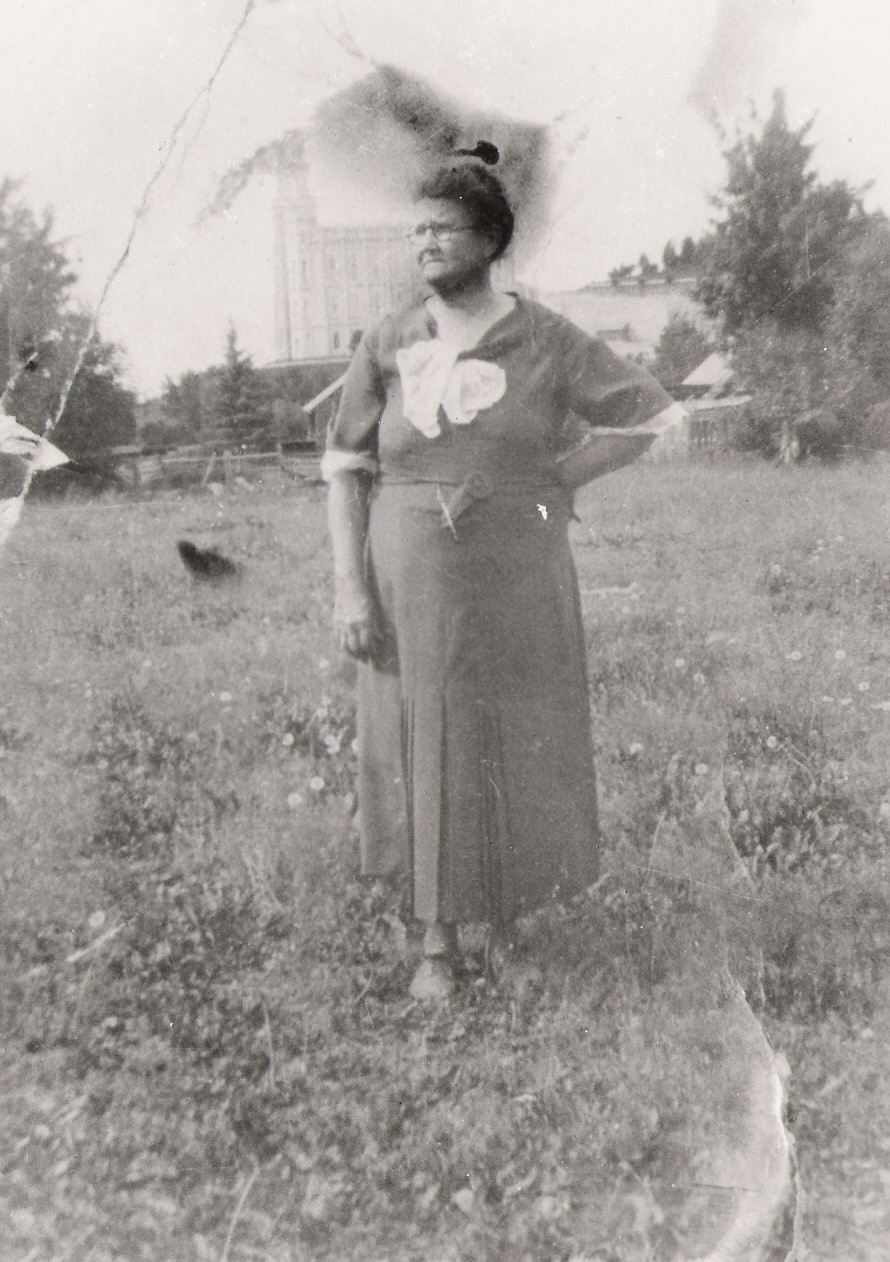
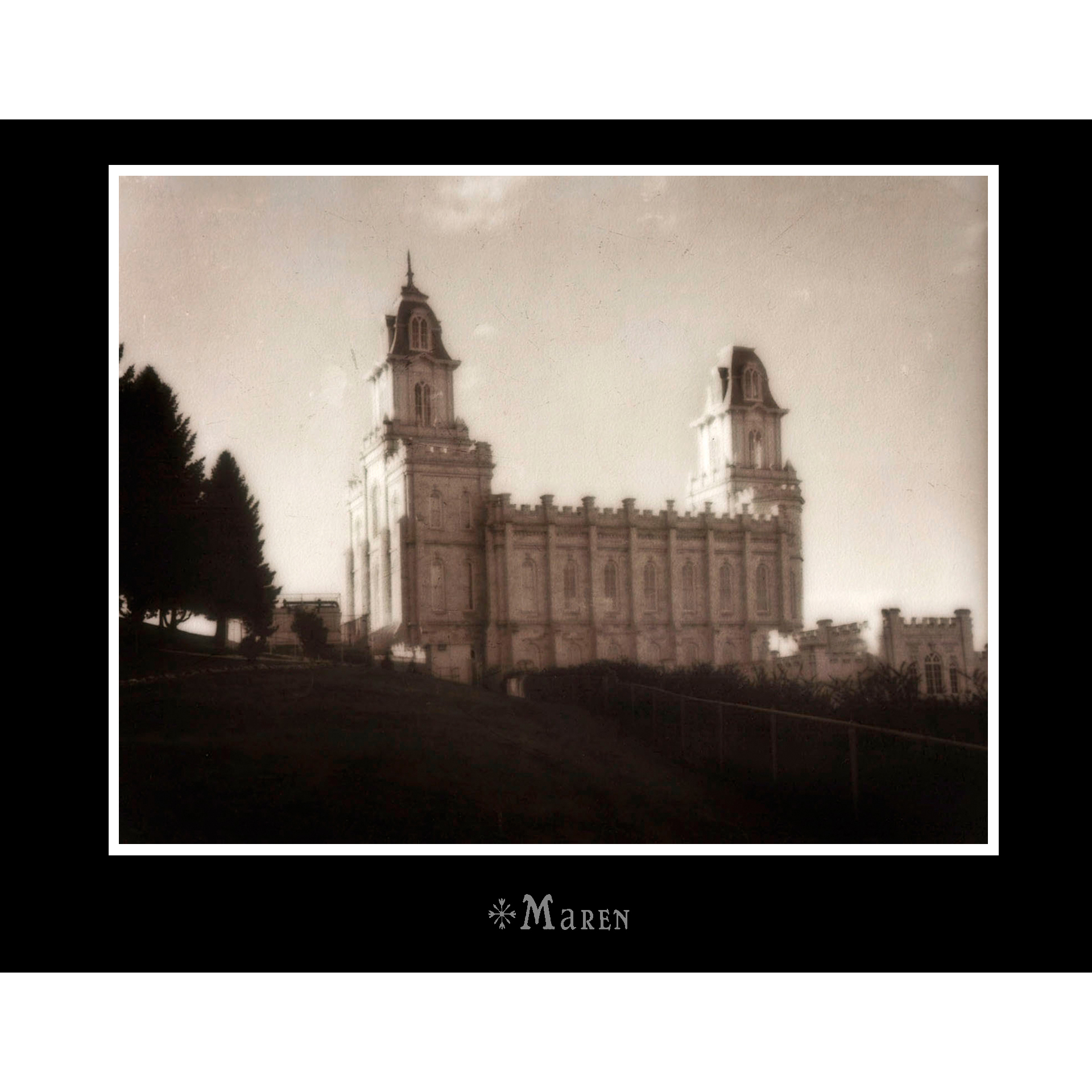
This image shows my great-grandmother Sarah Day Hall standing at her front gate in Manti, Utah, in the 1930s. In her workaday clothes, behind her sagging fence, the life of this Mormon matriarch would seem not to have changed much from her earlier sharecropper’s life in Alabama. The second image, though taken in her inelegant back pasture, shows how far she has really come from those earlier times: She can wear her best dress on Sundays to meet with the Saints, in the shadow of the House of the Lord. Read More
-
•
•
4 responses
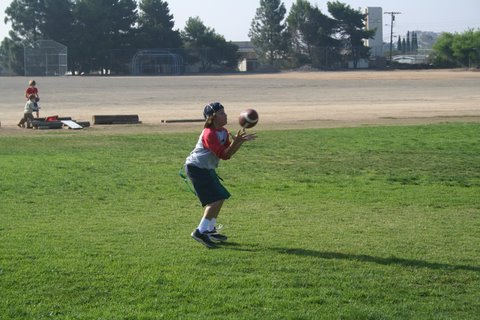
Isn’t that a great catch? Now take a look at the whole set of photos, as photographed by a beautiful woman (who knows the photo series coordinator): Read More