-
•
•
41 responses
Conductinng: Elder Henry B. Eyring Elder Quentin L. Cook: Lamentations of Jeremiah: Beware Of Bondage Turning from the worship of the true and living God and worshipping false gods like wealth and fame and engaging in immoral and unrighteous conduct result in bondage in all its insidious manifestations. These include spiritual, physical, and intellectual bondage and sometimes bring destruction. Bondage, subjugation, addictions, and servitude come in many forms. They can be literal physical enslavement, but can also be loss or impairment of moral agency that can impede our progress. Addictions that impair agency, contradict moral beliefs, and destroy good health… Read More
-
•
•
President Dieter F. Uchtdorf conducting. President Henry B. Eyring: To My Grandchildren I have seen those same tears of happiness in the eyes of someone who recounted the words of an apostle of God: He had said to her, after a searching and tender interview: “I forgive you in the name of the Lord. He will forgive you in His own time and in His own way.” And He did. Read More
-
•
•
President Henry B. Eyring conducting. Elder L. Tom Perry: The Doctrines and Principles Contained in the Articles of Faith This doctrine is to the Church like a battery is to a cell phone. When you remove the battery from your cell phone it becomes useless. A church in which true doctrine is no longer taught is similarly useless. It cannot guide us back to our Heavenly Father and our eternal home. Read More
-
•
•
President Uchtdorf conducting. President Henry B. Eyring: Sustaining votes of the General Authorities and Church Officers Read More
-
•
•
2 responses
President Eyring conducted this opening session. President Thomas S. Monson: Welcome to Conference I am happy to announce that two weeks ago the membership of the Church reached fifteen million. It has scarcely been one year since I announced the lowering of the age of missionary service. Since that time, the number of full-time missionaries serving has increased from 58,500 in October 2012 to 80,333 today. What a tremendous and inspiring response we have witnessed! Now is the time for members and missionaries to come together, to work together, to labor in the Lord’s vineyard to bring souls unto Him.… Read More
-
•
•
Lorenzo Snow lesson 19 highlights several purposes for missionary work in its collected statements from Snow’s discourses. Clearly bringing the gospel to others is the chief purpose of this effort. Snow also suggests in these statements that missionary work is a sacrifice that missionaries make when they are sent out into the world. Perhaps the sacrifices that Snow himself made taught him the value of missionary work and the sacrifices made. Snow’s sister evidently thought these sacrifices were important, since she made them the subject of the following poem. Read More
-
•
•
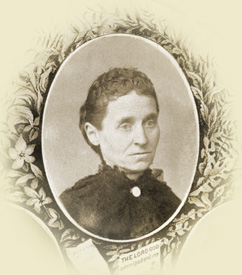
Often when we discuss the principles of welfare today, we talk as if the whole idea of welfare developed in the 1930s, along with the current program. In reality, before the current program caring for the needy, poor and promoting self-reliance were largely the purview of the Relief Society. And so it is a Song of the Sisters of the Relief Society (familiar today since it is the poem on which the current hymn, As Sisters in Zion, is based — Julie also posted here on Times and Seasons about this poem) that I present below to help us understand… Read More
-
•
•
3 responses
In Mormonism our definition for the term Prophet is usually more specific than that employed outside of the Church. To us, a prophet is not only someone who has been inspired to prophesy, but it is also the president of the Church, the leader called to preside over the membership, the person who is to receive revelation for the Church, the chief teacher and the chief person who testifies of our Savior. There are other prophets, but we focus on THE Prophet. We didn’t always mean this in quite the same way–at least before 1848 THE Prophet was Joseph Smith,… Read More
-
•
•
The place of Utah in LDS history is occasionally a topic of lessons like Doctrine and Covenants Gospel Doctrine lesson 36. And while today not all church members live in Utah or want to live there or feel that it is a place to admire, still, it is hard to argue with the fact that Utah played an important role in the formation of what Mormonism is today. As the lesson observes, the pioneers went to a place that no one wanted, a veritable desert, and created an impressive civilization. Its hard to say what they would think of Utah… Read More
-
•
•
2 responses
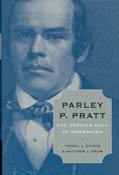
I recently finished reading Parley P. Pratt: The Apostle Paul of Mormonism (OUP, 2011), by Terryl L. Givens and Matthew J. Grow. Most Mormons know Pratt by name from reading the Doctrine and Covenants. A few Mormons have read Pratt’s autobiography, which gives some idea of the extent of his missionary travels, but provides little detail about his influential writings or his busy family life (he had 9 wives and 23 children at the time of his death). Any reader of this biography will come to appreciate just how significant a role Pratt played in the early LDS Church, almost… Read More
-
•
•
2 responses
The world today treats leaders with honor and deference, giving those who manage to become leader of government and society the benefits available to the rich, while shielding them from many of the cares of life, and, at times, from their own errors and sins. Lesson 18 in the Lorenzo Snow manual makes it clear that such benefits and deference are not what Church leadership are about (and I wonder if governmental and other leadership shouldn’t also avoid these trappings). Instead, Church leadership is about serving others, and whatever benefits from that leadership should come after this life. The following… Read More
-
•
•
4 responses
In recent years the attention on the tragedy of the Martin and Willie handcart companies seems to have increased. Their situation and rescue has been the subject of books and movies (and lessons) in a process that seems to mythologize the events. The current lesson (#35 in the Doctrine and Covenants Gospel Doctrine manual) explores the saving nature of the rescue, and compares that to the Savior’s atonement and our own responsibility to save those who are lost. The following poem helps to set the stage for this discussion, describing the difficulty and the courage necessary to face it. Read More
-
•
•
38 responses
So I had every intention of posting the next installment in the Approaching Zion Project today. But Labor Day weekend (and, specifically, houseguests, the Chicago Jazz Festival, and a Cubs game) intervened and, well, I’m not ready. But Monday night’s dinner with our guests brought up a question, and I thought I’d ask for an unrepresentative sampling of answers. Read More
-
•
•
3 responses
When we discuss the Mormon trek, the focus is almost always on the physical suffering that many of the immigrants endured while traveling west. While certainly the physical struggle to cross the plains (covered in Doctrine and Covenants Lesson 34) was difficult, the pioneers suffered in other ways also. For example, many left family behind, generally compounded by their conversion to Mormonism, and often assuming that they would never see their family members again. The poem below describes just such a situation. Read More
-
•
•
Many of our hymns have a martial air to them, often echoed in their messages. We are called “Christian Soldiers,” marching on to war, and we call to the “Elders of Israel” to join the campaign. And often the Priesthood is called “God’s Army” in an attempt to emphasize, I suppose, its size and power and the brotherhood we often feel in the priesthood. The following poetic excerpt not only captures some of that brotherhood, but also explains clearly that this “army” is not a military, but something far different, more like what is described in Lorenzo Snow lesson #17.… Read More
-
•
•
We often make assumptions about the past based on our perspective today, and the current Gospel Doctrine lesson about Brigham Young and succession in the presidency is no exception. We know that the senior member of the Quorum of the Twelve becomes the new Prophet, and it is easy to assume that this was always understood. But following the martyrdom of Joseph Smith, that question was far from clear among many members of the Church. Even six months later, when this poem was written, those members who followed Brigham Young often assumed that he would remain president of the Quorum… Read More
-
•
•
[I’m sorry for the delay in getting this posted. I’ve been traveling a lot the past week.] The martyrdom of Joseph Smith was a shock to his people and one that, as their successors, we still remember and still feel. But in the days following his assassination, the reaction of Church members was one of outrage. While we today see the martyrdom as “sealing his testimony,” then the members of the Church saw this as a failure of the state, with a feeling that the state was somewhat complicit in these murders. But despite that the brothers were immediately seen… Read More
-
Bloggernacle+, Essential Texts in Mormon Studies, Latter-day Saint Thought, Liberal Arts, Life in the Church
•
•
43 responses

As summer ends, my time to engage with Nibley’s social criticisms has begun to return. Of course, I say that the week before classes begin, so a couple things I want to point out before we get started: first, this is a long, detailed chapter. Read More
-
•
•
22 responses
It was January 5, 1982, the day United States District Court Judge William R. Overton issued his memorandum opinion in McLean v. Arkansas Board of Education. Plaintiffs challenged an Arkansas statute that required Arkansas public schools to “give balanced treatment to creation-science and evolution-science.” The Court found that “creation science has no scientific merit or educational value as science” and that “the only real effect of Act 590 [the Arkansas statute] is the advancement of religion.” As such, it violated the Establishment Clause of the First Amendment and was struck down as unconstitutional. Langdon Gilkey, a theologian who testified at… Read More
-
•
•
46 responses

After nine years as a stay-at-home mom, I recently got a full-time job. I’ve been working for a month now, which seems long enough to state some preliminary observations about how things are going. The short answer is, I am happier than I’ve been in quite a while. I have way more patience for my children when I come home at six o-clock from an office full of adults than I did when I was at home with them all day. My emotional resources are magically magnified by being away from home during the work-day doing something interesting and creative,… Read More
-
•
•
2 responses
When we speak of unity it is often difficult to understand exactly what we need to do to achieve it. The teachings of Lorenzo Snow in the current Priesthood/Relief Society lesson manual (lesson 16) try to address this, but I’m not quite sure that they give the specifics needed. Should we be united politically? What does such unity mean? There are many elements of society today that are by nature divisive, and politics is clearly one of them. Does the gospel offer a better way to decide political questions, a more united way? The author of the following poem seems… Read More
-
•
•
The doctrine of eternal marriage, discussed in D&C Gospel Doctrine lesson 31, is clearly tied to the priesthood (the authority by which such marriages are performed) and to salvation, for salvation in the eternal kingdom is dependent on sealing, both to parents, to spouse and to children. The following poems addresses the role of sealing in our understanding of priesthood and of salvation. Read More
-
•
•
4 responses

There have been LDS art contests in the past, either sponsored by LDS church institutions or by private organizations, but none have yet focused on Heavenly Mother as their theme. That changed this month with the newly announced A Mother Here Art and Poetry Contest. Aiming to stimulate the visual and poetic expression of Heavenly Mother, as well as highlight the nascent divinity that resides in women as well as men, monetary prizes in excess of $2200 will be awarded to the best entries. The contest accepts two-dimensional art submissions to be considered in its visual arts awards, and all… Read More
-
•
•
8 responses
Over at Keepaptichinin, Amy Tanner Theriot has a wonderful post talking about family associations, and providing some guidelines for how to put together a successful association. In the post, she mentions that family associations can qualify as 501(c)(3) tax-exempt entities. At the mention of Code sections (and revenue rulings!), my ears perk up, and I thought I’d give a little more information about the tax side of such organizations. But before you read my post, you need to read Amy’s. Because everything I know about family associations I learned reading her post, then doing a little Westlaw research. Because of… Read More
-
•
•
2 responses
Our doctrine of performing ordinances on behalf of the dead is unusual among the religions of the world. Many religions pray for the dead, Mormonism actively performs the same saving ordinances that the living must have. These teachings were introduced during the Nauvoo period, and baptisms for the dead were performed in the Mississippi at that time, until the basement of the Temple was complete and ordinances could be performed there. At that point Mormonism learned that these ordinances belonged in the Temple, and this understanding was captured in the following poem by William Wines Phelps, written for the dedication… Read More
-
•
•
For many members of the Church the most intense period of “faithful, energetic service in the Kingdom of God” during our lives is our missionary service. So it is no surprise that many of the ideas expressed in the Teachings of the Presidents of the Church: Lorenzo Snow lesson #15 are characteristics that we associate with missionaries—service as “ambassadors of Christ,” and “helping others receive salvation” are quickly listed as things that we too should adopt in our service in the Kingdom. Often we use missionary service as an example for how our own service should be conducted. But, this… Read More
-
•
•
3 responses
I’ve long thought that Nauvoo was a kind of Mormon Camelot, a shining, hopeful city built on consistent, righteous principles that fell apart amid internal dissension. While I wouldn’t push the analogy too far, I think it kind of works on the surface, especially given the standard portrayal of Nauvoo in lessons like Doctrine and Covenants Gospel Doctrine lesson 29 and in the following poem. Read More
-
•
•
Despair is, I think, one of the most difficult parts of the human condition. While the sources of our despair today are very different from those suffered by the early saints, the feelings are just as real and difficult. Where do we turn for peace? The following poem explores the despair we all feel—the same discussed in Doctrine and Covenants Gospel Doctrine lesson #28—and provides an answer to it. Read More
-
•
•
16 responses

Yes. I mean, I don’t know exactly, but still, yes, probably. Read More
-
•
•
2 responses
What do we mean when we talk about help from God? Our religion, and lesson 14 in the Lorenzo Snow manual, teaches us that we should rely on God for the help. Yet when we think about how this help actually works, it isn’t about God doing things for us, at least not usually, its about the guidance and strength that he gives us so that we can do what needs to be done ourselves. That is the strength that is described in the following poem. Read More