Latter-day Saint on Joe Rogan

•

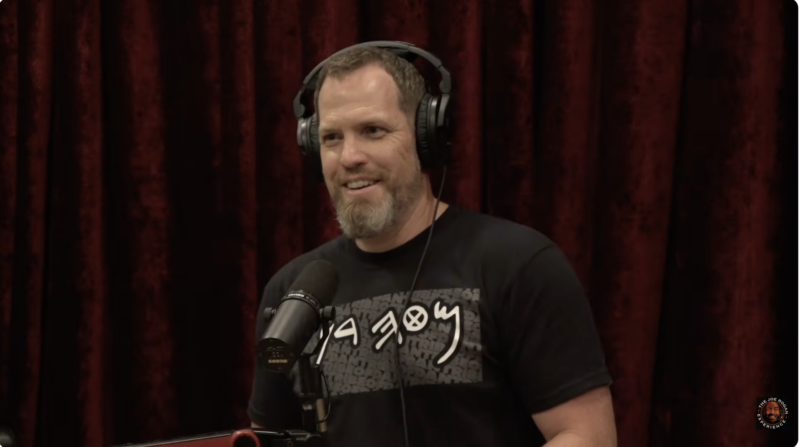
About a year and a half ago I wrote a post speculating about different possibilities for Latter-day Saints going on Joe Rogan. Well, yesterday we finally got one, Dan McLellan of Data over Dogma fame. Dan used to work for the Church in their translation department, and while he very occasionally defends our Latter-day Saint theological eccentricities  against attacks by Evangelical types, he is also on the record as not believing in LDS truth claims.

In terms of the interview, I used the “Ask Gemini” function to tell me the timestamps where he talks about Mormonism: “Dan McClellan discusses joining the LDS Church (The Church of Jesus Christ of Latter-day Saints) at the age of 20 (0:46:01). He shares how his decision to serve a two-year mission in Uruguay sparked his passion for studying the Bible, its history, and ancient languages, which eventually led him to pursue a career as a biblical scholar (0:46:04 – 0:46:37)” (and yes, I confirmed those timestamps).

So it doesn’t look like the Church really came up much. I listened to the first bit while doing dishes last night, and I haven’t finished it, but you could tell Rogan was going in his typical direction of “isn’t is so weird that these civilization were so advanced, wink wink” and Dan pushed back.

On one hand I totally called it, but on the other hand I noted in my prognostication last year that Dan is left-wing enough he might very well might not appear on Rogan out of principle, so I got that wrong. So welcome to the manosphere Dan!


Comments

31 responses to “Latter-day Saint on Joe Rogan”

  1. Not a Cougar

    Stephen, first, thank you for highlighting the interview. I listened to it in its entirety, and Dan was his usual thoughtful and thought-provoking self. I also agree that he gently but firmly pushed back on Joe’s instinctual desire to veer toward “extreme minority” (i.e., weird, unprovable, and extremely unlikely) explanations for ancient history.

    That said, I’d push back on your statement that “[Dan] is also on the record as not believing in LDS truth claims.” He’s certainly on record as stating that his scholarship does not support the Church’s truth claims (a quick search pulled a quote that has him saying his scholarship “almost unilaterally conflicts with and undermines LDS dogmas”), but that’s a fundamentally different statement from whether or not he is on record as personally not believing them. In fact, he’s been very clear about the fact that he does not speak about his personal beliefs in public fora, and he reiterated that position towards the end of this interview when Joe asked him about how his scholarship impacts his personal beliefs. If you have a public quote from Dan on his personal lack of belief in LDS truth claims, I’ll be happy to withdraw my objection to your statement above.

  2. Stephen C

    Sure, I guess? But if you say “the data contradicts LDS truth claims” I’m fine taking that meaning that he doesn’t believe the truth claims. I don’t think that’s much of a stretch. I take his reticence to be mostly about what he *does* believe, but it’s not that hard to parse out what he *does not* believe on his channel on LDS and other religious topics.

  3. Not a Cougar

    Stephen, if that’s the case, then I’d urge you to be a little clearer that you have made a conclusion regarding his beliefs based on his public scholarship rather than giving the incorrect impression that Dan has publicly stated he is a nonbeliever. If belief is a choice, as Elder Neil L. Andersen taught in his talk “Faith Is Not by Chance, but by Choice,” from the October 2015 General Conference, then, for all we know, Dan chooses to believe in spite of his and other’s scholarship . Isn’t that exactly what we’re asked to do when we’re told by multiple General Authorities to doubt our doubts? I’d be hesitant to make conclusions about someone else’s personal beliefs, especially when they are on record multiple times saying that they don’t talk about their personal beliefs in public. Also, thanks again for highlighting the interview.

  4. Vic Rattlehead

    Hmm. I was rather hoping Brad Wilcox could go on there, I am sure he would have some interesting answers as to why Black people were not able to have the Priesthood for so long.

  5. People just can’t quite grasp Dan’s explanation that his public statements are either from his own academic work or are the academic consensus of the data and not necessarily his own private faith based beliefs.

    The only thing we know of his private testimony is that he hasn’t expressed it publicly and that he is a member of The Church of Jesus Christ of Latter-day Saints.

    So you really need to retract what you wrote regarding him being on record of not believing the LDS truth claims because its factually incorrect.

  6. Not a Cougar

    From Dan’s Twitter account today:

    “Because folks are asking: You will not hear about my personal religious beliefs on any social media, only my scholarship. When I say, ‘The data indicate that [claim X] is [true/false],” I am *NOT* saying “It is my personal religious belief that [claim X] is [true/false].’ “

  7. Stephen C

    “So you really need to retract what you wrote regarding him being on record of not believing the LDS truth claims.”

    Nah:

    “The data support the conclusion Smith was a false prophet. Why would I have an argument against a claim I agree with?” https://x.com/maklelan/status/1979924790497648857

    “I have consistently and repeatedly stated that the data do not support the supernatural truth class of the LDS church including the historicity or ancient origin of the Book of Mormon.”
    https://www.youtube.com/watch?v=779wB_fGXUE&t=270s

    IIRC There was another bit where he specifically says the evidence doesn’t support the idea that the Church is led by prophecy, but my quick Chat-GPT search of his statements didn’t find it, so maybe it was a false memory.

    No academic article will try to argue for the thesis that “Joseph Smith was a false prophet.” That’s not what academics do; so he can’t say that and then retreat to “I’m just reflecting what the literature says,” that’s clearly his personal interpretation of “the data” since that’s nowhere in the academic literature.

    And that’s fine! I’m not trying to poison the well with members or get him in trouble with anybody. He doesn’t do the “as a Mormon, I think XYZ” thing, so he has the right to privacy about his personal religious beliefs. I think it’s great that our tradition is big enough to include people who are skeptical of its truth claims. (And the fact that a non-believer won the God medal of appearing on Rogan before any of the believing influencers speaks to our inability to break out our inside-baseball bubbles when the gospel should be more capacious, but that’s another issue, although Jacob Hansen appearing on Alex O’Connor’s podcast is maybe a solid silver https://www.youtube.com/watch?v=q_E4K_6O1LY).

    The fact is that he’s honestly answering a question that’s posed to him. If he were to make his channel specifically about trying to show the data debunks the BoM or whatever then yes, that might be disciplinary council territory, but I don’t think anybody would really have a problem with his skepticism when he only incidentally touches on his Mormonism specifically when pressed on it (often by conservative Christians who suspect he’s just playing the long game to undermine traditional Christian beliefs for his Mormon puppet masters in Salt Lake).

    Not a Cougar: I was about to his submit when your post went up. If your thing is literally data>dogma, and you say data=X, then sure, maybe in that one case “dogma” (personal religious beliefs) might be >data. He might be a young earth creationist who thinks God put dinosaur bones in the ground to test us, and he’s only speaking about the primacy of data in a hypothetical, theoretical sense, but come on.

  8. Not a Cougar

    Stephen, you say that “it’s great that our tradition is big enough to include people who are skeptical of its truth claims,” and maybe you really do think it’s great that there are active, attending Latter-day Saints who are vocal about the historical problems with the Church’s truth claims, but come on.

    As to Dan’s two statements you provided above, I’d prefer that Dan explain himself, but, short of that, I read the first statement as taking the “prophet” title literally and looking at actual prophecies rather than what we Latter-day Saints generally think of when we call someone a prophet (we sustain the First Presidency and Quorum of the Twelve as prophets, but we certainly don’t require them to prophesy as a requirement of that calling). It’s certainly no secret that Joseph Smith’s prophecies were hit and miss. And, yes, I understand that there are apologetic arguments that try to explain and contextualize the misses, but apologetics are not facts and data.

    As to the second statement, he’s simply repeating the majority position as to whether the archaeology of the New World supports Book of Mormon historicity (spoiler, it doesn’t support it). That’s not a controversial position. I can and do believe the Book of Mormon to be the word of God, but I fully admit that the vast majority of archaeologists do not accept the Book of Mormon’s description of the New World as a historical account. I don’t expect my bishop or stake president to try to grab my temple recommend simply because I admit that.

  9. Stephen C.

    That’s not what he said though. “Archaeology does not provide positive support for Book of Mormon claims” is a much more measured, and frankly responsible, statement than the sweeping “the data does not support the truth claims of the LDS Church.” “Joseph Smith was a false prophet” is not, “he occasionally made prophecies that were hit and miss.” And yes, apologetics can be “data” unless you’re not open-minded enough to accept any apologetics argument a prior.

    Sorry, but again if your whole thing across hundreds of movies is about how data is better than dogma, and how people should be less wedded to the latter than the former, then it’s a reasonable supposition that saying “the data contradict X” means you’re saying that’s probably not true, even if you technically add a disclaimer; that’s a not a get out of jail free card to the obvious implications. I respect his decision to not go public with his positive religious beliefs, but only somebody who’s really trying to use some special pleading and torturing “the data” of his statements would think that he’s a believer.

    Also “maybe you really do think it’s great that there are active, attending Latter-day Saints who are vocal about the historical problems with the Church’s truth claims.” He’s not that vocal though. As noted, he occasionally responds on the issue when pressed, so we’re not talking about somebody who challenges truth claims in Sunday School or has a website devoted to debunking the Church, so sure, that’s within the window of it being great that they feel they can be a part of it.

  10. Not a Cougar

    Stephen, one last thing and then I’ll leave this alone. Dan posted the following on his Twitter account yesterday:

    “There is no belief to which I hold that I would not be perfectly happy to publicly criticize. In fact, I’ve done it many, many times.”

  11. Stephen, the quote in your last response omitted a very important word: “The data does not support the **[supernatural]** truth claims of the LDS Church.”

    I’ve heard similar statements from numerous faithful LDS apologists. The argument generally goes something like this: There is no scientific evidence establishing the supernatural claims of the Church, which is precisely why those claims must ultimately be accepted on faith.

    In the end, you’re still drawing a conclusion about his personal beliefs based on his public statements, despite his explicitly denying that those statements represent his personal views. Your conclusion may be correct, but it may also be wrong.

    Perhaps the more reasonable conclusion is simply that his statements weren’t as carefully qualified as they could have been. But you seem to be arguing that, even if your interpretation is wrong, you’re nevertheless justified in publicly attributing beliefs to him that he explicitly denies holding.

    Ironically, there’s something rather biblical about that kind of reasoning.

  12. Israel Gonzalez

    Dan McLellan says a lot with his channel’s name when he uses the word “Data”. That is inconsistent with his interpretation of the available data. Several times during his arguments, what he presents is his opinion mixed with some data. It is an informed opinion, but we must be honest and acknowledge that it is still an opinion. In general, his views reflect the progressive wing of academia. If you contradict him with data, he does not accept that perhaps his opinion is not the truth, or that the “data” is partial and that traditional or future points of view are still valid. His tendency is to present his opinion as dogma, as final knowledge—which is exactly what he claims to want to avoid. I know that sells, but my piece of advice for him is to be more open and less contentious.

  13. Not a Cougar

    Israel, that’s an interesting perspective on Dan’s work, and I’d like to learn more. Can you link to any examples of his Youtube videos, Twitter exchanges, or podcast episodes where he refuses to accept or engage with objective data that conflicts with or contradicts his position?

  14. Stephen, I’m going to join with the crowd here: it’s presumptuous and inappropriate for you to opine on whether someone else believes in the Church’s truth-claims. It runs deeply against the love for neighbor we’re commanded to have, and deeply against the mandate that we have to not judge AND to not judge unrighteously.

    I don’t know the details of your testimony, I don’t know the details of Dan’s, and you don’t know the details of mine. If you, or Dan, or I, feel like sharing those details, we certainly can. But uninformed assertions, based on our interpretation of what people say about other topics, is certainly not Christlike.

  15. Even if we stipulate that Dan is a faithful, believing church member, it’s still a crummy move to put the weight of one’s discipline on the side of doubt in public, and then refuse to explain anywhere how he gets from that point to personal devotion. It takes work to explain how data fit with belief, and there may be professional costs for doing so, but it’s a crummy deal to leave that work and those costs up to other people. Being witnesses at all times and in all things and in all places is an obligation on the same level as mourning with those who mourn and comforting those in need of comfort, and it doesn’t make an exception for podcasts and social media.

  16. You do good work. So does McClellan. Sometimes you thrown down this very specific vibe, the term that comes to mind is “Nibley Negativity.” This nerfs the impact of your voice for a lot of people. I think your overall effectiveness and reach would improve without it. Keep doing good work.

  17. Restricted Listening

    Hilarious to me that all the commentary is about Dan, and not the other guy behind the microphone.

    Surprised the other guy even came up on this blog.

  18. I want people to believe the restored gospel of Jesus Christ. That’s important to me. That doesn’t mean I don’t talk about my doubts and the associated evidence, but it does mean I talk about them in a way that tries to increase faith rather than decrease it, like also presenting the (stronger) evidence for what I believe.

    I’m not interested in judging Dan McLellan–I know next to nothing about his work–but I would suggest that wanting other people to believe is a hallmark of a faithful Latter-day Saint (seconding Jonathan).

    (I use “evidence” rather than “data” deliberately.)

  19. I agree with RLD that I want people to believe in the gospel of Jesus Christ. I used to believe that meant inviting them to participate in worship with The Church of Jesus Christ of Latter Day Saints. It honestly kind of breaks my heart that I don’t any longer feel safe in issuing that invitation. These posts and discussions are a pretty good example of why I can’t encourage anyone to participate—I can’t know which church I will be inviting them to. The gospel is vitally important. The path of discipleship leads us to be better people. And the meanness, judgment, and shunning are real. I’m a lifelong, committed member. I have all the “spiritual credentials” marking me as being successfully on the covenant path. Yet one of the few things I’m certain of is that I’m not welcome at church. It doesn’t matter how sincere my testimony is. All that matters is that it’s not the right kind of testimony. This post reinforced that conviction.

  20. Being openly Mormon in academia and social media circles means paying twice, in skepticism from colleagues and listeners and in suspicion from members, and it’s fair to be frustrated when someone with standing in both worlds seems to skip the hard part.

    But I think these comments assume more than they show. Describing what the data show isn’t “putting weight on the side of doubt” unless faith depends on the data coming out a certain way. And “refuses to explain anywhere” is a strong claim.

    Has he declined to talk about his faith, or just not given the specific account you’d want?

    I’d also read the Mosiah 18 comparison differently. Mourning and comforting are things we do for people in front of us.

    Being a witness means bearing testimony of Christ, and that can take many forms. It doesn’t clearly include a duty to publish a theory of how scholarship and devotion fit together, on demand, to an audience that will grade the answer.

  21. Lion of the Lord

    I more or less agree with Stephen and Israel Gonzalez about McLellan and his supposed “data”. If I’m being honest, they are actually being very fair and just too him, or to use scripture, they are judging him with righteous judgement.

    To those splitting hairs about data being different from ones opinion, I would like to remind you that they are very interconnected and often inform each other. Depending on what data or information you use, you either become more right or left wing politically, morally, etc.

    Lastly, the disunity and contention currently found within the church has mostly been the Church’s own doing. Up to the presidency of President Monson one could clearly see that the Church was more or less right of center when it came to most social and political issues. (Prop 8, most GC talks, etc.)

    Under President Nelson, the Church became very moderate, and in some ways Left leaning. This middle of the road approach has upset both sides. Both wanting the leadership to agree with them, and both disliking the milk toast social takes.

    Put simply, as found within Revelation 3: 15-16, they want to be told if their views are either hot or cold, and dislike not being told. Personally, I want the Church to choose a side and let the chips fall where they may.

  22. If I said or wrote something that made someone wonder about my belief, and that person asked me about it, then providing a clear witness would be an urgent and crucial obligation. As much as someone in mourning or in need of comfort, answering questions about our faith is something we do for the person in front of us, especially if we have plausibly raised those questions.

    LotL: No, as I have argued for a while, the Church is consciously choosing center-ish positions and rejecting far-left and far-right views. In many cases, it’s because our political extremes have collectively lost their minds and the Church is not interested in following along. I can’t speak for anyone else, but I like our centrist Church a lot and I think moving towards the center is the right move.

  23. Stephen C.

    So if just finished listening to the whole
    podcast, and I actually think this particular podcast was great vis-a-vis the Church. It was brought up with a light enough touch but in a favorable enough light that it was about as good as could be hoped for, even coming from a nonbeliever :)

    (Incidentally, it’s interesting that everybody got hung up on the issue of his beliefs which I didn’t mean as any kind of attack or jab, but nobody commented on the last sentence which I did very much mean as a bit of a jab).

  24. Lion of the Lord

    Jonathan Green:

    Keeping Elder Cooks words in mind from GC, I would like to kindly push back on some of what you said. Though the Church has moved more to the center, I still see it as more conservative then the Republican Party on certain issues, such as sexuality.

    From where I am standing, I mostly see Trump and the Republican Party as moderate, with its stance on immigration being one of the only things that is Right of center.

    If I’m being honest with you, I only agree with about 50% of Republican policies, mainly because I don’t see them as being all that conservative, it having acquiesced on many social issues, along with it being weded to big business.

    As for Bishop Caussé’s environmental talk, from the blog post you shared, I am probably one of the few right of center members that didn’t hate it, but actually saw it as being conservative in nature.

    I mainly get this view because I’m a conservative in the vein of Russell Kirk, who wasn’t a raging capitalist, and cared about the environment. I personally hate how anti environment the Right has gotten, but that’s mainly because the Left has gone bonkers. Defacing Stonehenge, along with a Van Gough painting did not help.

    Anyway, sorry for being so long winded, and I truly hope you have a great rest of your Sunday.

  25. @PWS:

    “The gift of testimony is deeply personal. It is received in the intimacy of our relationship with God and shaped according to our unique experiences, circumstances, and needs….Your testimony may be different from mine or that of other family members or fellow Saints. Please trust it, nurture it, and bear it, because it is uniquely yours.” –Elder Gérald Caussé (last week)

    “Preserve, then, the freedom of your mind in education and in religion, and be unafraid to express your thoughts and to insist upon your right to examine every proposition. We are not so much concerned with whether your thoughts are orthodox or heterodox as we are that you shall have thoughts.” –President Hugh B. Brown

    There will always be voices calling for orthodoxy in the Church as well as voices that value differences. That’s rooted in human nature and some of the fundamental ways people differ. At the leadership level, it feels like those who value differences are ascendant, or at least ascending, perhaps because exposure to the global Church makes them realize the gospel doesn’t make everyone the same. But your ward may vary.

    I hope you’ll insist on participating in your ward whether you’re welcome or not. It’s your Church too. And in my experience, if you contribute to the community you’ll eventually convince people you really do mean well and will be accepted. As someone told Eugene England, “Gene, you’ve got to keep your hair short and always do your home teaching, to show you’re really OK despite your liberal ideas.” (I’m not endorsing the hair part.)

    Sing in the choir if you can. Not only is it a good way to contribute; you’ll find good people there.

    @Lion of the Lord: Seems to me that as the mainstream right has lost its way in the United States it has become easier to see that the Church was independent of it all along. You’re absolutely correct that it doesn’t work to try to fit the Church onto the left/right spectrum. The pluralism that President Oaks endorsed in his recent speech on the Constitution used to be a bedrock of the American creed, but now it doesn’t really fit in either party.

  26. RLD, I have a strong testimony. I’m active and committed. I’m not going anywhere. I’m just so tired of the meanness!

  27. “I’m just so tired of the meanness!”

    Amen.

  28. I was reminded a little when reading the comments of when the Book of Mormon musical first came out–15 years ago, maybe–and journalists were looking for reasons why it was okay to like a musical that made fun of a religion. At some point, someone invited John Dehlin to an early performance of BoM and the NYT basically did an entire story saying, “Hey, this Mormon liked it, so it’s okay to make fun of them!” (Or that may just be my jaded recollection; it’s been a while.) And I remember thinking to myself that even if he was still on our books at the time, Dehlin wasn’t really much of a member anymore and seemed to have left the faith in all but word, so maybe he wasn’t the best member to represent us as as whole. And I knew all that because I’d been “on the blogs” for a lot of years before that, including John’s blog.

    FWIW, like what I’ve seen from Dan McLellan, though admittedly I’m not even a scholar, let alone a Biblical scholar. But like the Dehlin/NYT story, to the extent McLellan is going to be held out representative of what Mormons are or believe to the world as a whole, I think it’s fair to ask if he’s even still believing. What I admittedly don’t know is the extent to which people actually associate him with the Church.

  29. Israel Gonzalez

    Just one example, in “marriage and sexuality” on celibacy.

    Professor Pablo A. Torijano of the Complutense University of Madrid aptly points out, the consensus of the “Third Quest for the Historical Jesus” (with scholars such as E.P. Sanders, John P. Meier, and Geza Vermes) insists that Jesus and his first followers operated entirely within the parameters of Galilean Common Judaism.

    • Marriage was the absolute norm: In that environment, marriage was not one “lifestyle choice” among several; it was the connective tissue of the economy, family survival, and religious duty.

    • Jesus’s celibacy: Although the historical Jesus probably did not marry—which was a striking eccentricity in his context—his central message was not an institutional endorsement of celibacy, but rather the apocalyptic proclamation of the imminence of the Kingdom of God. The first disciples (such as Peter, whose mother-in-law is explicitly mentioned in the texts) were married men who lived according to average Jewish customs.

    McClellan adopts a macroscopic and diachronic perspective (across the entirety of biblical history).

    In attempting to dismantle the modern theological argument for a “single, permanent biblical design for marriage,” McClellan assembles all the pieces that appear in the New Testament (including Paul’s letters and second-century texts) to demonstrate that the Bible contains contradictory narratives. However, in doing so, he flattens the sociological reality of 30 AD, where celibacy did not have nearly the same institutional or social status as marriage.

    So, was there diversity? Yes, of course. Can you flat to what Dan does in his videos? Nope. You must ponder and be honest with proportions, and explain what represented the most to the society in different times, especially in the inter-testamentary times (Also that being a paradox in those videos because Dan jumps from Mesopotamia to biblical time, to Jesus’ time even to rabbinic time… it’s a mess).

    And this affects the Petrine Church (term used by Antonio Piñero), the original jew christian movement that preserve all Jewish traditions, it exists high chances, in the first century of expecting that Jewish marriage would be the average, the norm in Jesus followers.

  30. If “the data” is as hostile to (LDS) belief as Dan claims, then I’d really like to see him provide the general (or specific) grounds for his continued belief. Otherwise, it’s just fideism.

  31. Not a Cougar

    Israel, I forgot to thank you for posting your example. I’ll see if I can find the episode or episode of Dan’s Youtube channel where he talks about how the Bible doesn’t have a single, permanent biblical design for marriage and report back.

Leave a Reply

Your email address will not be published. Required fields are marked *

This site uses Akismet to reduce spam. Learn how your comment data is processed.