As of about a month or so ago, GPT 5.2 Pro is starting to autonomously solve previously unsolved mathematical “Erdos” problems (a famous set of unsolved problems proposed by arguably-smartest-man-of-all-time Paul Erdos). We’re officially at the point where it can solve math problems we haven’t been able to. However, my understanding is that these are low-hanging fruit problems, but the crowning jewel of mathematical AI is if it can solve the Millennium Problems (prize money of 1 million dollars per problem).
Analogously, we’re kind of starting to get there with writing. In a previous post I did some exploratory AI fiction writing. In my experience, the artsy types are the most sensitive to AI so I’ll get the headline out of the way so they can uncurl their fists: so far I think it’s at the lower tier of what we’d find at, say, Barnes and Noble, but it’s not getting close to the realm of the greats. We’re picking off the somewhat derivate Erdos problems of fiction but we’re a ways away from the Riemann Hypothesis of AI fiction writing (AI music is in the same place).
Of course, putting aside the question of whether it would happen, opinions differ on whether AI superseding humans in the creative endeavors would be a good thing in the first place. I have a fairly nihilistic “author is dead” attitude towards this, but I understand the concern. In a discussion with a friend on this issue I proposed the thought experiment about whether it would be a good thing if we could push a button and generate 100 Godfathers with no human input. I said yes, he said no. I guess we’ll see if that thought experiment ever becomes a reality.
Anyway, while my previous AI writing attempts took the form of 5-7k word short stories because of one-shot output limitations, if you’ve been in the software development space you may have noticed that people can’t shut up about Claude Code or Codex right now. I’m not a software developer, and setting up these systems takes more energy than simply typing into an LLM, but to summarize for us mortals that never took a CS class: while previous AI systems do one-shot requests, Claude Code and Codex can iterate over its own instructions and access files on your computer or in your GitHub repo, so programmers can literally let it run for hours and save them gobs of time that they would have had to have spent manually typing in code.
So I finally got Claude Code running on my desktop and asked it to iteratively write a Mormon horror novel. The prompt I used was
I want you to write a Mormon horror novel. I don’t want it to be anti-Church, but I want there to be character development, subtle messaging about philosophical, religious, or social issues; figures of speech, all the hallmarks of good writing. I know you can only write some at a time, so write up each part then iterate and read the entire work so far to write up the next part, and so on and so forth until we have a 200-page or so novel, and then export it all to a word document file.
It then responded:
I’ll create a 200-page Mormon-themed horror novel that respects faith while delivering genuine horror and literary depth. Let me start with a different premise that explores faith positively while still being frightening.
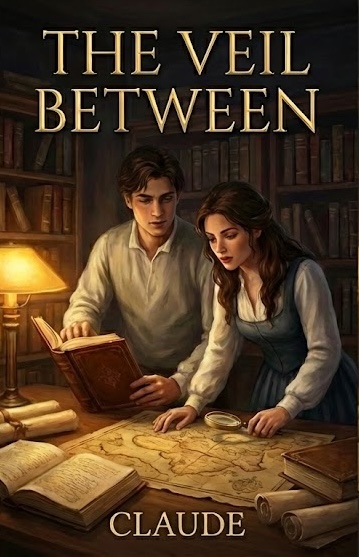
It then “worked” for about 20 minutes writing the book. So with that I give you The_Veil_Between (see link for downloadable file) by Claude. I assume that the vast majority of readers won’t take the time to read the novel, so below is the summary. (At the outset, I’ll note that it flirts with the line of appropriateness when it uses the sealing ordinance as a prop in a horror story, so if I redid it again I’d probably include more caveats and hedges, but still, it’s appropriately circumspect about the temple ceremonies themselves).
The story begins with Elder Samuel Chen, a recently returned missionary who is haunted by vivid, recurring dreams of a dark, malevolent presence lurking within a sealing room of the Manti Utah Temple. His path crosses with Mariana Reyes, a fellow BYU student and returned missionary who experiences the same terrifying visions. Mariana reveals that she possesses a spiritual gift passed down from her grandmother known as ver através do véu, or “seeing through the veil,” which allows her to perceive entities that remain hidden from most people. Together, they begin to investigate the source of these dreams, eventually discovering the restricted, nineteenth-century writings of Elder Matthias Keller. Keller’s journals describe a “taxonomy of darkness” and warn of “vessels”—innocent people who unknowingly carry spiritual attachments into sacred spaces, potentially tearing the veil and corrupting the temple itself.
Through their research, they identify Sarah Murdock, a young convert set to be married in a high-profile multi-family sealing session at the Manti Temple, as a primary target of an ancient entity called a Devourer. They learn that Sarah’s background as a cocktail waitress in Las Vegas and her grandmother’s involvement in Santería folk magic created a spiritual “attachment” that survived her baptism because it was never consciously renounced. Seeking help, Sam and Mariana enlist President Reyes, a former mission president with decades of experience tracking spiritual disturbances, and Elder Hammond, a temple sealer at Manti. They successfully perform an “ancient ordinance” of cleansing on Sarah, during which she uses her own faith and voice to cast out the Devourer.
However, the threat quickly escalates as Elder Hammond detects a new “cold spot” in the temple, signaling a second vector of attack. This vessel is revealed to be Robert Chen, Sam’s relative, who has been manipulated by “Deceiver” entities masquerading as “ascended masters” through his New Age meditation practices. Despite the entities’ attempts to use Robert as a weapon to “liberate” the temple from priesthood control, the team manages to reach his true self, leading to a second successful cleansing. Even with these victories, a sense of unease persists as the group realizes the adversary often uses visible threats as distractions for a more subtle, final assault.
On the morning of the wedding, they identify the third and most dangerous vessel: Sister Hendricks, a beloved and seemingly beyond-reproach temple worker whose family line had been cultivated by the Devourer for over a century. During the sealing ceremony of Sarah and Brandon Murdock, the entity attempts a final breach through Sister Hendricks. Using their combined spiritual gifts and priesthood authority, Sam and Mariana spiritually bind the entity, preventing it from manifesting and allowing the sealing to be completed in perfect purity. The novel concludes with the temple remaining a “house of light” and the protagonists accepting their ongoing callings as guardians against the unseen battles of the spiritual world.
A few points.
- I am impressed at the way it gets little nuanced details about LDS culture right, although there are still some inaccuracies (e.g. the idea that they publish the names of families going through the temple).
- It’s obviously not Salem’s Lot, but more like the Hardy Boys Mysteries or those fun Goosebumps books that R.L. Stine would pump out once a month in my elementary school days.
- I get the vibe that the writing quality declines with length, so that by the end it kind of sounds like a dramatic aspiring middle school writer. I don’t know if this a function of the AI writing or is just how it happened.
- Also, it’s very segmented, although not obnoxiously so. Again I don’t know if this is a function of its AI writing or just happened that way.
- And yes, it’s also a little racist with Santería portrayed as a diabolical faith, but this is mostly because it’s borrowing from the old “Black people’s religions are demonic” trope (e.g. Vodou and zombies) that has become a mainstay of horror.
Comments
11 responses to “The First AI-Written Mormon Horror Novel”
To extend your last point a bit, it also treats Asian religious practices (Robert Chen, ascended masters, meditation) as demonic, so the racism is kind of a pattern.
A larger issue is that the novel’s threats aren’t really the things that church members are scared of. In general, we don’t really spend too much time worrying about folk religion, meditation, or family traditions. It’s just not the stuff to keep you up at night, either as an adult or at Scout Camp. I don’t know if Jay’s Journal made it into the training data.
My guess is that Claude is giving us a Mormon-flavored take on American Christian fiction – which is an impressive accomplishment for a machine! – but that’s not enough to produce Mormon horror that really works.
Yes, with my other short stories you saw the same thing: it basically weaved standard horror tropes into an LDS context without coming up with authentically Mormon horror tropes. I suspect that until we get to AGI the creative products most at risk from AI are the derivative ones. (That being said, most of the stuff at B&N and coming out of Hollywood are derivative), but yes, it’s not very good at generating new genres or ideas.
Increasingly high levels of AI slop is not necessarily bad bad thing, of course. In a lot of other contexts, something that’s extremely fast, basically free, and good enough for most purposes means serious productivity gains. It just raises questions about viable career paths and long-term societal stultification that no one has quite figured out yet.
Our cosmology isn’t very good for horror–our demons are known quantities. There’s a reason we do science fiction and fantasy instead.
“…so far I think it’s at the lower tier of what we’d find at, say, Barnes and Noble, but it’s not getting close to the realm of the greats.”
Yeah, I don’t know how they move past this. These models need gobs of text for training, and of course most of it is mediocre writing. I see the same thing with AI-generated code: it’s inefficient and inelegant, but so is a lot of human-written code.
A new professor reached out to me a couple weeks ago: he’s teaching a course where students do their first statistics using Stata and the TAs told him they’re always overwhelmed, so he wrote a prompt that turns Gemini into a Stata coach and wanted to know how to make it available to the students. (The answer is a Gemini Gem. He didn’t realize my group helps students as well as researchers and now I’m doing a guest lecture for him, and he’s reevaluating whether to actually point the students to AI or not.) The advice it gives is usually okay. It was quite impressive to just give it a graph of a regression diagnostic and have it say, correctly, “See that U shape? That suggests the relationship between this predictor and the outcome is non-linear. Try adding a squared term.” But it’s inconsistent and often mediocre. Still, it was quite a thing to be asked to help set something up that, in theory anyway, could replace me.
You should include as part of the prompt a requirement to note sources the AI refers to come up with its iteration.
AI will cause many of us to lose our humanity and others to fully discover it.
In many ways, AI will be able to do things better than most and eventually all of us.
But all that truly matters is our lived experience.
Fascinating, that is essentially what God sent us here to do!
I thought I was the only member that ever read Jay’s Journal ! What a blast from the past.
RLD: “Our cosmology isn’t very good for horror–our demons are known quantities. There’s a reason we do science fiction and fantasy instead.”
That’s a good point. Also, a lot of horror elements are seen as untoward for Latter-day Saint culture. It’s not a coincidence that probably the best Mormon horror writer, Brian Evenson, was pressured out of BYU and left the Church.
I’ve used AI to teach my stats class. I used a “reverse classroom” approach where the students would basically come up to me with the problems in their code and I would help them out, but this would mean that most of the class was spent dealing with syntax, whereas now we can literally get to original regression analysis within an introduction course. Of course, as you note AI causes its own problems. My son takes pictures of his homework sheets and has it help him out, but I have to literally go through his search history like I’m looking for porn to make sure it’s not just solving it for him.
Anon: That’s one of the big problems, we don’t really know what goes into the black box of AI, so it couldn’t even tell us very well where exactly its inspiration came from.
Sute: I do think that as AI automates more things it does force us to really question what defines us and is meaningful. If your identity was tied to being a fast coder, well, that’s pretty shot at this point, and then lather, rinse, and repeat for every other skill as AI generalizes. As somebody whose ideal life would be sitting in a parlor talking to friends and family every evening, I’m fine with that, but I can sympathize with others whose self-image was tied to something that could go the way of the English cottage industries.
REC911: I kind of missed Jonathan’s “Jay’s Journal” comment but then looked it up. Looks like an interesting piece of Utah Mormon horror folklore! Odd that I hadn’t heard of it before. https://en.wikipedia.org/wiki/Jay%27s_Journal.
AI seems most useful for assistance with basic ideas and literature review. It can provide a different way to conceptualize a specific topic. As for literature, it appears to be useful for suggesting possible plots, particularly if you feed it different parameters. At this stage, AI seems more like an intermediate step than software for producing final product.
I doubt I will read the novel, but it is an interesting experiment, and the results show some interesting insight gained into the possibility of Mormon horror.
BUT, I’m not sure that its correct. There IS Mormon horror written — the anthology “Monsters & Mormons” (https://www.amazon.com/Monsters-Mormons-Wm-Henry-Morris/dp/0982781245/) in 2011 for example — so I don’t think RLD is exactly right that our cosmology doesn’t allow for horror, if nothing else than because there are malevolent forces beyond supernatural ones.
As for the ability of current AI models (with their checkered morality) to produce fiction, I personally think the role that rogerdhansen suggests is the best one now. Expecting AI to produce a finished product isn’t realistic. And for most “artsy types” (I include myself in that group AND I argue that, as creators in embryo, EVERYONE should think of themselves as part of that group), the use of AI is very problematic. There are many reasons for this, including the questionable morality of using the writing of others without permission and the substantial energy requirements (arriving just at a time when we desperately need to reduce the use of fossil fuels).
But beyond the morality I think there are at least two issues that make the use of AI to produce literature difficult or perhaps not a good idea.
1. Much of what makes literature attractive and interesting is novelty, something that AI models have a hard time doing because they are drawing on what has already been produced. AND, human beings need practice at novelty.
2. Producing a finished product isn’t necessarily the goal. The idea that machines are more efficient depends on what you think you are doing. If the point is simply to produce stories, then sure, go ahead and have machines do it. But if the point is to develop people who can produce stories, i.e., who can create, then using AI is exactly the opposite of what we should do. While all labor saving devices tend to reduce human capacities over time, and there are trade offs we have been and should be willing to make, I think there is a real problem that arises when we start replacing our creativity. When do the benefits of producing more and faster become overwhelmed by the losses of human abilities?
Unlike many other “artsy types”, I don’t want to condemn AI models outright. I think they have a place, and can be used as useful tools (although I have personally used them only a couple of times). But let’s be wise about their use. The output is not always the point.
[Also, FWIW, your “author is dead” comment seems to draw on the title of Roland Barthes’ article “The Death of the Author”. If so, I think you have wildly misinterpreted what he said. I don’t believe anyone in the philosophy of literature is arguing that the author no longer matters. The argument is about what the author means for interpreting the text.]
Let me put that last point more succinctly:
When does a tool become a crutch?