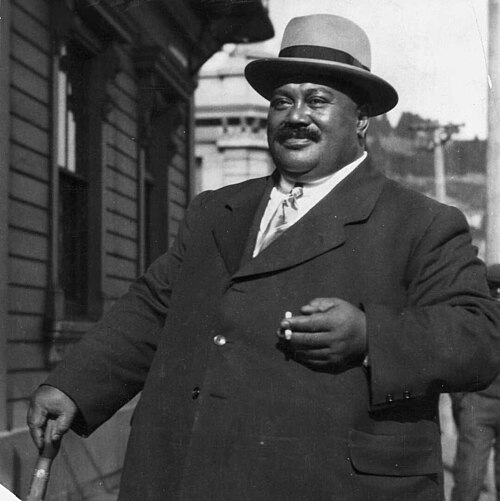
The last full-blooded Moriori
The Anti-Nephi Lehites are a compelling narrative. A formerly violent people who lay down their swords to the point of being willingly massacred, and then a deus ex machina sort of happens and they are saved by the conscience of their attackers.
But what happens if the attackers don’t stop? What happens if the angel doesn’t show up to save Isaac? We see a tragic case of this with the Moriori. Natives of the Chatham Islands in the South Pacific, they were facing invasion by mainland Maori, who they actually outnumbered. However, the elders held that their religion’s sacred principle of nonviolence was an inviolable oath to their Gods and could not be broken. Consequently, they were massacred, enslaved, cannibalized, and ritualistically tortured to death. The last full-blooded Moriori died in the early 20th-century.
Pacifism is one of those things that sounds nice in theory but quickly runs into issues when you start to think of all-too-plausible hypotheticals. We all honor and respect Mahatma Gandhi, but his take that the Jews should have just offered themselves to the Nazis probably wasn’t the right one for that particular circumstance. That being said, I have a hard time critiquing pacifists morally, whether they’re the Anti-Nephi Lehites, Mahatma Gandhi, or the Moriori. I probably wouldn’t have done what they did nor do I agree with the principle of pacifism, but I have a hard time not honoring and respecting people who are willing to pay the last measure of devotion for their beliefs.
Other Anti-Nephi Lehite examples. In the Qissa Khwani massacre British troops shot unarmed pacifist, Indian independence protestors. In the stomach-churning Gnadenhutten massacre American revolutionary soldiers raped and massacred a group of pacifist Native American converts to Christianity. Similar to the Anti-Nephi Lehites, they prayed and sang hymns to each other while they were being killed.
One soldier taunted an Indian by pretending to offer him his hatchet with the words, “Strike me dead!” When the man answered, “I strike no one dead!” the soldier swung at the Indian and “chopped his arm away.” All the while, the Indian kept singing [a hymn] “until another blow split his head.”
One of the murderers who thought that the killing would assuage his grief from losing his own relatives had a similar experience as the Laminates:
One Nathan Rollins & brother [who] had had a father & uncle killed took the lead in murdering the Indians, …& Nathan Rollins had tomahawked nineteen of the poor Moravians, & after it was over he sat down & cried, & said it was no satisfaction for the loss of his father & uncle after all.
Comments
6 responses to “Extreme Pacifism and the Moriori: The Anti-Nephi Lehites of the South Pacific ”
“See the lesson and the key
How the one who throws down his weapon
Gets more wounds
And the world counts the hits coming on him.”
This is interesting as I have actually been thinking about this recently after reading some Tolstoy. I wonder how moral pacifism actually is. I have come to the conclusion that it is a coherent personal stance to take, and I would not force a pacifist to defend themselves, but I believe if you impose your pacifism on others without escape or alternative, you bear a heavy moral cost.
“I have come to the conclusion that it is a coherent personal stance to take, and I would not force a pacifist to defend themselves, but I believe if you impose your pacifism on others without escape or alternative, you bear a heavy moral cost.” Basically my take. I’d even be fine sacrificing to provide security for pacifists that they can’t provide for themselves (e.g. tax payer-funded SWAT teams responding to active shooters in an Amish colony).
I’m no pacifist. I think the US military ended great evils in the Civil War and WW2, and there was no other way to do so. When I look at North and South Korea today, I’m proud of what we were able to do for the people of South Korea and wish there had been some way to do more for the people of North Korea. And yet…
Killing in war or self-defense is inevitably adjacent to murder, and it is easy to cross the line. One of the minor themes of the Book of Mormon is that to use violence, even in self-defense, is to put your soul at risk. (The book also tells you how to protect it.)
Leaders who order unjust wars are accountable for the blood shed. Leaders are also accountable for how a war is fought. That includes the moral environment they create: soldiers need to be clearly taught what the rules are and see that there are consequences for breaking them. It also includes the leader’s own decisions: for example, God knows to what extent the Allied “bomber barons” of WW2 really believed that deliberately killing hundreds of thousands of civilians could win the war, and to what extent they were influenced by wanting to win bureaucratic battles for resources. (No one after them can plausibly claim they thought air strikes alone can win wars.)
(Needless to say I’m very concerned about the morality of our current wars.)
But individuals are responsible for their own choices. I trust the Lord will take into account the adrenaline rush of fighting for your life, and the desensitization that results from long-term combat, but they can’t fully excuse murder.
Given all that, I think deciding you’d rather die than take that risk is a valid choice. Letting others die is a tougher choice, but that very much depends on the circumstances. My version of just war theory includes a requirement that you have a realistic chance of winning, or at least doing some good. What the Anti-Nephi-Lehies had in common with the Jews under Roman occupation (whom Jesus told to “resist not evil”) is that they couldn’t save themselves or anyone else by fighting. For the Anti-Nephi-Lehies, dying peacefully was not really giving up their life (it was forfeit anyway), but giving up their anger, however justified. But for a Nephite in Moroni’s army, or an an American infantryman on Omaha Beach, fighting is justified, but in some ways the greater sacrifice.
“Dying is easy, son, living is harder.”
As a Latter-day Saint with Mennonite ancestry, the story of the Anti-Nephi-Lehites has particularly resonated with me. I personally lean toward non-resistance, and do not keep guns in my home; if asked, what would you do in a theoretical attack (the proverbial-how-would-you-defend-your-food-storage scenario), I would probably do as the Anti-Nephi-Lehis did. But at the same time, if I had young children to protect, the Mama Bear in me would probably resort to violence. I resolve the moral quandary, I guess, by looking at what im protecting and whose agency is involved.
It is interesting to me that the Book of Mormon offers ethical value for both covenantal non-resistance AND self defense, that bith positions can be holy. Mormon the abridger must have felt the story of Ammon’s people to have been deeply moving and of poignant contrast to his life. Furthermore, the Book of Mormon seems to place an obligation on those who take the self-defense position to protect and defend persons who are in the position of covenental non-resistance.
“Peace on earth, good will toward everybody”.
So, what do you make of this? Conjecture? Nonsense? Promise? Do we throw it into the “it will happen during the millennium,” file where everything that doesn’t come to pass -like the sealed portion of the BOM the brass plates, and other cool stuff – get farmed off to. That includes ALL of the “will happen in this generation” events. How long is a generation anyway: 20 years, 200 years, 2,000 years? Were the angels just guffin’ on us? Maybe I’ve got it all wrong. After all, Mormon spent a zillion verses on war, and 17 verses on the 200 years of non-violent angelic behavior that followed Jesus’ visit to wherever the millions of Nephites lived (to be revealed…). Anyway, mormons seem to be getting meaner, I hate the rhetoric and that they share it with me because I’m active and am supposed to believe a certain way. They are surprised when they hear that, as for me and my house, “War…huh, yeah…what is it good for? Absolutely nothin’. Say it again.”