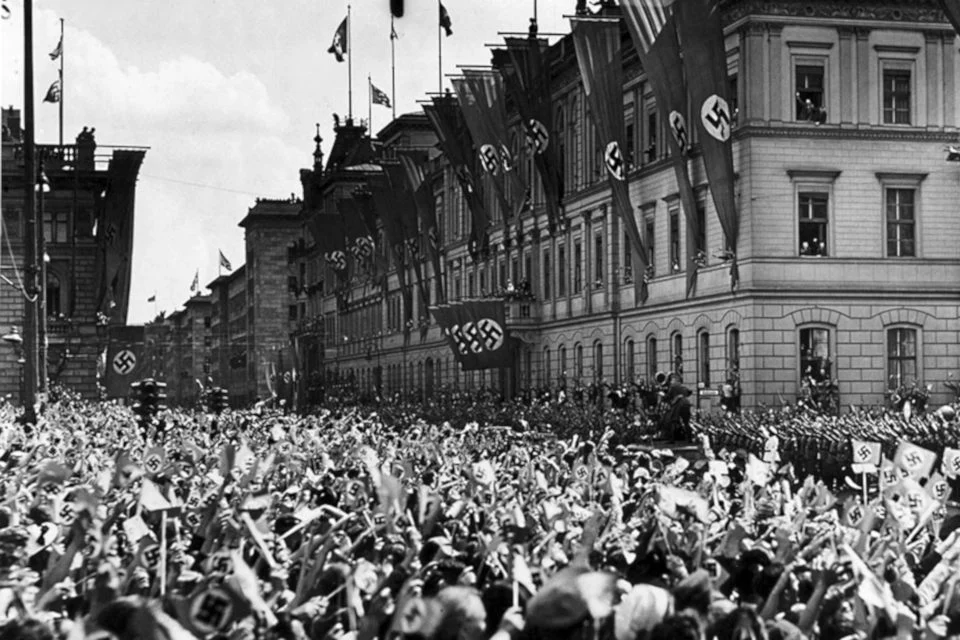
The first time I showed clips from Leni Riefenstahl’s Triumph of the Will while teaching about Nazi Germany, I was not expecting to be overwhelmed by grief and anger and revulsion. It wasn’t the iconic shots of athletic feats, tightly regimented youth performances, Hitler’s airplane in flight and his concluding speech that got to me. Instead, as I was fast-forwarding through the long and ponderous film, I landed on Hitler’s triumphant entry into the city of Nuremberg, where he was enthusiastically received by its citizens, and I was not prepared.
This wasn’t my first or last awkward moment in front of a classroom. One of the less-discussed facts about teaching is that you can wander into the middle of an emotional minefield without warning and with no easy way out, even when discussing seemingly harmless topics like education systems and street food.
In retrospect, I should have seen it coming. I have lived near Nuremberg multiple times for over three years in total, and the city has been the site of some important experiences. Dragging a toddler through the train station on the way to an Institute course (taught by a certain Erich Kopischke). Doing dissertation research in the Germanisches Nationalmuseum, while I fasted and contemplated whether the dissertation was worth finishing and whether a possible pregnancy-in-development would happen. Six years later when we returned to Germany, Nuremberg was the first place we brought our four children. “Is that a castle?” one of them asked as we arrived in the city, pointing to the city gate.

Just wait, I told him, and you’ll see a castle. Two years later, just a few days before we returned to the U.S., he was baptized in Nuremberg.

So a few years later, when my plan was only to show a few clips from Triumph of the Will, I did not respond with the appropriate analytic distance to the scene of Hitler’s triumphant entry into Nuremberg, as historical evil defiled a place I loved while the parents and grandparents of people I loved cheered him on, setting in motion a tragedy that would tear apart a continent and leave tens of millions of people dead.
* * *
Propaganda does many things. It projects images of strength and unity, offers targets of hate and admiration, and invites viewers to join the winning side. If you’re already on board, propaganda offers you satisfaction for your hopes: Promises made, promises kept. This is what you voted for.
I do not enjoy the propaganda produced by the various elements of the Trump administration. You might say I react viscerally to it. That’s not unusual; that’s just the nature of media produced by people I dislike in favor of policies I oppose. It is also not unprecedented for our government to do some genuinely bad, wicked and illegal things.
But past administrations generally tried to cover up their misdeeds and deceptions. Even evil regimes recognize the difference between the cruelty it wants its citizens to see and fear, and the crimes they want to hide from the eyes of the world.
So what the Trump administration chooses to flaunt is telling. The administration has released both raw footage and slickly produced videos of federal agents conducting warrantless searches and detaining families, humiliating deportees, and murdering alleged drug smugglers (because that is what it’s called when you kill people without legal sanction with whom you are not at war, far from our borders, who have not been arrested or tried, for crimes that do not warrant the death penalty, and when a whole branch of the armed forces exists to interdict smuggling without lethal violence as a first resort). Our government has facilitated the creation of these videos and approved their release because it wants them to be seen, even as it continues to block the release of other footage.
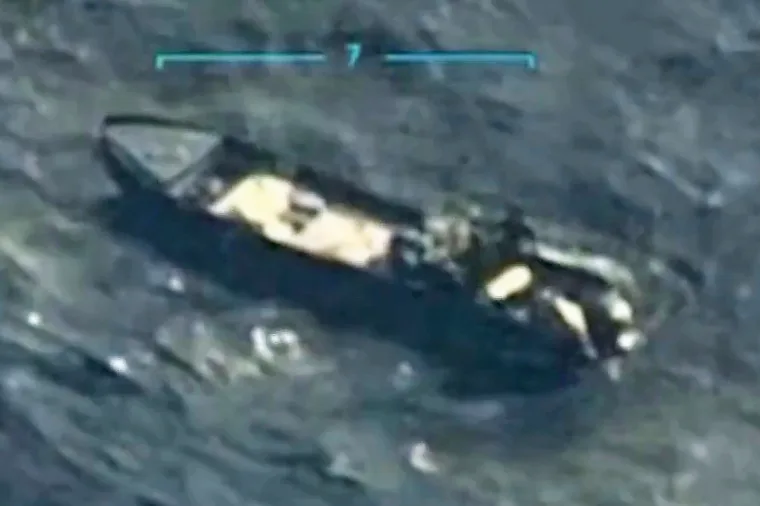
No less than Triumph of the Will, these videos are invitations to be part of the winning side. These contemporary propaganda films also invite supporters to defend the indefensible, to enjoy seeing others’ degradation, and to delight in bloodshed.
* * *
The Book of Mormon offers repeated warnings about this. In early and classic Nephite history in the books of Jacob, Mosiah and Alma, the Lamanites and the armies of wicked King Noah delight in shedding blood. In contrast, the Nephites and their leaders, including King Mosiah and Captain Moroni, “did not delight in the shedding of blood.” It is only during the Nephites’ final decline that they also “delighted in the shedding of blood continually,” despite Mormon’s warning to them to “delight no more in the shedding of blood.” Ultimately, before their final destruction, the Nephites delight in every type of abomination.
* * *
One of the awful new realities of 2025 has been seeing the United States, represented by our government, stop doing much of the good it used to do in the world, including publishing true statistics, promoting democracy and good government, opposing oppression, and protecting some of the world’s poorest from death by disease and starvation. What is harder for people to admit is that the United States, represented by its government, has begun actively perpetrating evil in many ways, including promoting fascist political parties abroad, publishing falsehood, assisting tyrants while abandoning democratic allies, spreading racism, facilitating corruption, dehumanizing immigrants, and, now, committing repeated acts of murder.
This was America’s choice, and the responsibility for it stains us. We have an obligation to put a stop to it. If you consider yourself a Republican or voted for Republicans, you bear particular responsibility to compel the government to change course.
* * *
Because if you accept the Book of Mormon as scripture, you’ve been warned about where this is going. A society that delights in suffering and bloodshed is ripe for destruction. For you as an individual, the temptation is to join the winning side by applauding the cruelty and defending the indefensible. If you persist in justifying murder, a sin second in gravity only to consciously denying the witness of the Holy Ghost, you will face eternal consequences if you do not repent. Maybe you can ignore what the Trump administration is doing to the nation or the world, but you have to be aware of what it is doing to your soul.
Comments
30 responses to “Delighting in bloodshed”
Thank you for sharing your thoughts.
“Murder is bad” is hardly an original thought. I don’t know why it has to be said, but here we are.
When I lived in Nashville as a child, we made frequent visits to Stones River Battlefield Park, near Murfreesboro. At about the same time, I read in Book of Mormon Stories about the Jaredites (particularly in Ether 15) fighting by day, and sleeping by their swords by night, literally to the last man.
I remember once at Stones River reading a display about the battle, again both sides fighting by day and sleeping by their weapons at night. (It was a three-day battle). My mind came to the similarities, thinking this was just like the Jaredites. A simple answer came, “Yes”.
During the 2003 Iraq War there was plenty of discussion rhetoric in my ward, often from the pulpit, about how that particular war was necessary. (Some even misquoted Pres. Hinckley to say the whole “War on Terrorism” was too.) In the YW room, there was even a picture labeled “Peace” of a solider holding a weapon.
Needless to say (I had moved in Christmas Eve 2002), it took me a long time to feel a part of things. One thing I regret is not posting my (2004) wedding invitation on the bulletin board. Some families didn’t come because they thought they wouldn’t be welcome.
“. . . [these] are invitations to be part of the winning side. These contemporary propaganda films also invite supporters to defend the indefensible, to enjoy seeing others’ degradation, and to delight in bloodshed.”
Extremely well said!
So, you’re saying tat we’re looking at the most heinous of spiritual crimes brought about by extremely successful propaganda that galvanizes millions of people by imprinting on identity, and re-tooling values.
Why is this not a major spiritual concern for modern-day Prophets, seers and revelators? This is not mere politics or politics as usual, this is about our souls, our fellow countrymen/women, nations, and the world. This is about morals, ethics and values. Why are the watchmen on the tower not sounding every alarm with every living breath? Why are we dwelling on chicken-soup-for-the-soul like feel-good stories of yester-year when THIS threat goes unmentioned?
I am done listing to excuses about us being “above” politics. How can we be “above” politics if blood-thirst, murder, conquest, power and oppression are the actual topics? How can we continue to sit behind our privilege, sun-bathing in Jesus’ happy smiling face, and excuse the things in your post as just the consequences of our collective comfort?
I’ve recently heard about “The Ones Who Walk Away from Omelas” by Ursula K. Le Guin. It’s a philosophical short story used as a way to test ethics. It’s about a beautiful, utopian city whose happiness depends on the perpetual misery of one imprisoned child. Every citizen learns the truth as they come of age. Most accept the arrangement. Some cannot and they leave Omelas. How can we look away from the blood-thirst, the corruption, the vindictiveness and cruelty, and think it is just a necessary evil for our collective prosperity and power?
These vigilante killings will have an insignificant effect on the drug trade–Venezuela is not even a very big player in it. So what’s the real motivation here?
Yes, there’s a geopolitical component, trying to pressure Maduro to step down. Much as I hate what Chavismo has done to Venezuela and would welcome a return to democracy, does anyone think the “America First” President is doing this for the benefit of the Venezuelan people, or that a military intervention will make them better off? Have we learned nothing from Iraq?
But I think the primary motivation is so that cable news viewers in rural areas hit hard by drug addiction can say “Look–Trump is strong. He’s making the bad guys suffer who have caused so much suffering for us.” Never mind that it won’t stop their own suffering–it’s pure vengeance.
Or maybe the main goal is to make the cable news viewer in the White House feel strong.
Either way, it’s delighting in bloodshed and the implications are dire.
I saw someone (not a crackpot) argue on Facebook that the whole boatsinking thing was about oil. I pushed back for a bit, but then we captured an oil tanker, so I’m not pushing back on that any more.
It’s not about oil, nor is it about regime change. It’s about distraction. Think about what Trump is trying to distract voters from.
A Nazi analogy is still a Nazi analogy, dressing it up with personal sentiment doesn’t make it less lazy. And using it to defend narco?terrorists just so you can take another swing at Trump is embarrassing.
If you weren’t so locked into partisan theatrics, you might see this more like Moroni (whom you quoted but obviously haven’t read): someone who fights unapologetically for his people’s safety. True, that means the messy business of killing people, but being proud of defending your country isn’t bloodlust. (Alma 60:36)
It certainly doesn’t mean clutching pearls because some of us aren’t mourning the deaths of terrorists. Honestly, get a grip.
Jonathan, you just might be my favorite commenter on the blogs–but I think you’re probably overdoing it a bit with this OP. you say:
“No less than Triumph of the Will, these videos are invitations to be part of the winning side.”
However true that might be, I’m fairly certain that those videos are also a warning to other countries and cartels that we’ve had it with the illicit drug industry. 100,000 people die every year in the U.S. by overdose of illegal drugs–not to mention the untold number of folks suffering from addiction. The toll in terms of life, sorrow, and resources, is astronomical. And then if we consider the toll that’s being taken on the whole of North and South America–even the entire planet–what kind of damage are really looking at? It’s nightmarish.
Also, why I agree that in theory everyone who isn’t an enemy combatant should get a fair trial–I have to say that the drug operations of Central and South America are for all intents and purposes modern Gadianton Robbers. These areas of the world are considered to be the most “murderous” on the planet–and it’s primarily because of the dirty business of the gangs and cartels in those regions. Even as we speak another country–Equador–is beginning to go they way of Venezuela, Columbia, Honduras, and other countries practically run by drug lords. And so I’m not entirely against the Trump administration labelling them “terrorists.”
That said–and I know this is not an original question–but I wonder sometimes how our left-leaning friends felt about Obama’s drone strikes. While I ache over the loss of innocent life–what trump is doing doesn’t even come close to the damage that was done to innocents back in Obama’s days. And I mean that irrespective of how one might categorize the actions of either administration.
That (and that) said, while I don’t love Trump–and I didn’t vote him–the RINO in me is sometimes awakened the unevenness in reporting on these issues. It all seems to depend on whether or not he’s “our guy.” If he is then he’s doing what must be done–a necessary evil. If he isn’t then he’s doing what Hitler did.
Morgan, the United States fought actual Nazis during WWII, and even in that bloody and nightmarish war, we taught U.S. service members the basics of the law of war and did our best to ensure compliance. Most of the time you can kill the enemy wherever you find him; however there are situations where the enemy is not a lawful target. Examples include airmen who have bailed out and shipwrecked sailors. A real world example of the latter was the Royal Navy taking pains to rescue over 100 German survivors of the sinking of the Bismarck. They didn’t simply machine-gun them just because they were the enemy.
Assuming for the sake of the argument that these traffickers are combatants, once their boat is destroyed and they’re floating in the ocean unable to flee or fight, they are “hors de combat” (French for “out of combat”) and no longer lawful targets. They can of course become lawful targets again if they continue to attempt to fight/resist/flee despite their circumstances (e.g., shooting at a rescue boat). This is why everyone wants to see the footage. Were the traffickers still resisting or fleeing after the initial strike or were they simply trying not to drown?
Mortimer, I think the apostles have spoken out several times recently about anger and media. In any case, I don’t think being mad at nonpolitical institutions for being nonpolitical accomplishes anything at the moment.
Omelas is a great story, but it doesn’t work as social critique because we can’t actually walk away. Our society is build on top of a thousand different injustices, and we should be working to make society less unjust. But there really aren’t any better large-scale alternatives out there, and for now the only option is to try to make things better where we are.
There are plenty of reasons to rejoice in the Trump administration’s changes in policies from a humanitarian and law and order basis. Violent crime, including murder, is way down in our federal capitol where the President has the most influence. As noted by Jack above, the violent drug gangs are being addressed on multiple fronts, including by our military. The congressional approval for this type of action was passed unanimously in the senate and with only one opposing vote in the house, not exactly an illegal military use. As also noted above, Obama did much worse than the current actions from Trump that you are complaining about.
Also, Maduro lost the last election in Venezuela by all impartial accounts. The lawfully elected President of Venezuela has praised Donald Trump as she was in Oslo to receive her Nobel peace prize. The Trump administration provided aid to get her there. I do not remember any major actions that the Biden administration took to help the democratically elected leader of our former ally. So who is better upholding democracy here?
On the whole, President Trump is more in line with Captain Moroni, than with the 4th century Nephites.
Morgan, the Germans I know don’t think the analogy is strained at all. They wonder why it’s taking us so long to notice what’s happening. Take a look at the kinds of political parties our government is now supporting in Europe. From a distance, it’s easy to assume they’re just traditional conservative parties who want to reduce immigration, but they’re not. Their advertising and political rhetoric is crassly racist and fascist.
Alma 48:11 informs us that “Moroni was a strong and a mighty man; he was a man of a perfect understanding; yea, a man that did not delight in bloodshed.” I don’t think Moroni would murder 80 Lamanites who were 1000 miles away from Zarahemla at the time, and the Lamanites regularly waged actual war on the Nephites.
Words like “terrorist” have particular meanings, and a “terrorist” is not someone who imports a product that millions of Americans are eager to buy. We are not in a state of war, there is no congressional authorization to use force, and no acts of terrorism have been committed. The Coast Guard regularly arrests drug smugglers. To kill smugglers without warning in this situation is simply murder.
There’s also the unresolvable paradox of our military killing low-level smugglers without warning, while the president just pardoned the second leader of a massive drug-running operation (first Ross Ulbricht, now Juan Orlando Hernández). If we’re letting the leaders off scot-free but killing the people on boats, the claim of self-defense collapses. It’s just murder.
Jack, making a statement doesn’t justify killing 80 people (so far). If you need a Republican to convince you, see what Rand Paul has said. Bombing boats does nothing that sending the Coast Guard couldn’t have accomplished, and the Coast Guard can in addition collect intelligence and identify any innocent parties, such as human trafficking victims.
Joe Biden largely put an end to the use of drones for killing people in the Middle East. Did you notice? While the Obama administration had its foreign policy failures, the situation was not comparable because there were actual terrorists and congressional authorization. And critically for us, we weren’t being fed drone strikes as propaganda and asked to applaud.
“Bombing boats does nothing that sending the Coast Guard couldn’t have accomplished…”
I agree in terms of the mechanics involved in capturing culprits and securing the goods. But what the coastguard can’t do is send a clear message to those in power that if you keep doing this we’re going to send a missile right down your chimney.
In saying that I’m not suggesting that that’s the best way to handle the situation–I don’t know. But I think the message is clear: My guess is that by now Trump has these guys looking over their collective shoulder–and that in and of itself is a good thing, IMO.
Re: “actual terrorists”: I think we’re going to have to agree to disagree on this particular point. Drugs have killed around a million people (more or less) over the last twenty years in the U.S. alone–not to mention the number of lives that have been ruined by them. Now I don’t want to do a “tit for tat” comparison between drug deaths and terrorist deaths. Even so, while I’m not sure how I feel about Trump’s tactics I have to say that I can’t disagree with his categorization of drug lords and their henchmen as terrorists.
Jack, murdering low-level drug smugglers while pardoning Ulbricht and Hernandez doesn’t send that message at all. And again: Sending a message by murdering people is horrific. It’s not a gray area or pushing the border, it’s a sin that will damn everyone involved.
Terrorists commit acts of terror to achieve strategic or political ends. Words mean things. Drug smugglers may be horrible criminals who deserve punishment through the criminal justice system, but they are not terrorists. We do not execute drug dealers when they are tried and arrested in the U.S. We did not execute the Sackler family for earning billions from pushing Oxycontin; they got off with a fine. And in any case the drug responsible for most overdose deaths in the U.S. is fentanyl, which is not typically produced in Venezuela or transported through the Caribbean.
El Oso: Comparing Trump to Moroni doesn’t work at all. Trump lacks Moroni’s physical courage and commitment to truth and righteousness at any cost. There is simply no point of resemblance between them.
Fortunately we have another Book of Mormon figure who is a near-perfect match: King Noah. They both lead lives of iniquity and immorality, love luxury and flattery, and are vengeful and deeply corrupt. And Trump’s effect on the spiritual lives of the people and the strength of the country he presides over is very similar to that of King Noah.
I don’t know, Jonathan. As I say, I’m not sure about Trump’s tactics–but boy when we consider the scale of the drug wars in Mexico, Central and South America, the Philippines, and other places–and I’m talking about actual murders now, not ODs–it’s truly staggering.
And I disagree about Trump’s message being unclear. Trump is a wild card. Who knows when he might send a stealth bomber your way.
Interesting. A post titled “Delighting in bloodshed” critiques an administration that, in less than a year, helped negotiate peace agreements between:
* India and Pakistan
* Rwanda and the Democratic Republic of Congo
* Israel and Iran
* Thailand and Cambodia
* Armenia and Azerbaijan
There may be others I’ve forgotten. And of course while the efforts haven’t succeeded yet, Trump and his administration have been trying to get a deal between Russia and Ukraine.
While it’s certainly not a slam dunk, and I do have some reservations, it’s possible to argue that the administration’s immigration policies and what’s happening with Venezuela will lead to less total bloodshed in the future than than if other alternatives were pursued. I don’t think I have enough knowledge or wisdom to make that call one way or another.
I really don’t think you can accurately describe the current administration as “delighting in bloodshed.”
Curtis, those peace agreements have not amounted to much. The Rwandan-aided insurgency in Congo continues. The conflict between Thailand and Cambodia escalated sharply this week and is ongoing. India disputes the claim that Trump brokered a peace deal. Israel had finished bombing Iran, and Iran no longer had the capability to respond. Nothing has changed in the tense relationship between Armenia and Azerbaijan.
But murder continues to be bad, and releasing propaganda videos is a way of inviting U.S. citizens to delight in bloodshed and other forms of cruelty. An individual may not have much power to stop what the government does, but they always have the choice of what they will applaud.
Thank you Jonathan.
If the charge against Trump is “delighting in bloodshed”, then the very attempt at forging peace, however unsuccessful, is evidence against it. If the Navy’s missiles had missed, I suspect you would still accuse Trump of attempted murder. Yet he gets no credit for attempted peace. That’s a poor dodge.
The United States has arrested members of ISIS on American soil. Does that invalidate Obama’s drone strikes because they could have waited until they came to the U.S. to arrest them? The U.S. isn’t being attacked by the Houthi – just our ships are – should we issue warrants for their arrest instead of Tomahawks?
No, I don’t think you would say that, because arresting drug boats and drone striking ISIS are both an ordinary course of action. Why should it always be so? This whole argument relies on an overly precious conception of national security v. domestic spheres of policy – drugs are a domestic criminal matter and terrorism is not. And I think that distinction is pretty arbitrary.
BLOG POST: We shouldn’t delight in bloodshed.
CRACKPOTS: THE HELL WE SHOULDN”T!!
Very good article. There are so many active members of the church who make covenants whose attached blessings are that they may have eyes that they can see; yet refuse to see this. Why? Can’t the covenants made with God fix this?
Hoosier, if you would like to see credit where it’s due, then there’s this: The administration’s approach to Syria has been exactly correct. It’s dropped sanctions and steered all sides towards national unity and built partnerships with the new government in just the right way.
The problem with the higher-profile, non-fictive attempts at peacemaking is that they have been amoral, comically incompetent and transparently corrupt. The U.S. negotiators have little idea what they’re doing, little understanding of the opposing parties, and a focus on financial benefit, not even for the U.S. as a whole but for friends and family members.
Even if the peacemaking was competent, it wouldn’t balance out the legally unsanctioned killing, 1000 miles from the border, of 80 people (and counting) whose boats were not physically capable of reaching the U.S. and were not headed our direction.
Obama’s drone strikes are a decade in the past. Trump didn’t end them as president, but Biden did. Now Trump has brought them back, today, right now, and the people who complained about Obama’s drone strikes are still droning on about Obama. But since you mention it: Attacks on shipping have been a cause for military action for centuries! It’s what sent the marines to the shores of Tripoli. Responding against the Houthis is 100% legitimate.
The distinction between controlling crime domestically and stopping terrorists intent on attacking the U.S. abroad with military force is not “precious” or “arbitrary.” It’s fundamental! The Constitution is very clear about war-making powers, and freedom from search and quartering soldiers. We really, truly, absolutely do not want the Commander in Chief to decide to unilaterally stop drug dealers in San Francisco with drone strikes! We don’t want the Army to feel like they can search any house they feel like for information about potential drug dealers. We don’t want that to happen even for domestic terrorists!
In any case: I don’t know how bloodthirsty Trump himself is, although he has been eager to try out some of the military levers under his control in the past, including a desire to have protestors shot. More significantly, some key figures in the Trump administration do take obvious delight in the suffering and degradation of immigrants and the death of Venezuelan boat operators. And most importantly for us, the propaganda videos they put out wants us to share in their delight, and that’s a giant moral problem that can’t be ignored.
Jonathan Green,
There is no such thing as a non-political institution, including religious organizations and especially not Christian institutions whose second greatest commandment is to love their neighbors. Politics is not mud wrestling with pigs (although some bad politicians devolve to that level). Politics actually reflects our shared decisions about how we treat one another, from our local communities to the global stage. Politics should be an advanced expression of charity and love, given structure through intelligent and just laws. The notion of neutrality ignores the reality that every system already reflects values and power.
The brethren’s recent statements about media use and anger are PROFOUNDLY INSUFFICIENT. They are so vague and carefully tip-toe around the parties, names and movements involved that they UTTERLY FAIL to confront the clear and present spiritual dangers named in your excellent post including political indoctrination, authoritarianism, bloodthirst, and the resurgence of extremist ideologies. By never naming what is actually happening, these messages speak to everyone and no one at the same time, offering moral fog instead of a beacon light from a lighthouse. The result is predictable. About 2/3rds of US Saints have been duped to sincerely believe that cruelty, dehumanization, and MAGA-aligned violence are necessary evils to our might and strength.
Nephi gloried in plainness and truth. But our conference talks, FP announcements, and news reports are so nebulous that they are NOT plain and therefore not particularly truthful. As a result, the do not protect the flock.
Equally telling to how their messages are MEANT to be wishy-washy and non-direct is how they are delivered. Urgency is NOT conveyed through hushed reverent tones, nor is is buried in dozens of unrelated correlated topics. Life doesn’t just go on as normal when THIS is the threat. When something this grave is at stake, it should be THE main message.
But, there are plenty of messages that help placate us to think of only the simple good shepherd Jesus. No need to think about the current storm or how Jesus’ own example was to speak out against and ultimately lose his life in political opposition to the violent, tyrannical, unjust occupiers.
The story of Omelas IS relevant because it exposes a choice we all face once our eyes are opened to suffering. We can either turn away and enjoy the calm of privilege, or accept responsibility for what we now know. Like the citizens of Omelas, we have three choices.
1) to continue as normal and consent to the evils you described in the name of our might, power and prosperity.
2) To leave the city. (Now not possible as this tide covers the earth)
3) WORK TO CHANGE what should never be tolerated.
I believed, and actually I still believe, that Jesus’ church should champion that kind of moral courage, and push back against acquiescence. I’m bereft that we “shrink and shun the [moral] fight”.
The Church may claim to be “neutral”, yes, but it RESERVES the right to “take a position on matters that it believes have significant moral or ethical implications or that directly affect the mission and teachings of the Church.”
So again, I ask- where are the watchmen on the watchtower? Where is the voice of warning? Not a muffled mention drown in 10 hours of conference talks each season, or the 432 pages in the adult Come Follow Me manual, or the millions of pages on lds.org, but a real emergency bell?
Mortimer, I disagree strongly that religion is inherently political. Churches existed long before and continue to exist outside our political order. I would say instead that political choices have unavoidable moral and religious implications.
I agree with you about working for change. I don’t believe that was an option presented in LeGuin’s story.
I don’t think “Why doesn’t the Church speak out” is useful. It’s like the people saying, “Why don’t the Democrats do something?” instead of just, you know, doing something themselves without waiting. Would I enjoy seeing President Oaks rebuke Republicans? Sure. But President Oaks has to speak to members in 200 countries and worry about the spiritual welfare of people across the political spectrum, and he has to weigh the utility of speaking out against the consequences, and none of that is my call to make. I can only choose when I speak and what I say. Lots of people and institutions have lots of reasons for doing or not doing something.
Jonathan – I very much appreciate your analysis here. You seem to be drawing parallels between Republicans and Nazis. Considering their global responsibilities, do you think the LDS church’s response to the Nazis in the 1930s parallels their response to what the US Republicans are doing now?
Jonathan Green,
I’m not asking the Church to take sides in partisan politics specifically for the sake of power to one side or the other. I’m saying that Prophetic leadership includes naming moral dangers plainly when they are reshaping people’s values and justifying cruelty and violence. Another definition of a Prophet (lowercase p perhaps) is someone who speaks truth to a culture of lies (Sister Joan Chittister).
A global audience may be a reason to refrain from normally endorsing parties or candidates, but it is not a reason to avoid clarity about evil and consequences or to clarify their lies with TRUTH. In scripture, P/prophets did not speak in abstractions when societies were being led astray, they named idolatry, oppression, and bloodshed, even evil kings, judges or other leaders if needed, because those things had become normalized. Truth had been obscured. Messages so general that the deceived can hear them as *approval* are NOT WARNINGS, they are fog.
It also isn’t accurate to say that religion exists outside political order. Historically, religion has almost never been separate from authority, law, and public life. In ancient societies, religious teaching shaped what was considered just, lawful, and acceptable behavior. Prophets confronted kings, systems, and collective sins, not just private hearts. (This is actually pretty fascinating to think about. I wish Dan McClellan the bible scholar was a T&S reader and we could ask him for clarification on this point.)
Religion can only be apolitical if it is reduced to private sentiment with no claims on public conduct, which Christianity, by design is NOT. Or in other words, religion is only neutral it it lives solely in the heart of an individual and makes no claims about how people should treat one another in the world. Christianity has never been that. The tent of Zion, the Saints, the Church, the United Order, has always been about community making a difference in this world by collaboration.
Asking why modern leaders are silent is NOT the same as refusing to act ourselves. Individual action matters, but so does the voice of the watchmen, and so does our community. When leaders explicitly reserve the right to speak on serious moral and spiritual threats, choosing NOT to NAME a clear danger is NOT neutrality. (As Holocaust survivor Elie Weisel said, “Neutrality helps the oppressor, never the victim. Silence encourages the tormentor, never the tormented.”) It is a CHOICE with consequences, especially for the vulnerable. This calls into mind the big paradox of religion, individual or communal salvation. faith is personal, yet it is lived, tested, and actualized in community. I don’t want to thread-jack your post, but just pointing out that there is a communal dependency and even goal to our quests.
So why doesn’t it just work for us to take the responsibility ourselves and ignore the fact our community chooses inaction? Because institutional moral leadership and individual action are not substitutes for one another, they’re complimentary. Zion is not a solo project. We are yoked to one another, covenentally and morally, and the work that actually changes the world, resisting evil, protecting the vulnerable, building peace, requires shared sacrifice, coordination, and mutual reinforcement. No man is an island. No lasting moral movement is sustained by private individuals acting alone, it survives when communities, sometimes even small, hidden, or counter-cultural, share responsibility, sacrifice and are one in purpose. When institutions refuse to lead, they don’t stay neutral, they leave people to struggle alone against the highly coordinated and organized forces you quite well described in your post.
And this matters so much now, when religion’s social power is fading and the “Nones” are rising. Churches no longer function as the default for society. The church has focused on becoming more of the spiritual spa for individuals or a private wellness practice (YW Personal Progress, Personal Home and Family Enrichment, Family study of Come Follow Me, personal temple work, etc.). But Christianity was never meant to be a spiritual spa. It was meant to change the world, to confront violence and injustice (peacefully, non-violently), reduce and eradicate suffering, hunger, poverty, war, etc.
If the Church sets aside its millennial zeal and turns inward, it should not be surprised when people begin to wonder what, exactly, it is for. And if a church with over $100 billion in assets (including airwaves, broadcast stations and satellites, newspapers, universities, magazines, global distribution systems, political and diplomatic networks, printing presses, websites, technology platforms, farms, real estate, and countless other resources) chooses SILENCE in the face of the most urgent moral threats of our time, including matters of life and death, it should again not be surprised when that question grows louder.
But, we can agree to disagree too.
Steve B., it’s on my mind.
Mortimer, your concerns – which are valid – deserve their own discussion. It’s a post I’ve had in mind for a while, so I’ll try to make it happen soon. It might be after the holidays, and hopefully won’t be preempted by anything dire.