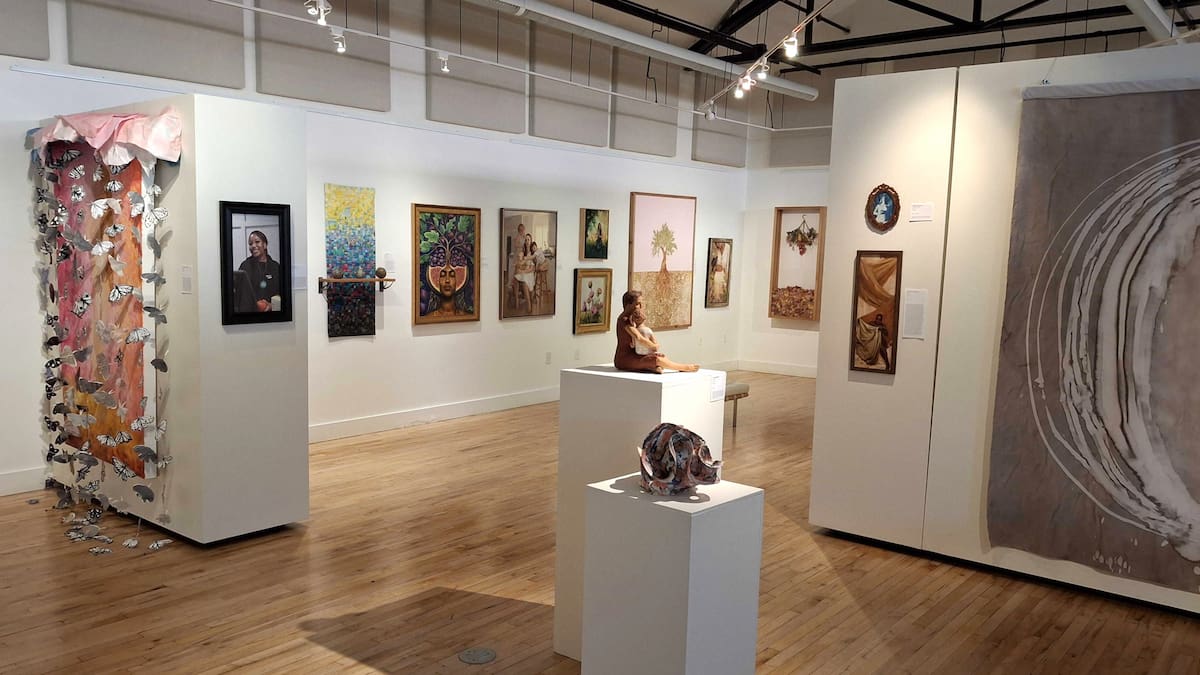
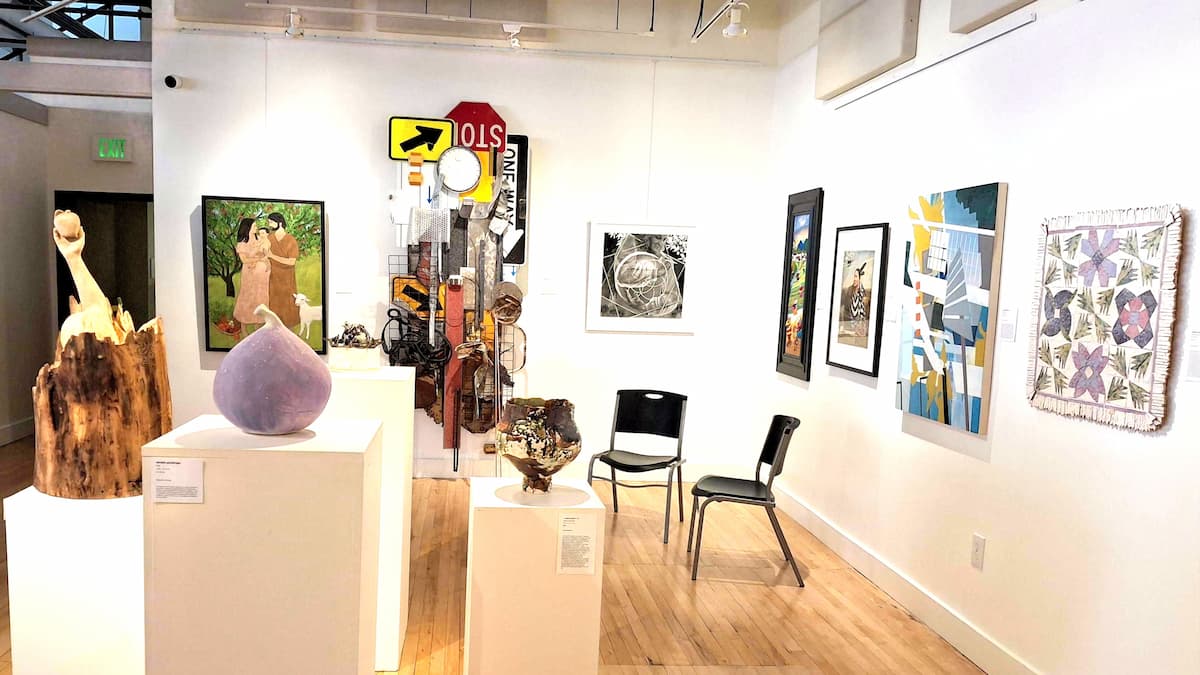
Those who have followed Times and Seasons for a while may know that I like talking about art from time to time. The Certain Women Art Show is an important artistic institution for its ability to transform complex theological concepts into immersive visual dialogues, and their latest exhibition, Brave Like Eve, currently on display at the Bountiful Davis Art Center (January 14 – March 27, 2026), in Bountiful, Utah, is a fantastic example of this. By bringing together over 100 Latter-day Saint women artists, the show does more than simply illustrate a scripture story; it performs significant theological work, reframing the Fall from a narrative of feminine transgression into a testament of courageous purpose.
Reframing the Progenitress
In broader religious traditions, Eve has often been cast as the ultimate cautionary tale—the source of human shame and the reason for our collective exile. Latter-day Saint theology, however, has long maintained a more nuanced view, treating Eve’s choice not as a mistake but as a deliberate and necessary step in the Plan of Salvation. Brave Like Eve leans fully into this distinct perspective.
The exhibition successfully dismantles the “burden of shame” usually associated with the Garden of Eden. Instead, we see an Eve who is thoughtful and deliberate. As the curators note, this is an Eve who was “taught at the feet of Heavenly Parents” and who acted with a “sacred responsibility” toward the future of the human race.
The Weight and Errand of Mortality
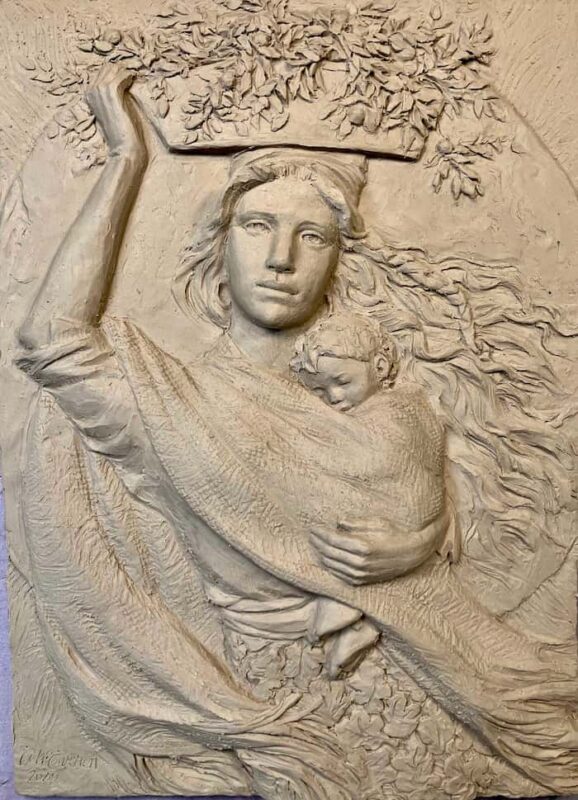
Several pieces in the show particularly stood out for how they realize this theology in physical form. Annette Everett’s Eve’s Errand is a poignant exploration of the physicality of choice. Everett captures Eve shouldering the literal and metaphorical requirements of mortality—represented by a baby that stands for all of mankind. For the artist, it brings to mind Truman Madsen’s description of Eve as the “heroine who led the way into this obstacle course of mortality.” The piece suggests that Eve’s gift was a beautiful, heavy burden that enabled the “birth and rebirth of the whole human family.”
Choice
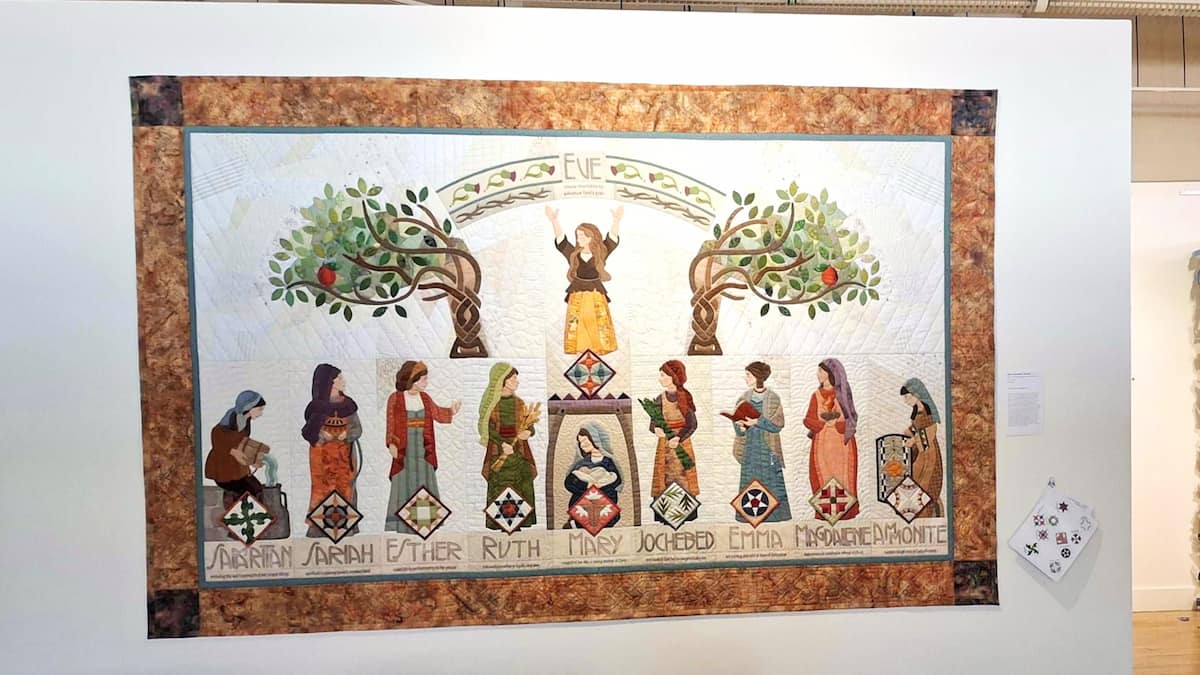
The Fall of Eve and Adam was a thoughtful and deliberate choice in Latter-day Saint theology. Several pieces in the Brave Like Eve exhibit focused on the choice that was made. One of these pieces of art that I enjoyed in particular was one about how Eve’s choice allowed other women in the scriptures to choose hope: “Eve was first; then followed a sisterhood across dispensations, acting with faith in Christ, endeavoring to make a difference for good.”
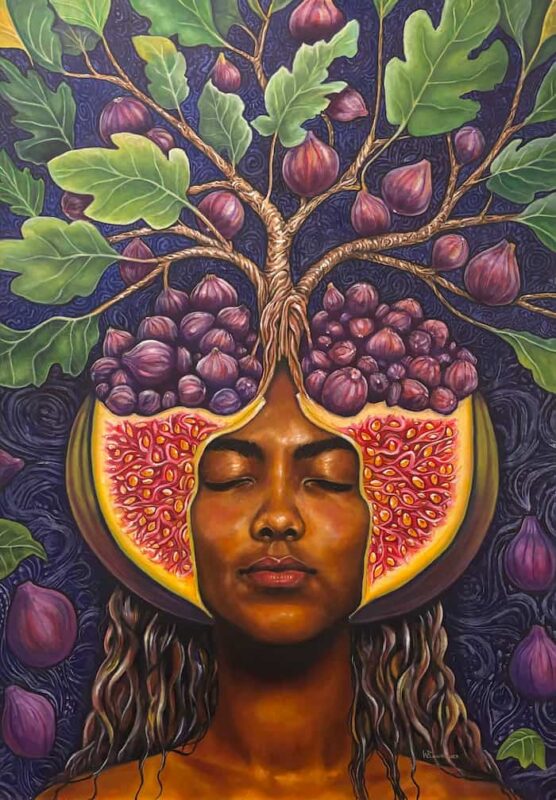
Another piece of art at the exhibit that focused on choice was “The Courage to Choose” by Wendy Boomhower. As the artist explained: “Eve’s act was one of profound understanding and divine courage. She saw beyond the moment and chose a path that would bring life, knowledge, and growth to all humankind. The fruit symbolizes her wisdom, the seeds her posterity, and the branches her eternal connection to the divine feminine. Through her courageous choice, mortality—and the story of humanity—began.”
Choice is, of course, something that has implications for how we live today. And some of the artists in the show didn’t shy away from those implications, even with how they apply to social issues that are debated in the public sphere today. As Erica Diane Monson explained,
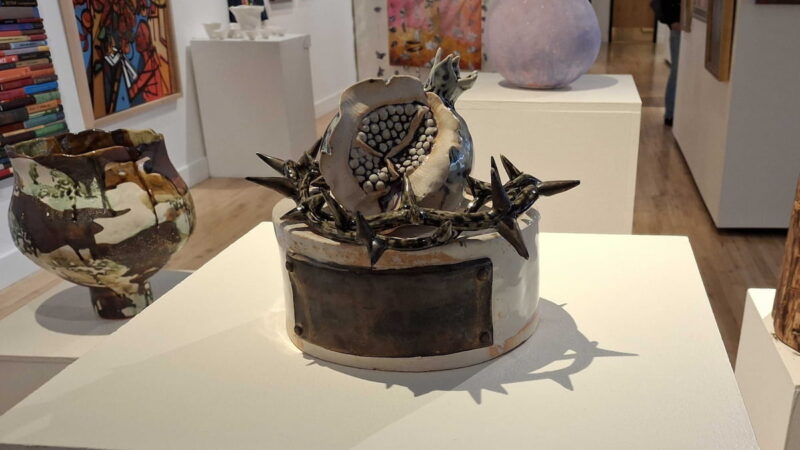
My work explores gendered beliefs around the value of the body. I am interested in the ways our beliefs inform the way we view motherhood. Eve is a figure who has been condemned and praised for her choice. I find it ironic that within Mormon octrine we take a radical view and celebrate Eve’s choice to eat of the fruit and become the mother of humanity, but discredit choices in reproductive freedom for women today. For and In Behalf of Eve, explores the objectification of female bodies, abortion and reproductive rights. Now more than ever, it is important to protect our ability to choose how we use our bodies.
Cosmic Order and Nature
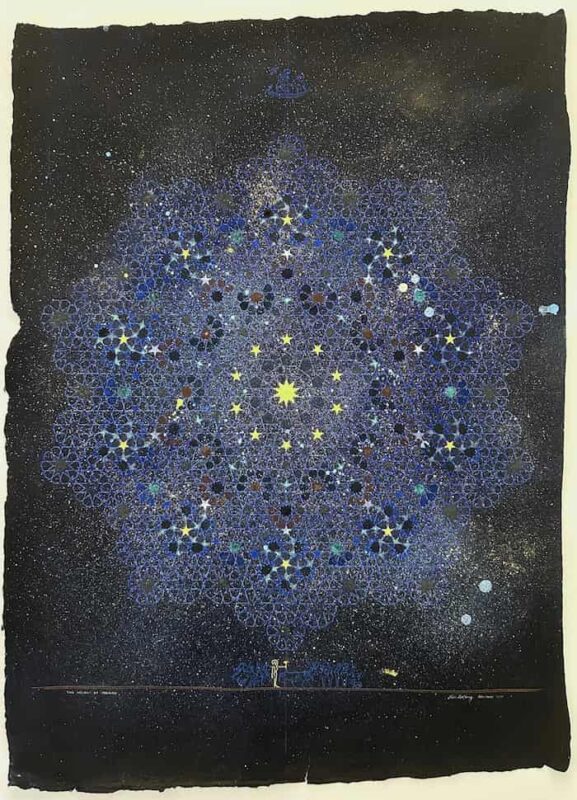
The exhibit also excels in showing the interconnectedness of Eve’s choice with the very structure of the universe. Lisa DeLong’s The Weight of Creation uses sacred geometry, pigments from the earth, and 24k gold leaf to illustrate a divine order. By linking the geometric principles of an apple and human DNA to the celestial movements of Venus, DeLong situates Eve’s work at the center of a grand, cosmic design.
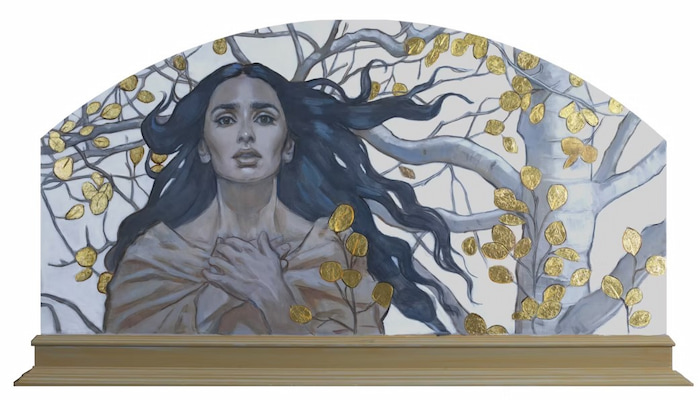
Rose Datoc Dall’s depiction of Eve was moving for its linking between the fallen world and Eve’s choice (and from that choice, the need to endure to the end throughout mortality). As the artist explains:
In this image, Eve has long entered the mortal world, as represented by the change of the seasons. This aspen tree has lost many of its leaves with the onset of winter. Yet, golden leaves cling tenaciously to the aspen trees. Golden leaves not only connote beauty and a bit of the divine, but they often represent survival, faith, resilience, which qualities Eve must call upon again and again on her mortal path, and enduring in her convenants, such that her human family together eternally, much like the aspen tree, whose forests spread and interconnect beneath the soil as one giant organism.
Conclusion
Brave Like Eve is a triumphant realization of Latter-day Saint “art-as-theology.” Curators Laura Erekson, Nicole Woodbury, and Heather Belnap have orchestrated a show that invites us to look at the foundations of history and culture through a lens of informed choice rather than subjugation. For anyone interested in how the visual arts can expand our understanding of divine purpose and womanhood, this exhibition is a mandatory visit. It is an honoring of Eve that, in turn, honors all those who have followed her into the beautiful, difficult errand of life. If you want to see it in person, Brave Like Eve is currently on display at the Bountiful Davis Art Center (January 14 – March 27, 2026), in Bountiful, Utah. If you aren’t in a position to attend in person, but would like to see the artwork with explanations, visit https://www.certainwomenartshow.com/.
Comments
4 responses to “Brave Like Eve Art Exhibit Open in Bountiful, Utah”
This looks great. Thanks, Chad.
Eve was the original feminist. She was willing to risk her life for the sake of gaining knowledge. How many people do we know who exemplify such courage?
my wife and i went and saw this yesterday. it was beautiful. we would not have known about this show w/o your post, so thank you for sharing.
dlc, I’m glad to hear you went!