
In my ward growing up one of the scoutmasters was a non-member father of one of the boys in the troop. This was one of the nice side-benefits of the Church’s involvement in the Boy Scouts: it was the perfect calling for the non-member husband of an interfaith couple who wanted to be involved with his kids in the Church’s youth programs. I’ve also seen cases where the proverbial, completely non-believing, occasionally-comes-to-church-to-support-their-spouse member was wholeheartedly willing to accept home teaching assignments when we all knew full well it was more akin to a social worker arrangement than a ministering priest one.
(One could argue that male ministering assignments should only be given to those that can do blessings and the like, but frankly in most wards the demand for ministers, people that check up on you, even non-religious ones, so far outstrips the supply there’s little reason to not accept help where it’s available).
More generally speaking, it’s nice to have some sort of low-stress calling that allows part-members to be involved in their family’s faith community without the religious commitment. A lot of the formula would be the same; for example, I don’t see why they couldn’t be set apart for a calling (if they’re okay with that), similar to how you don’t have to be a member to receive a priesthood blessing. Of course, this would have to be handled gingerly; they don’t feel the same obligation to accept callings and it would typically have to be something that involved their family directly.( I guess if you could convince a non-member to run tithing down to the bank every Sunday more power to you, but I doubt that would work.) If the Church is already asking for their family’s time during the weekends and mid-week the ward leadership would have to really read that particular room well in order to know when a calling for them was appropriate.
It presumably wouldn’t involve teaching, but even then with the constant struggle sometimes to find enough teachers I’ve more than once thought about a hypothetical situation where in an emergency we’d ask the ward, never-member atheist to draw from his or her general Western cultural knowledge to teach golden-rule ethics from the Bible to Sunbeams.
So maybe I’m just being non-creative, but post-Scouting the only ready-made callings that I can think of that would work for something like that is maybe pianist or choir director, but there may be custom-built callings that could work in those very particular situations.
Comments
14 responses to “Non-Member Callings and Part-Member Families”
Another possibility is family history consultant, for those so inclined (especially if able to help staff a family history center).
Activities Committee.
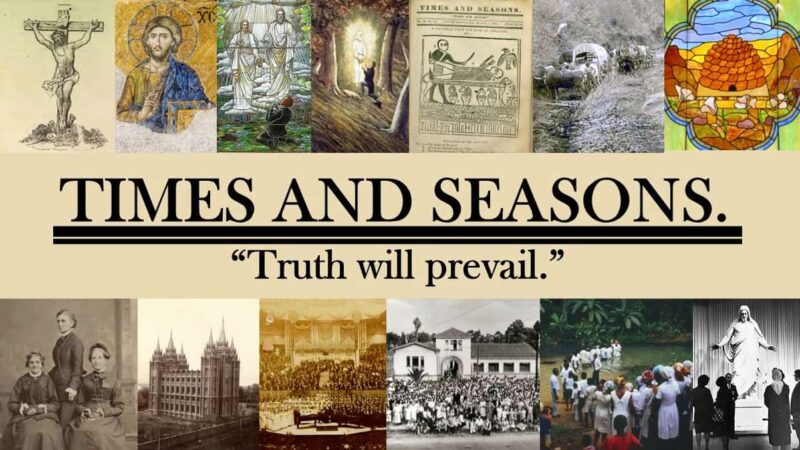
Dude in the middle only has three fingers on his left hand.
I would strongly argue that ministering assignments should be given to anyone willing to do them, irrespective of their ability to give priesthood blessings. To do otherwise further stratifies the community. Peter Priesthood is asked to keep watch over more people, while Jack is being told that he’s not worthy enough to be tasked with checking in on his neighbors. (Further, what about every Aaronic Priesthood holder; you know, the ones explicitly called out in the D&C to visit the house of each member and watch over the church away, and be with and strengthen them.)
One of the greatest weaknesses of our church is the way we push out people who aren’t 100% in. I’ve been in meetings where the bishopric was clearly conflicted that there was a single YW leader (out of a dozen or so) that didn’t have an active temple recommend. Releasing that woman sends a clear message that if you slide from 100% orthodoxy/orthopraxy for any reason, you’ll be sitting on the sidelines until you reform. And benching people is hardly the way to get them to feel like part of a community.
And the guy in the middle clearly has 5 fingertips on his left hand. I can only see 4 on his right, but his pinky can easily be tucked back behind the other fingers.
Jonathan Green and E: Great ideas. Because we (rightfully) focus on the religious dimension, we sometimes forget that genealogy has really taken off as a hobby in the US in its own right. There are so many non-LDS genealogy junkies that would love to help people with census records.
Dave W: I agree. I mean, within certain obvious limits (Hannibal Lecter should not be given a ministering assignment); one of the benefits of living in a “high needs” ward is that that kind of line drawing doesn’t happen as much. “Brother Smith, great to see you at church after ten years; can you substitute Sunbeams?” Also, the way your energy in your comment slid into that non-sequitur final paragraph responding to Ivan made me lol.
I don’t see the pinky there, sorry. AI is now causing viewers to hallucinate!
AI slop is annoying (I’m not even getting into the problems with the teeth on all of the characters in the pic)
Anything related to activities could be a good candidate, including things that are more “assignments” than “callings.” Young Men and Young Women’s camps still need a ton of people, Activity Days, sports nights, etc.
Also, service. Seems like the “compassionate service committee” got folded into ministering, but they could be asked to participate in or even coordinate the work it did.
I’m a little dubious about giving a non-member a solo ministering assignment, as ministers should be able to address spiritual needs. But with a companion, absolutely.
Similar reasoning can apply to a member who has lost their testimony but it still attending for their family’s sake, a member who is not attending church but still has some attachment to the community (e.g. they still come play basketball), etc. I completely agree with DaveW that we should gratefully accept whatever anyone is willing to give. If someone wants to be part of a community, at any level, the best way to make them feel like they really are a valued member is to ask them to contribute to it.
We have pretty clear lines in callings-meant primarily for adherent members by assignment. I wonder sometimes if we could have more room for less orthodox attenders or involve some selection.
I understand we have a way of doing things, but would like more options for attendees who aren’t fully on board. Folks with chastity or word of wisdom issues. Gay partnered folks who still want to come to Church, etc.
Along with the original post there seemed to be more room for Jack or cultural members that now has been greatly reduced.
Before my husband joined the church, he “volunteered” in our ward nursery. He was sustained and set apart and loved every minute of it. It was a large part of his desire to ultimately join the church.
Don’t forget that certain non-members can be Bishop. (D&C 68:14-20).
All they have to be is of the tribe of Levi/Literal descendants of Aaron. No need to be members or even ordained to the PH*.
Of course, being bishop might be more of a deterrent to membership and participation for our non-member friends.
Unpopular opinion incoming:
I disagree that pianist, organist and choir director should be non-member callings. Music is MORE important to the spirituality of a gathering than the speakers or teachers. A music leader ought not just to be a member of the church, but someone who has the ability to cultivate love and the spirit in the meeting- shine a torch of light. It’s not just about technical skill. That being said, I would NEVER turn away anyone who wanted to sing in a choir, be part of an ensemble or special large musical performance, etc. But I think they should play with the saints, not lead. Additionally, family celebrations and funerals should always welcome non-LDS performers and speakers. But I find it fascinating why this calling was one thrown out as a non-member calling when teacher was not, even in the primary, or Elders Quorum where the high priests are probably sleeping anyway.
@mortimer: Actually, I cringed a bit at the same spot and for the same reason. A church choir director in particular should be mindful of the spiritual purposes of music, and teach them to both the choir and ward leadership. They should talk with the choir about the doctrine taught in the music they perform and the message they want the choir to convey. When I’m conducting, I always try to work in what’s essentially a very brief testimony about a choir number into the final rehearsal for it, and it makes a big difference in the performance–both musically and spiritually.
Look, we had a whole discussion about this in the sixteenth century, and art and music are nice and all, but they’re definitely there to support the gospel word, not the other way around. If you can mostly hit the right notes, that’s enough to be an accompanist. At least that’s the standard I hold myself to as the accompanist in extremis for priesthood meetings. If a nonmember were willing to take over for me, I’d happily relinquish that role.
Jonathan Green,
Sounds like you sided w. the Calvinists and Council of Trent, while I’m staunchly with Martin Luther- music is core to the gospel, a vehicle of doctrine and transformational means of grace.
Don’t forget that the same 16th C discussion swung the pendulum all the way over, to the counter-reformation’s throat-choke on music (a time I call Boyd K Packer’s model era which inspired his strict rules for music in LDS services), to the Anabaptists and their silent or unaccompanied services.
Spiritual truth begins in the soul, not in language.
Doctrine is first experienced in the heart and only later translated into words. Language is an imprecise tool for conveying spiritual reality. Anyone who has wrestled with Paul’s writings knows how much meaning shifts as ideas move from Greek into centuries of other languages. Something is always lost in every translation, even Paul’s own Greek. The purest form of the gospel is spirit speaking to spirit, not words.
That’s why music matters.
Music is closer to the soul’s native language. As Hans Christian Andersen said, “Where words fail, music speaks.” Unlike speech which must pass through vocabulary, culture, and interpretation, music communicates truth and feeling directly, universally, and more precisely. A trained musician can express profound spiritual ideas.
Many religious traditions have recognized this. Early Muslim scholars resisted translating the Qur’an because they knew language inevitably distorts divine meaning. Music, like math, crosses boundaries without distortion.
And science confirms what faith has always sensed: music literally synchronizes hearts, breath, and emotion. It unifies people physically, not just metaphorically.
This is why Maya Angelou’s insight rings true:
People forget what you say, but they remember how you make them feel.
Music makes us feel. It embeds spiritual truths more deeply than words ever can.
So no, music is not optional, secondary, or something that any person walking off the street with the technical skill can technically do. It’s not decoration, it’s core. It is one of the most direct, powerful, and undistorted ways the gospel reaches the soul.
Now, to your point that someone walking off the street might be more skilled to do it, yeah – I don’t have a rebuttal for that. Except that we should be doing more than just playing the notes- we should be magnifying and elevating it with the light of the spirit, which I (as an old ward and stake organist and pianist) too often fail to do.
Sorry fo rthe thread-jack, now I’m going to go back to the idea of exploring how far we can take the idea of having a non-member bishop. I think there may be a loop hole for a Leverite woman (LDS or no) to take the reins. Kate Kelly would be thrilled.