Author: Dave Banack
-
Church Discipline: A Comparison
From Socrates in Athens to Galileo in Rome to John Scopes in a small town in Tennessee, trials make great drama. So it is not surprising that LDS disciplinary proceedings, essentially mini-trials, get so much attention, especially in the age of blogs and Facebook. I shared my thoughts on the topic three years ago in…
-
Practical Apologetics: Keeping the Faith
Another installment in my occasional series (see here, here), this one prompted by a fine little two-page article titled “Keeping the Faith” in, of all places, the BYU Magazine. The Church, both the membership and leaders, finally seems to be waking up to the fact that the Church is losing its youngest adult cohort, the…
-
Stirring Up the Saints: The Mormon Reformation
So I read Bigler and Bagley’s The Mormon Rebellion: America’s First Civil War, 1857-58 (U. of Oklahoma Press, 2011) last week. It will certainly convince you that the Utah Territory of the 1850s was the Wild Wild West as much as it was Zion. Checking the footnotes, it seems like the narrative is built primarily…
-
12 More Questions for Armand Mauss, Part 2
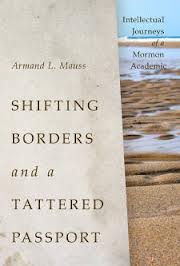
We continue our Q&A with Armand Mauss, LDS author and scholar. See Part 1 for a full introduction. 5. Let’s talk now about some of the issues you discussed in your memoir, Shifting Borders and a Tattered Passport: Intellectual Journeys of a Mormon Academic (U of U Press, 2012). In Chapter 6, “Recurrent Visits with…
-
The Rise of Biblical Criticism and the Mormon Response
“The rise of biblical criticism” is the title of a section in Jaroslav Pelikan’s Whose Bible Is It? A History of the Scriptures Through the Ages (Viking, 2005). Those pages are a short and objective introduction to what is variously called biblical criticism, historical criticism, higher criticism, or the historical-critical method. This discussion is sort…
-
12 More Questions for Armand Mauss, Part 1
Way back in April 2004, almost exactly ten years ago, Armand Mauss was the very first Times and Seasons 12 Questions guest (see Part 1 and Part 2). A lot has happened in the last ten years, so Armand has graciously agreed to answer 12 more questions. He was a Professor of Sociology for many…
-
Priesthood Session: A Personal View
I attended priesthood session at my local chapel. About sixty men and boys in attendance. One woman. It was snowing when I left home. I decided to reward my choosing the right with good consequences, so I stopped by my local Wendy’s and bought a small vanilla Frosty. On the way I listened to a…
-
GenCon: Saturday Afternoon Session
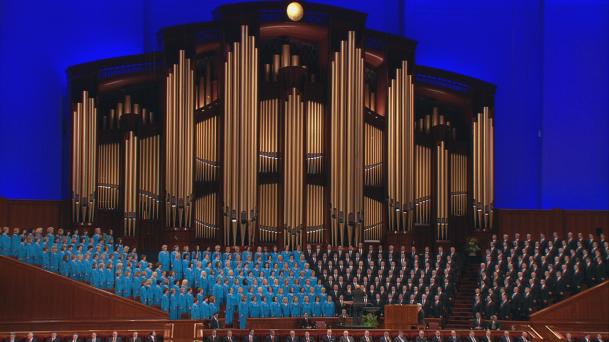
Welcome to round two of T&S sort-of live coverage of General Conference. President Eyring conducted this afternoon session with President Monson (in attendance) presiding. Opening prayer by Ian S. Ardern, a Seventy, and music by an Institute Choir from Orem, Utah. Direct quotations of a speaker are given in quotation marks; other text represents my…
-
GenCon: Saturday Morning Session
Welcome to T&S sort-of live coverage of General Conference. President Uchtdorf conducted this opening session with President Monson (in attendance) presiding. Opening prayer by Carl B. Cook, a Seventy, and music by the Mormon Tabernacle Choir. Direct quotations of a speaker are given in quotation marks or blockquote form; other text represents my own summary…
-
The Book of Mormon as Literature
One can read the Book of Mormon as canonized scripture, to guide the Church and its members in doctrine and practice, or as a sign of Joseph Smith’s calling to bring forth new scripture and establish a restored church. Then there is the possibility of reading the Book of Mormon as literature, to enlighten, uplift,…
-
Congratulations, OW: Now It’s A Conversation
A conversation in two senses: First, everyone is talking about Ordain Women (here, here, here, here, here, here, and here; a four-part response here; earlier T&S posts here and here). Second, because, almost without noticing its own success, Ordain Women achieved a significant milestone this week as the LDS Church opened a public conversation with…
-
A Conversation About Letters to a Young Mormon
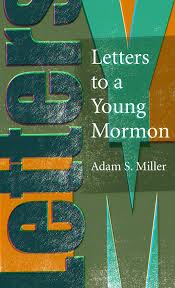
This is a discussion T&S permabloggers Julie and Dave had last week about the new book Letters to a Young Mormon (Maxwell Institute, 2014) by Adam Miller (also a T&S permablogger). Dave: Three things a reader should know about Letters to a Young Mormon: It is short, 78 pages if you count the title page.…
-
Openings and Beginnings
When we read scripture, we generally start at the beginning. This is one reason why openings — first lines, first paragraphs — are so important. They set the scene for what is to follow. They set the context and frame our understanding for entire chapters and books to follow. Terry Eagleton has a lot to…
-
Mormonism at the Scopes Trial
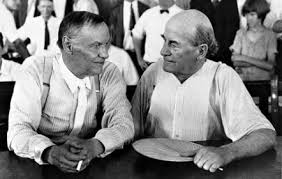
I read Edward J. Larson’s Summer for the Gods: The Scopes Trial and America’s Continuing Debate Over Science and Religion (Harvard Univ. Press, 1997) earlier this month, and was surprised to see the Book of Mormon appear in one of Clarence Darrow’s arguments to the court. Funny how little mention there is of the Scopes…
-
Mormon Christianity: A Sympathetic View
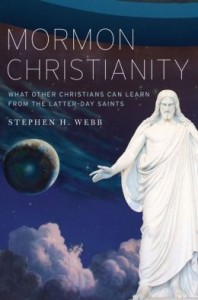
Stephen H. Webb’s Mormon Christianity: What Other Christians Can Learn From the Latter-day Saints (OUP, 2013) has a lot to offer both LDS and non-LDS readers. My acquaintance with Amazon titles on Mormonism makes me think it would have attracted a much larger non-LDS readership had it been titled How I Escaped From Mormon Christianity.…
-
Two Churches, Two Gospels
As a Mormon, you belong to two churches: your local congregation, be it ward or branch (the Local Church), and the Church of Jesus Christ of Latter-day Saints (the Institutional Church). While something similar may be true for members of other denominations, it is more true for and has more effect on Latter-day Saints. You…
-
Mormon Christianity: A Little Bit Catholic
I’m about a third of the way through Stephen W. Webb’s Mormon Christianity: What Other Christians Can Learn From the Latter-day Saints (OUP, 2013). Webb is a Catholic professor of philosophy and theology turned writer. His Catholic perspective on LDS doctrine and his evident sympathy for the LDS approach to Christianity make this insightful outsider…
-
Times and Seasons Welcomes Chris Henrichsen
Times and Seasons is pleased to welcome Chris Henrichsen as our latest guest blogger. Chris has been blogging for years, first at FPR and then, since February 2013, at the Patheos column Approaching Justice. He has a BA and an MA in political science from the University of Utah and is currently working on a…
-
Mormonism: The Last Fifty Years
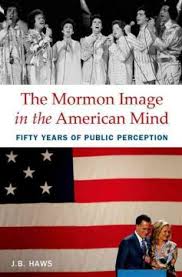
Over the holidays I read The Mormon Image in the American Mind: Fifty Years of Public Perception (OUP, 2013), by J. B. Haws, a BYU history prof. Technically, the book is a study of how the LDS Church and Mormonism in general is perceived by the American public, and the author presents survey data throughout…
-
Evangelicals Need Inoculation Too
I hope you have seen the recent public announcement of the initiative to use the Gospel Topics section of LDS.org to essentially do what we have been calling “inoculation” for the last ten years (see here for a list of links to Bloggernacle posts on the topic). The three short video interviews of General Authorities…
-
The Practical Atonement
This is the third of three posts on the atonement (see here and here). What effect, if any, does the atonement have on your day-to-day life? Does it change how you think, how you feel, or how you act? I think most Latter-day Saints would agree that the atonement is not simply about something that…
-
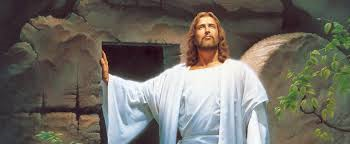
The Theological Atonement
Last week I posted The Atheological Atonement, noting that the LDS Church affirms the atonement but not any particular theory of the atonement, and suggesting this is actually not a bad “official” position for the Church to take. This post takes a different approach: if the Church were to move towards a publicly stated theory…
-
Times and Seasons: The First Year
Ten years is a long time, even in the real world. When Adam put up the first Times and Seasons post on Nov. 19, 2003, there was no WordPress. There was no Bloggernacle. There were just six T&S permabloggers (Nate, Matt, Adam, Kaimi, Greg, and Gordon) and a handful of commenters. Those were the days.…
-
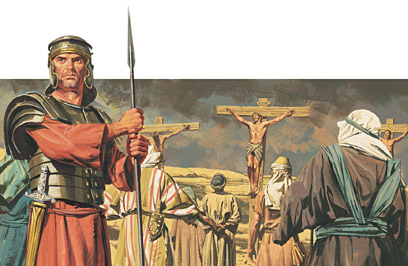
The Atheological Atonement
I presented a paper on vicarious atonement at the recent SMPT Conference. To prepare the paper, I reviewed the various theories of the atonement offered by Christian theology as well as the LDS view(s) of the atonement. I came to two mildly surprising conclusions.
-
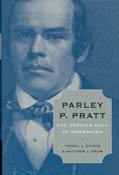
The Life and Times of Parley P. Pratt
I recently finished reading Parley P. Pratt: The Apostle Paul of Mormonism (OUP, 2011), by Terryl L. Givens and Matthew J. Grow. Most Mormons know Pratt by name from reading the Doctrine and Covenants. A few Mormons have read Pratt’s autobiography, which gives some idea of the extent of his missionary travels, but provides little…
-
The Day Creationism Died
It was January 5, 1982, the day United States District Court Judge William R. Overton issued his memorandum opinion in McLean v. Arkansas Board of Education. Plaintiffs challenged an Arkansas statute that required Arkansas public schools to “give balanced treatment to creation-science and evolution-science.” The Court found that “creation science has no scientific merit or…
-
Science, Mormonism, Dialogue
The good news: There is more room for dialogue between science and Mormonism than between science and other conservative Christian viewpoints. Most Latter-day Saints don’t feel threatened by science. The bad news: Some Latter-day Saints do come to see the relation between science and Mormonism as one of conflict rather than dialogue, and sometimes science…
-
Same Old Thing or A New Vision for Missionary Work?
The reaction to yesterday’s two-hour Worldwide Leadership Broadcast on missionary work has been mixed. Given the pre-broadcast hype, some viewers were undewhelmed; others were impressed. Our friends at BCC live-blogged the event with reader comments ranging from cynically dismissive to excited and energized. Below I’ll give links to media and LDS coverage, offer my own…
-
The Earliest New Testament
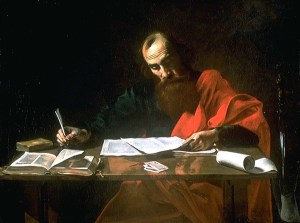
This is the third post (first, second) in a series on the New Testament. This post covers what should probably have been the first post: consideration of the seven undisputed letters of Paul, chronologically the earliest documents in the New Testament, written in the 50s. They give us the best information we have on the…
-
Science as Friend or Foe
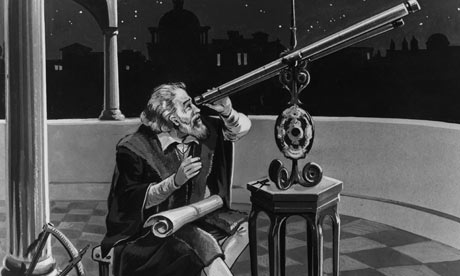
On a recent long drive, I listened to all 12 lectures of a Science and Religion audio book by Professor Lawrence Principe of Johns Hopkins. A topic of personal interest (see my earlier T&S series here, here, here , and here), the science-religion issue should also be more of an interest to LDS scholars and…